



The Kalka-Shimla Railway: A UNESCO Heritage Journey
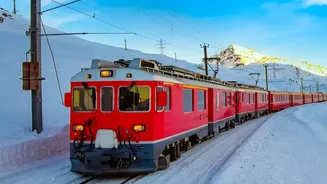
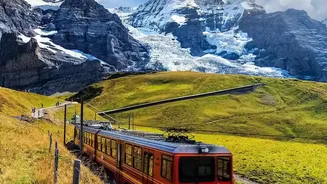
Arguably the most iconic of India's 'toy trains', the Kalka-Shimla Railway is a UNESCO World Heritage site that truly comes alive in winter. This narrow-gauge line, built in 1903, ascends from the plains of Kalka to Shimla, the 'Queen of Hills', navigating
over 100 tunnels and 800 bridges across its 96-kilometre route. The five-hour journey is a masterclass in slow travel, allowing you to watch the landscape transform from scrubland to dense pine forests. While heavy snow in Shimla itself is most likely in January and February, the journey offers crisp air and stunning valley views throughout the winter months. Sit on the valley-facing side for panoramic shots of the Shivalik hills, often with fog settled in the gorges below while you climb into the sunshine. Several trains like the Shivalik Deluxe Express and the Himalayan Queen run on this route, offering a nostalgic travel experience.
The Darjeeling Himalayan Railway: Views of Kanchenjunga
Another UNESCO World Heritage gem, the Darjeeling Himalayan Railway offers a different kind of winter magic. While significant snowfall in Darjeeling town is rare, the winter months from December to February provide the clearest skies for breathtaking views of the Kanchenjunga massif. The 'Toy Train' chugs from New Jalpaiguri up to Darjeeling, a journey of over seven hours, passing through lush tea gardens and charming hillside villages. A popular option for visitors is the shorter 'Joy Ride', a two-hour round trip from Darjeeling to Ghum and back. This ride includes the famous Batasia Loop, where the track spirals around a war memorial, offering a 360-degree view of Darjeeling and the snow-capped peaks beyond. The Ghum Winter Festival is sometimes held from late November into early December to celebrate the railway's heritage. Remember to pack warm layers, as the mountain air can be brisk, especially on early morning rides.
The Kashmir Valley Line: A Modern Marvel in the Snow
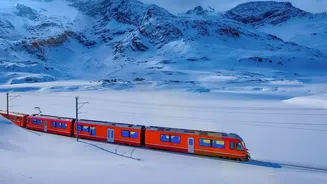
For a truly dramatic snow experience, the railway line through the Kashmir Valley is unparalleled. Connecting towns from Banihal to Baramulla, this modern engineering feat offers postcard-perfect views of a winter wonderland. The journey showcases the best of the valley in winter, taking you past frozen rivers, snow-covered fields, and majestic chinar trees, all framed by the Pir Panjal mountain range. The train ride through the 11-kilometre Pir Panjal tunnel, which connects Qazigund and Banihal, is an experience in itself, halving the travel time compared to the often-blocked road in winter. In peak winter, locomotives are sometimes fitted with snow cutters to clear the tracks, ensuring connectivity when other transport comes to a halt. It's a vital lifeline for locals and a breathtakingly scenic journey for travellers seeking the ultimate snow-laden landscape.
Your Guide to Planning and Booking
Booking these popular train journeys requires some advance planning. Tickets for the heritage toy trains, in particular, should be booked well in advance, as the reservation period opens 60 days prior on the IRCTC website or app. Due to small coach capacities, seats sell out almost instantly, especially during peak tourist seasons. When booking online, be sure to use the correct station codes: KLK (Kalka) to SML (Shimla) for the Shimla train, and NJP (New Jalpaiguri) to DJ (Darjeeling) for the Darjeeling route. For winter travel, packing is key. Layering is the most effective strategy. Carry thermal wear, warm jackets, sweaters, gloves, and a cap, as temperatures can drop significantly, and the heritage carriages can be draughty. January is statistically the best month for reliable snowfall in both Shimla and the higher reaches of Kashmir, while Darjeeling's clearest mountain views are also found in the deep winter months.