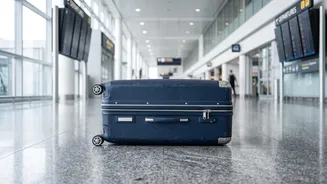









That amazing $49 flight seems like a steal until you get to the airport and discover your checked bag costs more than your ticket. On budget airlines, this is the norm. The simplest way to protect your wallet is to embrace the carry-on.
The Budget Airline Business Model
To understand why
baggage fees are so high, it helps to understand the business model of ultra-low-cost carriers like Spirit and Frontier. These airlines unbundle their fares, meaning the initial ticket price covers only one thing: a seat on the plane for you and a small personal item that fits under the seat in front of you. Everything else is an extra, or 'ancillary,' revenue source. This includes seat selection, snacks, and most importantly, luggage. Checked bags and even standard carry-on bags that go in the overhead bin are their biggest moneymakers. By charging for these, they keep base fares incredibly low to attract customers, knowing many will have to pay for bags later.
Personal Item vs. Carry-On vs. Checked Bag
On budget airlines, these three categories have very different price tags. A 'personal item'—like a purse or small backpack that fits under the seat (typically around 18x14x8 inches)—is almost always free. A 'carry-on' is a larger bag (up to 22x14x9 inches) for the overhead bin, and it almost always has a fee on airlines like Spirit and Frontier. A 'checked bag' is the largest and heaviest, and also comes with a fee that is often comparable to or sometimes even more than the carry-on fee, especially if you pay at the airport. The key is that the price to add a bag increases dramatically the longer you wait. A carry-on that might cost $45 when you book can jump to $99 at the gate.
A Real-World Cost Breakdown
Let's look at the numbers. On a typical Spirit or Frontier flight, a checked bag can cost between $40 and $100 each way, depending on the route and when you pay. A standard carry-on might be slightly less. If you're forced to check an oversized carry-on at the gate, you'll pay the highest penalty, often close to $100. An overweight checked bag (often anything over 40 pounds on these carriers) can add another $75 to $129 in fees. Suddenly, that 'cheap' round-trip flight can cost an extra $200 in luggage fees alone. By fitting everything into a personal item, you pay zero. By using a single, regulation-sized carry-on, you still save significantly compared to checking a bag, especially a heavy one.
The Other Perks of Packing Light
Avoiding fees is the main reason to travel with just a carry-on, but it's not the only one. First, you save time. You can skip the long lines at the bag-drop counter and walk straight to security. Upon arrival, you don't have to wait at the baggage carousel, hoping your bag appears. Second, you eliminate the risk of the airline losing your luggage, a nightmare that can ruin the start of any trip. Finally, traveling light gives you more flexibility. It's easier to navigate public transportation, walk through city streets, and manage your belongings without a heavy suitcase dragging you down.
How to Master the Carry-On
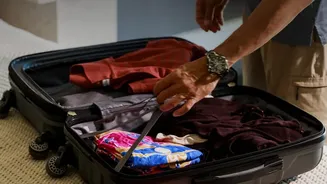
Packing for a week in a single carry-on might seem daunting, but it's entirely possible with a few strategies. Use packing cubes to compress clothing and stay organized. Roll your clothes instead of folding them to save space and minimize wrinkles. Plan a versatile wardrobe around neutral colors that you can mix and match. Wear your bulkiest items, like a jacket and boots, on the plane. And be strategic with your personal item—use it for essential documents, electronics, and anything you need easy access to during the flight.