





A Landmark Investment in Physical AI
Eka Robotics, a startup focused on creating intelligent robots, has successfully closed a $150 million Series A funding round. This significant injection of capital was co-led by prominent venture capital firms Andreessen Horowitz (a16z) and F-Prime,
with additional participation from previous and new investors including Obvious Ventures, E14 Fund, and Samsung Next. The funding is a powerful vote of confidence in Eka's mission to solve one of the biggest challenges in robotics: creating machines that can perform a wide variety of physical tasks in unpredictable, real-world environments. The company plans to use the funds to scale its core technology, expand its robots' capabilities, and accelerate customer deployments.
Beyond the Assembly Line: The Quest for Generality
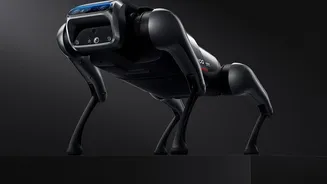
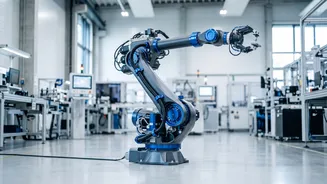
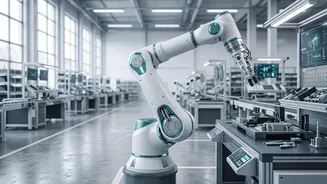
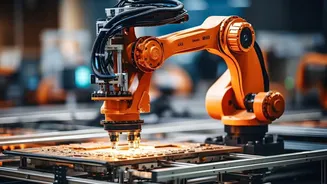
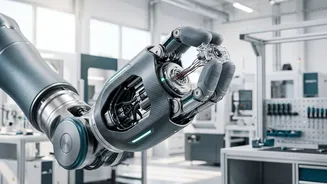
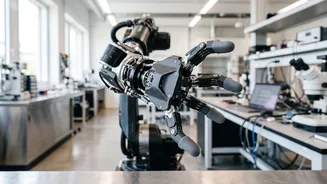
For decades, robots have been specialists. The robotic arms in a car factory are incredibly efficient at welding the same part thousands of times, but they can't suddenly decide to pack a box or assemble a different product. Eka Robotics is targeting something far more ambitious: general-purpose robots. Think of it as the difference between a simple calculator and a powerful smartphone. A general-purpose robot is designed to be versatile, capable of performing a wide range of tasks without needing to be completely reprogrammed for each one. This flexibility could unlock automation for countless jobs in logistics, electronics assembly, and beyond that are currently too complex or variable for traditional robots.
The Secret Sauce: A 'Vision-Force-Action' Model
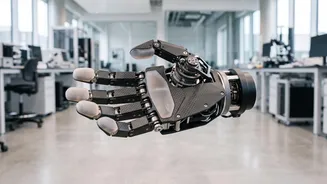
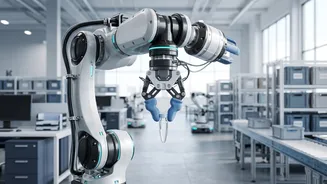
Eka's innovative approach is built on what it calls a 'Vision-Force-Action' (VFA) model. Most robots rely heavily on vision to understand their surroundings. Eka integrates this with advanced force feedback, essentially giving its robots a sense of touch. This allows them to feel when an object is slipping or how much pressure to apply when gripping a delicate item, like a strawberry or a complex wire. Co-founder Pulkit Agrawal notes that while vision gets you close, the final, crucial part of manipulation happens through force. Instead of just mimicking human actions, Eka trains its AI models in vast physics simulations, allowing the robots to develop a true 'intuition' for physical tasks through trial and error, much like AlphaZero learned to master chess without human data.
Superhuman Speed and Dexterity
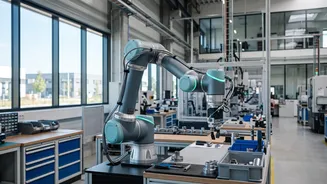
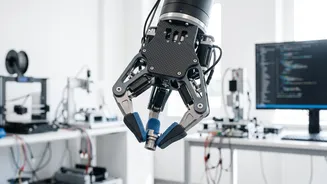
The results of this unique approach are already impressive. Eka's systems have demonstrated the ability to pick and place objects at a rate of 1,500 per hour, more than double the average human speed of around 600 per hour. This performance isn't limited to simple pick-and-place tasks. The same robots can handle more dexterous jobs like screwing in a lightbulb or inserting wires, showcasing the generality that investors are betting on. By building robots that learn the physics of a task rather than just copying movements, Eka aims to create systems that are not only faster but also more reliable and safer to work alongside humans.
Impact on India's Tech and Manufacturing Future
While Eka Robotics is based in the US, its success is part of a larger global push toward advanced automation that has significant implications for India. India's robotics market is expanding rapidly, with projections showing it growing from over $2 billion in 2026 to more than $7 billion by 2034. The country is already the sixth-largest installer of industrial robots globally, driven by the automotive sector and government initiatives like the Production Linked Incentive (PLI) scheme. As companies like Eka push the boundaries of what robots can do, they create new possibilities for Indian manufacturers to enhance productivity, improve quality, and compete on a global scale in the era of Industry 4.0. The development of adaptable, intelligent robots could be a game-changer for industries struggling with labor shortages or tasks that are too dangerous or repetitive for human workers.