



What to Expect When You Look Up
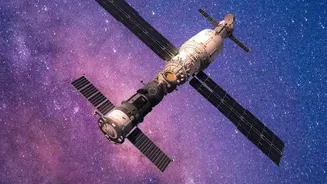
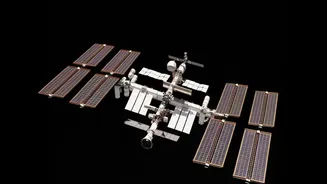
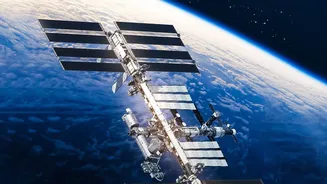
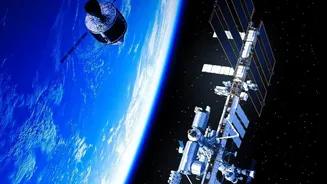
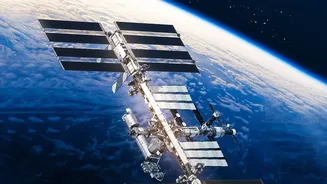
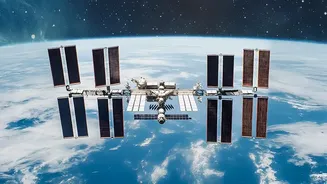
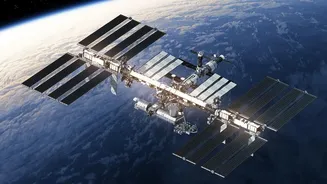
Spotting the International Space Station is a surprisingly simple and rewarding experience. You don’t need a telescope or any special equipment. To the naked eye, the ISS appears as a very bright, white dot of light moving smoothly across the sky. Unlike
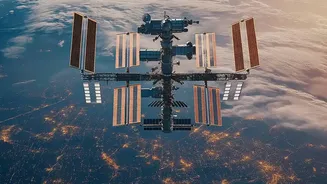
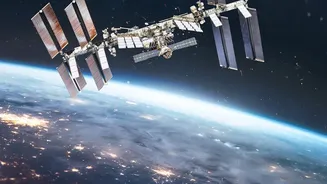
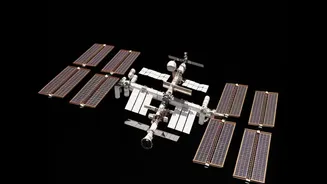
an airplane, it won't have blinking lights and it travels much faster, completing a full pass of the sky in just a few minutes. It can be brighter than any star or planet, sometimes outshining even Venus. This brightness comes from the station's massive solar arrays reflecting sunlight. The best times to see it are typically an hour or two after sunset or before sunrise, when the sky is dark at your location but the ISS, at its high altitude, is still bathed in sunlight.
Top Free Apps for Tracking Satellites
The key to a successful sighting is knowing exactly when and where to look up. Thankfully, a variety of free and user-friendly mobile apps do all the work for you. They use your phone's GPS to provide precise predictions for visible passes over your specific location. Most will send you alerts so you don't miss a chance to run outside and witness this marvel of engineering orbiting 400 kilometres above Earth. Here are some of the best and most popular choices available for both Android and iOS devices.
ISS Detector: The Specialist
As the name suggests, this app excels at tracking the International Space Station. The free version for both Android and iOS is straightforward, providing a list of upcoming passes, their duration, and a rating for how bright and high the pass will be. One of its standout features is a weather check that will warn you if cloudy skies are likely to obstruct your view. It also offers push notifications to remind you a few minutes before a pass is about to begin. For those who get hooked, an inexpensive in-app purchase can unlock the ability to track thousands of other objects, including Starlink satellite trains, the Hubble Space Telescope, and comets.
Heavens-Above: The Classic Choice
A long-time favourite among amateur astronomers, the Heavens-Above website now has a companion mobile app. Its main purpose is providing highly accurate pass predictions for the ISS and a vast catalogue of other satellites. The interface is simple and functional, focusing on giving you the data you need quickly. It features a live sky chart that shows you an object's path against the backdrop of constellations. The app also includes a night mode with a red-light filter to help preserve your night vision while you're outside. While the app is free, it is supported by ads.
SkyView Lite: The Augmented Reality Star
If you want an app that not only tells you where to look but shows you, SkyView Lite is an excellent choice. It uses your phone's camera to create an augmented reality (AR) view of the sky. You simply point your device upwards, and the app will identify stars, constellations, planets, and, of course, satellites passing overhead. You can follow a satellite's path across your screen in real time. It's incredibly intuitive and a fantastic way to learn more about the night sky. The app doesn't require a WiFi or GPS signal to function after initial setup, making it perfect for camping or trips to remote, dark-sky locations.
Tips for a Perfect Sighting
Once your app alerts you to an upcoming pass, a little preparation can make all the difference. Find a spot with a clear view of the horizon, especially in the direction the app indicates the pass will begin. Passes are rated by their maximum elevation; a pass that reaches a high elevation (closer to 90 degrees, or directly overhead) will be brighter, longer, and more impressive than one that stays low on the horizon. Give your eyes a few minutes to adjust to the darkness before the pass begins. This will make it much easier to spot the station as it emerges. Finally, remember that patience is key. Some passes are faint, but a bright, high-overhead pass is an unforgettable sight.