








A Sanctuary for Olive Ridleys
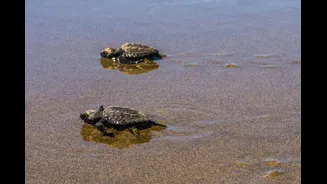
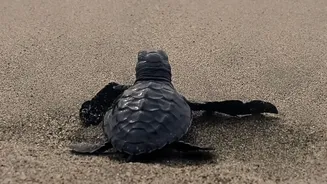
Goa’s sandy shores are a critical nesting ground for Olive Ridley turtles, a species recognised globally as vulnerable. Every year, typically between November and April, female turtles return to these beaches to lay their eggs. This natural phenomenon
is vital for the survival of the species, but it often clashes with the state's bustling tourism industry. Unregulated construction, artificial lighting from beach shacks, and noise can disorient nesting females and their hatchlings, posing a significant threat to their population. Historically, Morjim and Mandrem in the north, along with Agonda and Galgibaga in the south, have been the most recognised nesting sites, with conservation efforts run by the Forest Department and local communities for years.
The Ten Proposed North Goa Beaches
The Forest Department’s recent proposal, sent to the Department of Environment and Climate Change, seeks to vastly expand these protections. The plan aims to officially designate a total of 24 beaches across the state—10 in North Goa and 14 in South Goa—as turtle nesting sites under the Coastal Regulation Zone (CRZ) Notification, 2019. The ten beaches identified in North Goa include some of the most famous and busiest tourist hubs: Morjim, Mandrem, Ashvem, Arambol, Keri, Vagator, Baga, Calangute, Candolim, and Miramar.
What 'Protection' Actually Means
If the proposal is approved, these beaches would be classified under CRZ-I, a category for ecologically sensitive areas. This designation would trigger stricter regulations, especially during the nesting season. Expected controls include tighter restrictions on artificial lighting, beach shacks, vehicle movement on the sand, and loud events at night. The goal is to minimise human disturbance, giving the turtles a safer environment to nest. The move comes amid reports of a decline in the number of nests and eggs recorded in recent seasons compared to previous years, prompting the call for more robust protective measures.
A Question of Balance
The proposal has sparked concern among local business owners and residents whose livelihoods depend on tourism. Stakeholders like the All Goa Private Property Shacks and Huts Owners Association have voiced strong opposition, fearing that the new rules could kill the tourism business, particularly in areas that have only recently started to develop. They argue that while they are not against protecting turtles, a balance must be struck. Shack owners and fishermen are seeking clarity on the exact nature of the restrictions and whether their activities can continue under regulated conditions. They contend that conservation and tourism can coexist, but abrupt and sweeping regulations risk undermining the local cooperation that has been crucial to conservation efforts so far.
The Path Forward
The Forest Department's proposal is currently with the Department of Environment and Climate Change for review. The next steps will likely involve public consultation and further discussion before a final decision is made and the list is potentially notified in the official gazette. Tourism bodies have stressed that any plan must clearly define what is permitted and prohibited, rather than imposing a blanket ban that could cripple the local economy. The debate highlights a central challenge for Goa: how to preserve its unique ecological heritage while sustaining the vibrant tourism industry that forms its economic backbone.