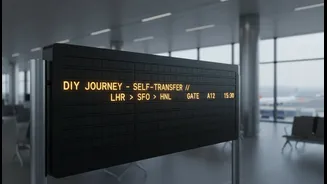









What is a Self-Transfer?
A self-transfer is when you create your own itinerary by booking two or more separate flights to get to your final destination. Unlike a traditional connecting flight booked on a single ticket, where the airline is responsible for getting you and your luggage
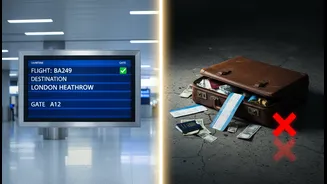
from start to finish, a self-transfer treats each flight as an independent journey. If you miss your second flight because the first was delayed, the second airline generally considers you a no-show, and you are responsible for booking and paying for a new ticket. This strategy can offer great flexibility and lower prices, but the trade-off is a significant increase in risk and personal responsibility.
The Checked Bag Challenge
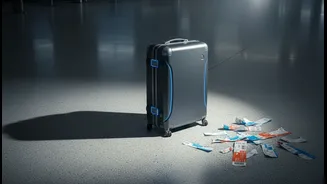
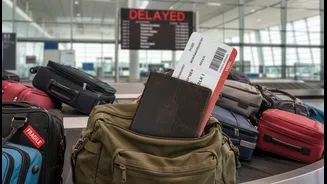
Traveling with checked luggage is the single biggest complication for a self-transfer. On a standard connection, your bags are automatically transferred from one plane to the next. With a self-transfer, they are not. You must deplane, go to baggage claim, collect your luggage, and then head back to the departures area to check in and drop your bags for the next flight. This process requires you to exit the secure transit area and go through security screening all over again. This cycle of collecting and re-checking luggage eats up a significant amount of time and is often where travelers run into trouble, especially at large or unfamiliar airports.
Racing Against a Tight Schedule
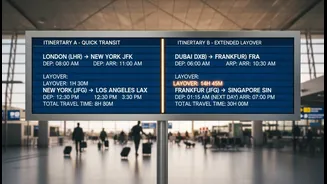
Airlines have strict cut-off times for checking in bags, typically 45 to 60 minutes before departure. With a self-transfer, this deadline becomes your personal race against the clock. A short delay on your incoming flight, a long wait at the baggage carousel, or a crowded security line can easily cause you to miss the baggage drop-off for your next flight. Experts suggest that a layover of less than three hours for a domestic self-transfer with checked bags is extremely risky. For international journeys, which add immigration and customs procedures, a buffer of four to six hours is often recommended to be safe.
The Domino Effect of Delays
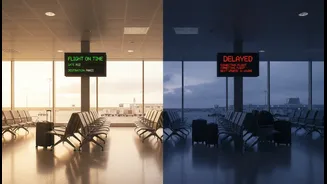
A late arrival on your first flight can trigger a catastrophic domino effect. Because the two tickets are not linked, the second airline has no obligation to hold the plane or rebook you on a later flight for free. You will likely have to purchase a last-minute ticket, which can be incredibly expensive, and potentially pay for an unexpected hotel stay if no same-day flights are available. One study found that even a 30-minute delay could cause 40% of self-connecting passengers to miss their onward flight, highlighting how little margin for error there is with this type of travel.
How to Make Self-Transfers Safer
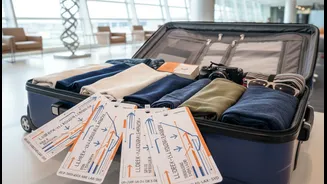
If the cost savings are too good to pass up, there are ways to mitigate the risks. The most effective strategy is to travel with carry-on luggage only. This allows you to skip the baggage claim and re-check process entirely. Secondly, book an extremely generous layover—think five hours or more, especially for international travel or at busy airports. Before booking, research the airport layout to understand terminal transfer times. Finally, consider purchasing travel insurance that specifically covers missed connections on separate tickets, and check the fine print to understand what is covered.