





Why Bodyweight Training is Perfect for Beginners
Starting a fitness routine can feel intimidating, but bodyweight training removes the biggest barriers. There's nothing to buy, no complex machines to learn, and no need to feel self-conscious at a crowded gym. All you need is a small amount of floor
space and a little consistency. These exercises use your own body as resistance, which is a safe and highly effective way to build functional strength, improve your posture, and increase muscle tone. By focusing on movements that mimic everyday activities, you'll find daily tasks become easier, too.
Understanding the Basics: Reps, Sets, and Rest
Before you jump in, it helps to know three key terms. A 'rep' (repetition) is one full completion of an exercise, like one squat. A 'set' is a group of reps you do without stopping. 'Rest' is the break you take between sets. For beginners, a great starting point is to aim for 2-3 sets of 8-12 reps for each exercise. This range is ideal for learning proper form while building both muscle and endurance. Resting for 30-60 seconds between sets allows your muscles to recover just enough to perform the next set with good technique.
The Foundational Move: Bodyweight Squats
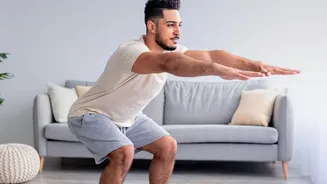
The squat is one of the most fundamental human movements and a powerhouse exercise for your legs and glutes. To do it correctly, stand with your feet slightly wider than shoulder-width apart and your toes pointing slightly outward. Keep your chest up and your back straight as you push your hips back and bend your knees, as if you're sitting in a chair. Lower yourself until your thighs are parallel to the floor, then press through your heels to return to the starting position. Avoid letting your knees collapse inward.
Building Upper Body Strength: Push-Ups
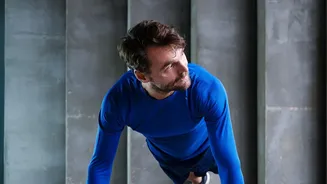
Push-ups are the gold standard for strengthening your chest, shoulders, and triceps without any equipment. If you're a beginner, start with a modification. You can perform them with your hands on a wall or an elevated surface, or on your knees. Place your hands slightly wider than your shoulders. Keeping your body in a straight line from your head to your knees or heels, lower your chest toward the floor by bending your elbows. Press back up to the starting position. The key is to keep your core engaged and avoid letting your hips sag.
The Core Stabilizer: Planks
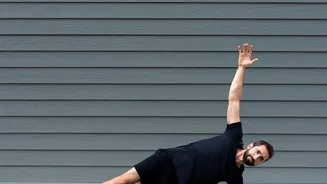
The plank is an excellent exercise for building core strength and stability, which helps protect your back. You can perform a plank on your forearms or your hands. Position your elbows or hands directly under your shoulders. Extend your legs back and balance on your toes, creating a straight line from your head to your heels. Engage your core by pulling your belly button toward your spine and squeezing your glutes. Avoid letting your hips drop or rise too high. Start by holding the position for 15-20 seconds and gradually increase the time as you get stronger.
Improving Balance and Leg Strength: Lunges
Lunges train each leg independently, which is great for improving balance and addressing muscle imbalances. To perform a forward lunge, take a step forward with one leg and lower your hips until both knees are bent at approximately a 90-degree angle. Ensure your front knee stays aligned over your ankle and doesn't push past your toes. Push off your front foot to return to the starting position, then repeat on the other side. Keep your core engaged and your torso upright throughout the movement.
Activating Your Glutes: Glute Bridges
Many people have underactive glutes from sitting, and the glute bridge is a perfect exercise to wake them up and strengthen your entire posterior chain. Lie on your back with your knees bent, feet flat on the floor about hip-width apart, and your arms at your sides. Squeeze your glutes and engage your core as you lift your hips off the floor until your body forms a straight line from your shoulders to your knees. Pause at the top before slowly lowering your hips back down.
Your First Weekly Workout Plan
Consistency is more important than intensity when you're starting out. Aim for a full-body workout three times a week on non-consecutive days (e.g., Monday, Wednesday, and Friday) to allow for recovery. Here’s a simple circuit to begin with. Perform each exercise in order, rest for 60-90 seconds after completing all exercises, and then repeat the entire circuit for a total of 2-3 rounds. - Bodyweight Squats: 10-12 reps - Push-Ups (modified): 6-10 reps - Lunges: 8-10 reps per leg - Glute Bridges: 12-15 reps - Plank: Hold for 20-30 seconds