





The Monsoon: India’s Economic Engine
The Southwest monsoon is more than just a rainy season; it is the cornerstone of India’s prosperity. Arriving in June and lasting through September, these seasonal winds deliver over 70% of the country's annual rainfall. This deluge replenishes rivers
and reservoirs, ensuring drinking water for millions and powering hydroelectric dams. More critically, it irrigates nearly 60% of India's cultivated land. A strong, well-distributed monsoon means a bountiful harvest, low food inflation, and a robust rural economy. Conversely, a weak or failed monsoon can trigger a cascade of problems, from crop failure and water scarcity to economic slowdowns. The fate of the monsoon is, in many ways, the fate of the nation for the year.
Enter El Niño: The Pacific Spoiler
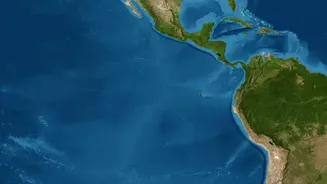
Thousands of kilometres away in the vast Pacific Ocean, a powerful climate event known as El Niño periodically unfolds. El Niño, which means 'the little boy' in Spanish, is characterised by the unusual warming of the sea surface in the central and eastern equatorial Pacific. This isn't just a minor temperature shift; it's a large-scale phenomenon that disrupts atmospheric patterns across the globe, occurring every two to seven years. Normally, strong trade winds blow from east to west, piling up warm water in the western Pacific near Asia. During an El Niño, these trade winds weaken, allowing the warm water to slosh back eastward, toward South America. This change sets off a chain reaction in the atmosphere, affecting weather from North America to Africa and, crucially, India.
How a Warm Pacific Weakens Indian Rains
The connection between a warm Pacific and a dry India lies in a massive atmospheric circulation pattern called the Walker Circulation. In a normal year, warm, moist air rises over the western Pacific (near Indonesia), flows eastward at high altitudes, sinks as dry air over the eastern Pacific, and then flows west again along the surface. This circulation helps drive the Indian monsoon. However, El Niño throws a wrench in the works. The warming of the central and eastern Pacific causes the area of rising moist air to shift eastward, away from Asia. Over the Indian subcontinent and the western Pacific, this leads to an increase in sinking dry air, a phenomenon called subsidence. This sinking motion suppresses cloud formation and rainfall, effectively weakening the engine of the Indian monsoon and often leading to below-normal rainfall or even drought conditions.
A Complicating Factor: The Indian Ocean Dipole
While El Niño is a major influencer, it’s not the only player in the game. The Indian Ocean has its own climate see-saw called the Indian Ocean Dipole, or IOD. The IOD measures the temperature difference between the western Indian Ocean (Arabian Sea) and the eastern Indian Ocean (Bay of Bengal). In a 'positive' IOD phase, the Arabian Sea becomes warmer than usual, while the Bay of Bengal cools. This warmer water in the west encourages more evaporation and moisture-laden winds to move towards the Indian mainland, boosting monsoon rains. A strong positive IOD can sometimes act as a saviour, counteracting the negative effects of an El Niño and delivering normal rainfall when a drought might otherwise be expected. Conversely, a 'negative' IOD can worsen the impact of an El Niño, leading to severe drought.
The 2026 Forecast: A Battle of Giants
As of August 2026, a strong El Niño is developing in the Pacific, with forecasters noting it has the potential to become a historically powerful event by the end of the year. In line with this, the India Meteorological Department (IMD) has forecast 'below-normal' rainfall for India in August. However, there is a silver lining on the horizon. A positive IOD is also expected to develop around September. This creates a classic atmospheric tug-of-war. The question for the latter half of the season is whether the helpful influence of the positive IOD will be strong enough to offset the rain-suppressing power of the strong El Niño. While current IMD reports from mid-August show active monsoon conditions with heavy rain in some central and eastern regions, the broader outlook for the month remains subdued.