





The Limits of Calorie Counting
The idea of meticulously tracking every calorie can be exhausting. It often fosters an unhealthy relationship with food, turning meals into a source of anxiety rather than nourishment. This obsessive focus can lead you to ignore your body's natural hunger
and fullness cues. Furthermore, not all calories are created equal. 200 calories from a piece of fried snack and 200 calories from a bowl of dal with vegetables have vastly different effects on your body. A purely calorie-centric approach overlooks nutritional quality, which can lead to a diet that is technically within a calorie budget but lacks essential vitamins and minerals. Food labels themselves can have a margin of error, making precise counting an illusion. This flawed math can lead to frustration and a feeling of failure, when in reality, the system itself is the problem.
Fibre: The Satiety Superstar
Instead of subtracting calories, let's focus on adding one crucial nutrient: fibre. Fibre is a type of carbohydrate that your body cannot digest. Its power lies in its ability to promote satiety, or the feeling of fullness. Soluble fibre, in particular, dissolves in water to form a gel-like substance in your stomach. This process slows down digestion, meaning food stays in your stomach for longer. As a result, you feel full for longer after a meal, which can naturally reduce your overall calorie intake without you feeling deprived or hungry. High-fibre foods also tend to require more chewing, giving your brain more time to register that you are full. This shift from a mindset of restriction to one of abundance can make healthy eating feel more intuitive and sustainable.
Beyond Weight Management: More Health Benefits
The advantages of a high-fibre diet extend far beyond the weighing scale. A fibre-rich diet is crucial for good digestive health, helping to prevent constipation and maintain regular bowel movements. It also plays a vital role in nurturing a healthy gut microbiome. The friendly bacteria in your gut feed on fermentable fibres, producing compounds that can reduce inflammation and improve overall metabolic health. Furthermore, fibre helps to stabilise blood sugar levels by slowing the absorption of sugar, which prevents the sharp spikes and crashes that can lead to cravings. Studies have consistently shown that high fibre intake is linked to a lower risk of chronic conditions like heart disease and type 2 diabetes.
Boosting Your Fibre Intake the Indian Way
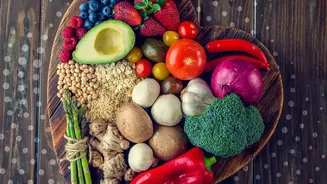
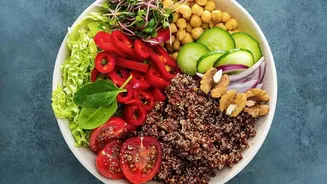
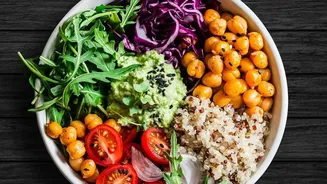
The good news is that a traditional Indian diet is naturally rich in fibre-friendly foods. Incorporating more is simple and delicious. Start by embracing whole grains. Swap white rice for brown rice and make rotis from whole wheat (atta), jowar, bajra, or ragi. Lentils and legumes are fibre powerhouses; a daily bowl of dal—be it moong, masoor, or chana—is an excellent addition. Fill your plate with a variety of seasonal vegetables like spinach (palak), bottle gourd (lauki), okra (bhindi), and carrots. Don't forget fruits; guavas, apples, bananas, and papayas are great sources of fibre. For snacks, instead of reaching for processed options, a handful of roasted chana or nuts can provide a satisfying, fibre-filled crunch.
So, Do Calories Not Matter at All?
This isn't to say that calories are completely irrelevant. Energy balance is still a fundamental principle of body weight. However, by prioritising fibre, you naturally influence the 'calories in' side of the equation in a much healthier way. High-fibre foods are generally less energy-dense, meaning they provide fewer calories for the same volume of food. Because they keep you fuller for longer, you are less likely to overeat or snack on high-calorie, low-nutrient foods between meals. Essentially, focusing on fibre helps you self-regulate your appetite and naturally guides you towards a more appropriate calorie intake, without the stress and obsession of constant tracking.