


Why Simple Math Fails
It seems logical to just cut every ingredient in half, but recipes are systems of chemical reactions, not just math problems. Halving ingredients changes crucial relationships, like the ratio of surface area to volume. A smaller batch of cake batter in the same
large pan will be very thin, causing it to bake too quickly and potentially dry out. Conversely, putting that smaller amount of batter in a proportionally smaller pan creates a new dynamic. The rate of evaporation changes, heat penetrates differently, and the final texture can be completely altered. This is especially true in baking, where the precise interaction of ingredients is what makes a cake rise or a cookie hold its shape.
The Science of Baking Smaller
Baking is where the divide-by-two rule truly breaks down. Leavening agents like baking soda and powder are chemically sensitive and don't always scale down linearly. Using exactly half might not provide enough lift, while a little too much can leave a chemical taste. The same goes for spices and strong flavourings; half the original amount can still be overpowering in a smaller total volume. Even the development of gluten in bread dough is affected. A smaller dough mass will require less kneading time, and overworking it is a common mistake that can lead to a tough, dense loaf.
Navigating Tricky Ingredients
Certain ingredients pose a unique challenge. The most notorious is the egg. What do you do when a recipe calls for one, and you need half? The most accurate method is to whisk the egg until the yolk and white are uniform, then measure out half by volume (about 2 tablespoons) or by weight (about 25 grams). Spices are another area for caution. Start with slightly less than half and taste as you go; it's always easier to add more seasoning than to take it away. For liquids like milk or water, simple division usually works well, but be precise with your measurements.
Adjusting Cookware and Time
Using the right-sized pan is critical for success. When you halve a recipe, you often need to use a smaller pan to maintain the intended depth of the food. For example, if a recipe for a 9x13 inch pan is halved, it will likely fit well in an 8x8 inch or 9-inch round pan. This change in pan size directly impacts cooking time. A smaller, deeper portion will take longer to cook through than a larger, shallower one. A good rule is to start checking for doneness much earlier than the original recipe suggests—perhaps around two-thirds of the way through the original time. Rely on visual cues like colour and texture, or use a thermometer to be certain.
A Better Strategy for Scaling Down
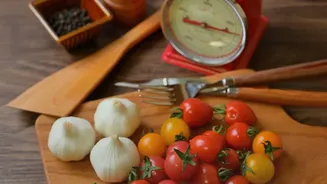
Instead of blindly dividing, think of scaling down as re-calibrating the recipe. First, calculate your new ingredient quantities, being extra careful with leaveners and spices. Use a kitchen scale for the most accurate results. Next, choose the appropriate cookware for the new volume. Finally, prepare to be an attentive cook. Set your timer for about 75% of the original time and check your dish frequently. For cakes, the toothpick test is your best friend. For other dishes, look for the visual and textural signs of doneness described in the original recipe. Remember that you can always cook something a little longer, but you can't un-burn it.