



A Network of Global Standing
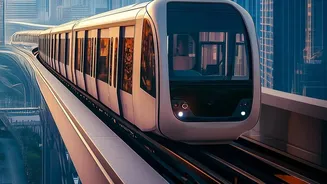
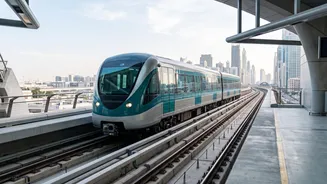
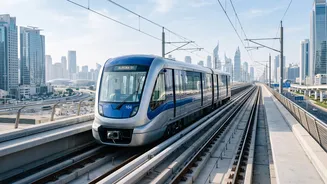
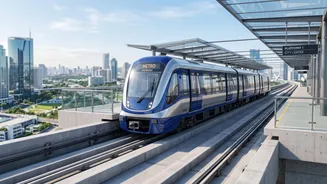
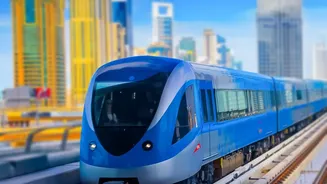
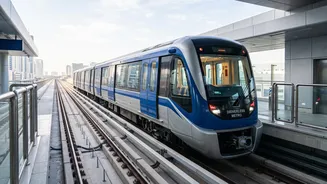
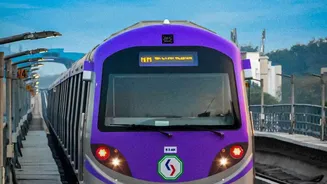
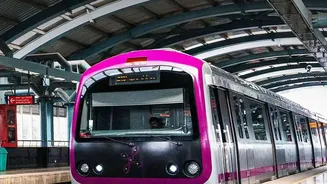
The Delhi Metro's turn towards automation is spearheaded by its Magenta and Pink Lines. Together, they form a formidable driverless corridor that, according to recent reports, spans approximately 120 kilometres and accounts for nearly a third of the entire
network. This automated expanse isn't just a local achievement; it places the Delhi Metro among the top five largest driverless metro networks globally. The system, officially termed Unattended Train Operation (UTO), was first introduced on the Magenta Line in December 2020, with the Pink Line following suit. This expansion highlights a significant leap in India's urban infrastructure, demonstrating a capacity for world-class public transit solutions that serve millions of commuters daily. On November 2, a record 1.6 million passengers travelled on these driverless trains in a single day, showcasing the system's growing importance and public acceptance.
The Tech Behind the Transit
So, how do these trains run on their own? The magic lies in a technology called Communication-Based Train Control (CBTC). Unlike traditional systems that rely on trackside signals, CBTC allows trains to communicate wirelessly and continuously with a central command centre and with each other. This creates a 'virtual block' or a dynamic safety bubble around each train, enabling them to run closer together without compromising safety. The Operations Control Centre acts as the brain, monitoring every movement in real-time. This high level of automation, known as Grade of Automation 4 (GoA4), eliminates the possibility of human error in driving, ensuring precise departures and arrivals. It also allows for greater operational flexibility, as train frequency can be adjusted instantly to meet passenger demand, a feat much more complex with human-operated services.
Transforming the Commuter Experience
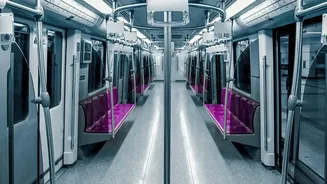
For the millions of people who rely on the Delhi Metro, the driverless system translates into tangible benefits. The most significant is increased frequency. Automated trains can operate with a headway of just a few minutes, drastically reducing waiting times on platforms, especially during peak hours. This efficiency was on full display recently when the Metro network handled its highest-ever passenger boarding of over 8.2 million in a single day amid a transport strike, with the driverless Pink Line alone serving over 940,000 boardings. The result is a more reliable and predictable journey. Automation guarantees precision in scheduling and eliminates the abrupt starts and stops sometimes associated with manual driving, leading to a smoother ride. Moreover, in some train designs, the removal of the driver's cabin has freed up additional space for passengers, a small but welcome perk in a bustling city.
The Broader Debate: Cost vs. Progress
The success of Delhi's driverless network has ignited a nationwide conversation. Vikas Kumar, the managing director of the Delhi Metro Rail Corporation (DMRC), has championed the model, urging other Indian cities to follow suit. The benefits are clear: reduced human error, enhanced service availability, and improved reliability. However, the technology is not without its critics. Concerns have been raised about high upfront capital costs and the potential for job redundancy for train operators. DMRC has addressed this by strategically redeploying its staff to roles in station management and crowd control, ensuring no layoffs occurred due to automation. Experts advise a balanced approach, suggesting that while global trends point towards automation, India should conduct its own cost-benefit analysis based on local conditions rather than simply adopting international models.