




A Growing Barrier to Travel
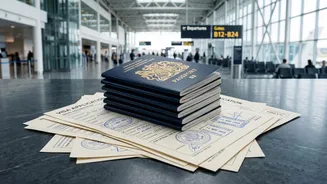
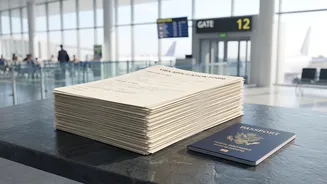
According to IATA's 2026 Global Passenger Survey, a staggering 43% of travellers have been discouraged from visiting a destination specifically because of its immigration requirements. This figure marks a significant jump from 33% just a year prior, indicating
that as travel rebounds, the friction at borders is becoming a more decisive factor in holiday and business planning. The survey, which gathered responses from over 10,000 travellers across more than 200 countries, paints a clear picture: the dream of a seamless journey is clashing with the reality of bureaucratic hurdles. While technology like AI and biometrics is making parts of travel easier, complex entry rules are creating a powerful deterrent that affects nearly half of all potential travellers.
The Anatomy of Frustration
What exactly is stopping people from travelling? It is not just about the cost. The IATA survey found that the primary reason, cited by 53% of those deterred, was the sheer complexity of the process itself. This includes navigating confusing government websites, dealing with inconsistent document formats, and facing systems that freeze during an application. Cost and data privacy concerns were secondary factors, each cited by only 17% of discouraged travellers. The issue is particularly acute for travellers from Africa and the Asia-Pacific region. IATA's Senior Vice President, Nick Careen, even shared his own frustrations with onerous visa applications, highlighting how even seasoned travellers struggle with the current systems.
The Digital Paradox
Ironically, this frustration is growing at a time when passengers are more willing than ever to embrace digital solutions. The survey shows that travellers overwhelmingly want to digitise the process. An impressive 86% of passengers stated they would be willing to share immigration information digitally before departure to speed up processing. Furthermore, 60% would prefer to apply for a visa online rather than going to a consulate in person, and 45% wish they could complete all immigration formalities before even getting to the airport. This reveals a major disconnect: passengers want a streamlined, digital experience, but the current patchwork of national systems often fails to deliver. More than 100 countries now issue electronic visas (eVisas), but a lack of common standards for verification means airlines struggle to check them efficiently, undermining the entire purpose.
A Call for Simpler, Smarter Borders
The findings have prompted IATA to call on governments worldwide to modernise and standardise their approach to border control. The association argues that simplifying entry requirements is not just about passenger convenience; it's an economic imperative. When 43% of travellers are deterred, destinations lose out on significant tourism revenue and business opportunities. The proposed solution involves a greater push towards secure digital travel credentials and a unified framework for verifying eVisas. By allowing passengers to complete checks before they travel, airports become less congested, security is enhanced through better pre-screening, and the overall travel experience is improved. Partnerships, like IATA's recent integration with visa service provider OneVasco, aim to bridge this gap by connecting visa application services directly to the flight booking process, creating a more seamless journey from start to finish.