







The Ultimate Safety Drill
Sending humans to space is fundamentally different from launching satellites; the top priority is ensuring the crew can return to Earth safely, especially if something goes wrong. The uncrewed tests for Gaganyaan are designed to validate every safety-critical
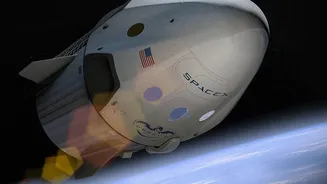
system without risking human lives. These missions are ISRO's way of perfecting the most complex and dangerous parts of the journey: launch aborts and atmospheric re-entry. Think of them as the final exams before the actual crewed flight. Recent milestones have included a series of Integrated Air Drop Tests (IADT) to perfect the parachute system, which is essential for slowing the crew module for a gentle splashdown in the ocean.
Mastering the Great Escape
One of the most critical systems under review is the Crew Escape System (CES). This is the space-age equivalent of an ejection seat, designed to pull the crew module and its occupants away from the rocket in case of an emergency on the launch pad or during ascent. ISRO has conducted several abort tests to validate this system's performance. The Pad Abort Test (PAT) confirmed the system works at the launch pad, while the Test Vehicle (TV) flights, like TV-D1, demonstrated a successful abort mid-flight at high altitude. Each successful test proves the escape route for astronauts is reliable, building confidence for the final mission.
A Symphony of Parachutes
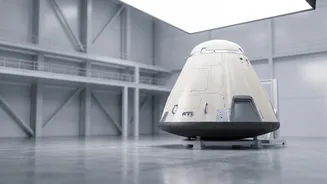
Bringing the crew module from orbital speeds back to Earth requires a flawlessly executed sequence of events. After enduring the intense heat of re-entry, the capsule's speed must be drastically reduced. This is where the parachute system comes in. The Gaganyaan deceleration system uses a combination of drogue, pilot, and three main parachutes. ISRO's Integrated Air Drop Tests have simulated various scenarios, including dropping a nearly 5-tonne dummy module from a helicopter to ensure the parachutes deploy in the correct sequence to stabilize the capsule and slow it to a safe landing speed. Tests have even simulated the failure of one main parachute to prove the system's redundancy.
The Road to a Crewed Launch
Every successful safety test clears another milestone on the path to India's first human spaceflight. Following the series of abort and drop tests, the next major step is the first uncrewed orbital mission, designated G1, which is targeted for the end of 2026. This mission will launch on the human-rated LVM3 rocket and will test all systems—including the life support systems with the help of a humanoid robot named Vyommitra—in an end-to-end flight. According to ISRO officials, a series of uncrewed flights are planned to ensure every aspect of the mission is perfected before the first crewed flight, currently anticipated by 2027.
India's Place in an Elite Club
Successfully developing and testing these complex safety systems is about more than just the Gaganyaan mission; it is a powerful demonstration of India's technological prowess. When India launches its astronauts, it will become only the fourth nation in the world—after the US, Russia, and China—to possess independent human spaceflight capability. This achievement is built on the back of thousands of ground tests and these highly visible uncrewed flight tests. They signal to the world that India's space program is not just ambitious but also mature, with an unwavering commitment to astronaut safety that is the hallmark of a true space-faring nation.