


A Sweet Discovery in the Stars
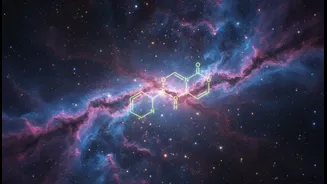
In a remarkable breakthrough announced in mid-July 2026, a team of astronomers has reported the first direct detection of a sugar molecule in interstellar space. The molecule, known as erythrulose, was found in a vast, dense formation of gas and dust
called the molecular cloud G+0.693−0.027, located near the heart of our Milky Way galaxy. This isn't the first time hints of sugar have been found in extraterrestrial materials—traces have been identified in meteorites that have crashed on Earth. However, detecting it directly in the raw, pre-stellar gas from which new stars and planets will eventually form is a monumental step forward. The discovery was made by a team led by researchers from the Center for Astrobiology in Spain, using the combined power of the Yebes 40-meter and IRAM 30-meter radio telescopes. These powerful instruments allowed them to pinpoint the specific chemical signature of this complex organic molecule from thousands of light-years away.
More Than Just a Grain of Sugar
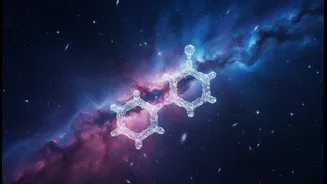
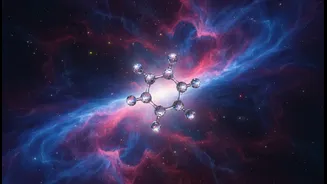
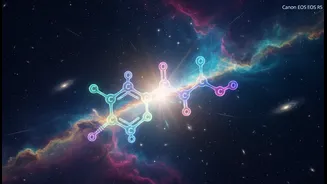
So, what exactly is erythrulose? On Earth, this four-carbon sugar occurs naturally in foods like red raspberries. But in the context of cosmic chemistry, its significance is far greater. Sugars are one of the fundamental building blocks of life as we know it. They are essential components of ribonucleic acid (RNA) and deoxyribonucleic acid (DNA), the molecules that carry genetic instructions in all living things. According to Izaskun Jiménez-Serra, the lead author of the study, erythrulose is particularly important because in watery environments it can transform into threose. Threose is believed to be a possible evolutionary predecessor to RNA, suggesting it could have played a key role in the very first steps toward life. Finding such a molecule floating in space provides a powerful piece of evidence that the foundational ingredients for biology are not exclusive to planets but are present in the universe's raw materials.
Listening for a Molecular Whisper
Detecting a single type of molecule in a cosmic cloud hundreds of trillions of kilometres away is an immense technical challenge. Scientists can't simply scoop up a sample. Instead, they practice a form of cosmic archaeology using radio telescopes. Every molecule, from simple water to complex sugars, vibrates and rotates in a unique way, emitting or absorbing energy at very specific frequencies. This creates a one-of-a-kind spectral "fingerprint." The research team pointed their radio telescopes at the G+0.693−0.027 cloud and meticulously sifted through the vast spectrum of radio signals coming from it. By matching the faint signals they detected with the known fingerprint of erythrulose measured in a laboratory, they could confirm its presence with confidence. This discovery demonstrates that the universe's chemical complexity can emerge even in the cold, dark nurseries where stars have yet to be born.
The Cosmic Recipe for Life
This finding fundamentally changes our understanding of the cosmic recipe for life. It suggests that the formation of life-enabling molecules is not a rare event that happens only under the specific conditions of a planet like Earth. Instead, the process appears to begin much earlier, in the interstellar medium itself. The ingredients are being mixed before the "oven"—a new solar system—is even built. By finding erythrulose in a pre-stellar cloud, scientists have shown that the chemical pathways to create complex organics are robust and can operate in the harsh environment of deep space. This supports a fascinating theory: that asteroids and comets, which are leftover material from a solar system's formation, could have "seeded" young planets like Earth with these essential, pre-made ingredients billions of years ago. This sugar molecule, formed in the dark, may have been part of the delivery that ultimately gave rise to life.