




Your Pre-Travel Vehicle Checklist
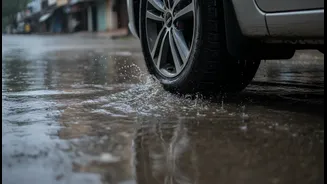
Before you even think of starting your journey, a thorough vehicle check is non-negotiable. Begin with your tyres. They are your only connection to the road, and their ability to grip is severely compromised on wet surfaces. Ensure they have adequate
tread depth—at least 3 mm is recommended for monsoon conditions. Worn-out tyres cannot channel water away effectively, which can lead to a dangerous loss of control. Also, check that your tyres are inflated to the manufacturer's recommended pressure. Next, inspect your windshield wipers. If they leave streaks or judder across the glass, replace them. Poor visibility is a primary hazard in heavy rain, and effective wipers are your first line of defence. Finally, test all your lights: headlights, taillights, brake lights, and turn signals. They are crucial for both seeing the road and being seen by other drivers. Using your low-beam headlights during the day can significantly increase your visibility to others.
Mastering Wet-Road Driving Techniques
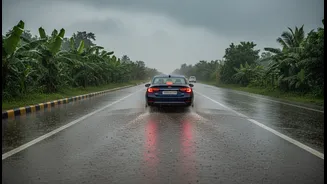
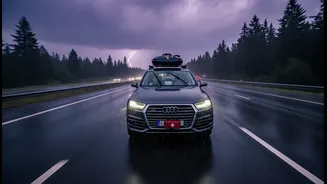
Once on the road, your driving style must adapt to the conditions. The most critical adjustment is to slow down. Reducing your speed gives you more time to react and significantly lowers the risk of hydroplaning. Braking distances can be much longer on wet roads, so increase the gap between you and the vehicle in front to at least four to six seconds. Avoid sudden movements. Gentle acceleration, smooth steering, and gradual braking are key to maintaining traction. One major mistake drivers make is using cruise control in the rain. If you hydroplane while cruise control is engaged, the system can cause the wheels to spin faster, potentially leading to a skid when traction returns. Always maintain manual control of your vehicle.
Understanding and Avoiding Hydroplaning
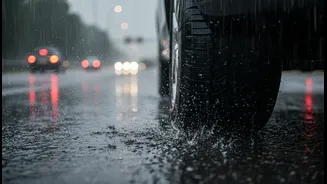
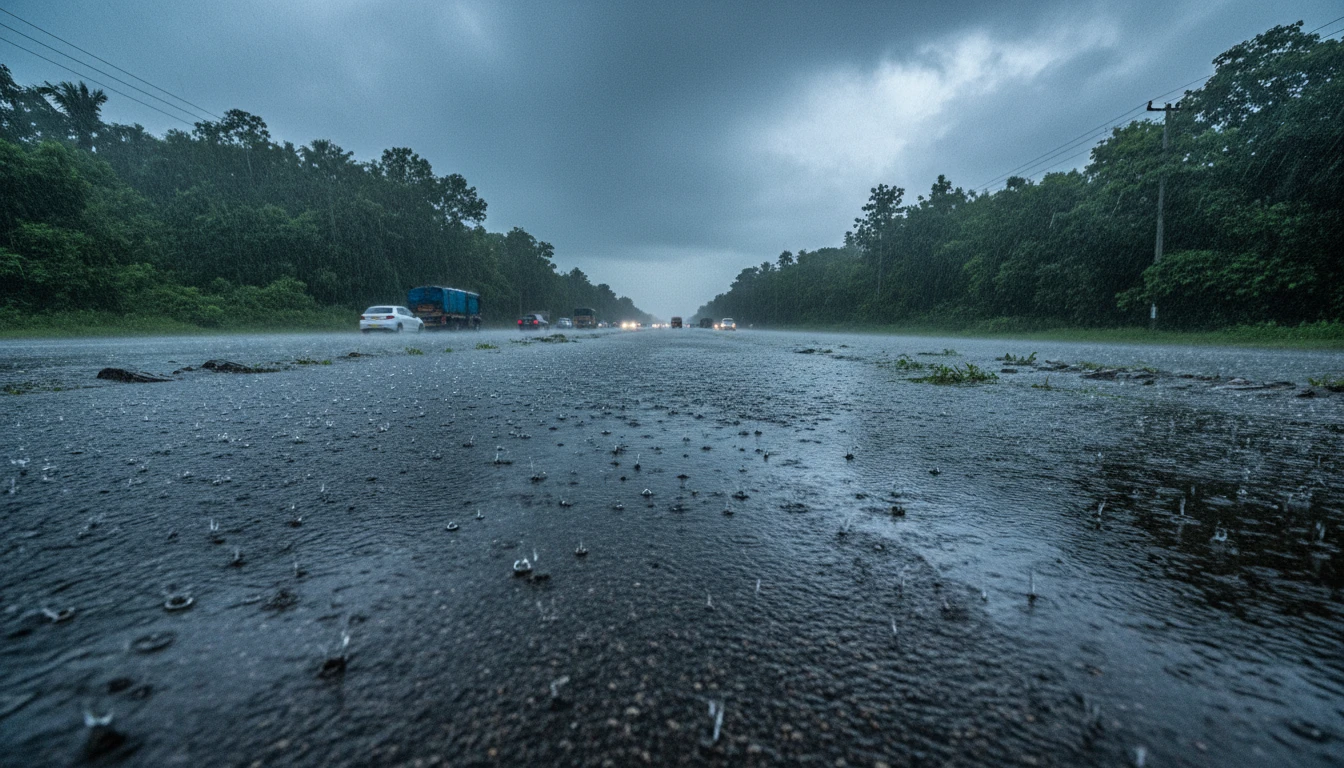
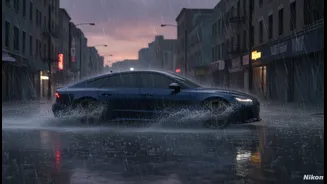
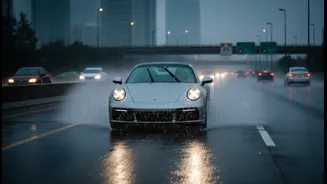
Hydroplaning, or aquaplaning, happens when a layer of water builds up between your tyres and the road surface, causing you to lose steering and braking control. It can occur with just a thin layer of water, especially at higher speeds or if your tyres are worn. The first few minutes of rainfall are often the most dangerous, as the water mixes with oil and debris on the road, creating an exceptionally slick surface. To avoid it, steer clear of puddles and standing water, which can hide deep potholes that may damage your vehicle. If you feel your vehicle begin to hydroplane, it's crucial not to panic. Do not slam on the brakes. Instead, ease your foot off the accelerator and keep the steering wheel straight until you feel the tyres regain their grip on the road.
Navigating Waterlogged Roads and Low Visibility
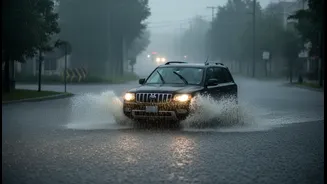
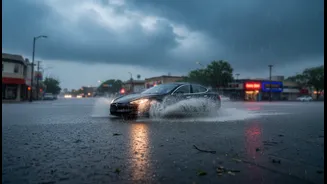
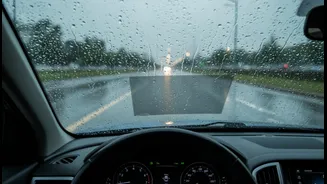
In India, waterlogged streets are a common monsoon menace. Never drive into standing water if you cannot gauge its depth. As little as one foot of water can be enough to make a car float and be swept away. If your car stalls in water, do not try to restart the engine. This can force water into the engine, causing a catastrophic failure known as hydrostatic lock. Instead, turn on your hazard lights, and if the water is rising, abandon the vehicle for higher ground when it's safe to do so. During a downpour, visibility can drop to near zero. Use your low-beam headlights, as high beams will reflect off the raindrops and worsen your vision. If conditions become too severe to see the road or other vehicles clearly, the safest action is to pull over to a secure location like a parking lot, turn on your hazard lights, and wait for the storm to subside.
Packing Your Monsoon Emergency Kit
Being prepared for the worst can turn a crisis into a manageable inconvenience. Your car's emergency kit should be specifically tailored for the monsoon. Essential items include a powerful, waterproof flashlight with extra batteries, a first-aid kit, and jumper cables. A fully charged power bank for your phone is indispensable. It's also wise to carry a tyre inflator, a basic tool kit, and a warning triangle or flares to alert other drivers if you break down. Pack an umbrella, a raincoat, and a dry towel. Keeping non-perishable snacks and a few bottles of water can be a huge comfort if you get stuck in a long traffic jam, a common occurrence during heavy rains.