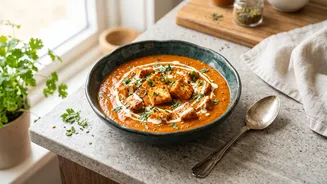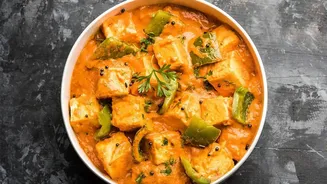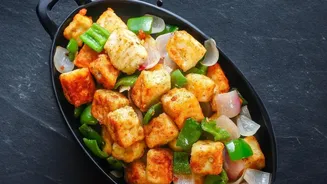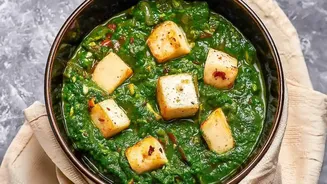




The Foundation: Perfecting Your Masala Base
The soul of any great paneer gravy is its masala base, typically made from onions and tomatoes. The key to a deep, complex flavour and smooth texture isn't a powerful blender, but patience. The technique of 'bhuno' or slow-sautéing is crucial. When you
cook finely chopped or grated onions in ghee or oil over a low, steady flame, their natural sugars caramelise, lending a subtle sweetness and rich brown colour. Cook them until they soften and almost melt into a jam-like consistency. Similarly, ripe tomatoes should be cooked down until they release the oil. A well-cooked base breaks down more easily, ensuring that even a standard Indian mixie-grinder can produce a surprisingly smooth paste without leaving behind a raw taste.
The Secret to Silkiness: Natural Thickeners
The coveted creamy texture of restaurant gravies often comes from more than just cream. The real workhorses are natural thickening agents that add body and richness. The most popular choice is raw cashews. Soaking a handful in hot water for about 15-20 minutes softens them significantly, allowing them to be ground into a fine, luscious paste that dissolves seamlessly into the gravy. A fantastic alternative, especially for those with nut allergies, is 'magaz' or melon seeds, which provide a neutral flavour and incredible body. Poppy seeds ('khus khus') and even blanched almonds are also traditional options. For a lighter but still creamy finish, full-fat yoghurt or 'dahi' is an excellent choice. The trick is to whisk it until smooth and add it to the gravy off the heat or at a very low temperature, stirring continuously to prevent it from curdling.
The Role of Fat and Finishing Touches
Fat is not just a cooking medium; it's a flavour and texture enhancer. While oil works, using ghee provides a nutty aroma and richness that is hard to replicate. Many chefs use a combination of both. The final 'velvet' touch often comes right at the end. While the core creaminess is built by your nut or seed paste, a small splash of cooking cream or a dollop of unsalted butter stirred in just before serving adds a beautiful gloss and an extra layer of richness. For a leaner option, a few tablespoons of milk can also be used to adjust the consistency and add a subtle creaminess. Another restaurant secret is a final sprinkle of 'kasoori methi' (dried fenugreek leaves), crushed between your palms to release its aroma, which gives the dish its characteristic fragrance.
The Grinding and Straining Technique
This is where we directly address the 'no fancy equipment' promise. Your everyday mixie-grinder is perfectly capable of creating a smooth puree if you follow a few simple rules. First, always let the cooked onion-tomato masala cool down completely before grinding. Grinding hot ingredients can create pressure inside the jar and lead to accidents. It also results in a coarser paste. Second, don't overcrowd the jar; grind in batches if necessary, adding a splash of water to help the blades move. For that absolutely flawless, silky-smooth texture, the ultimate home kitchen hack is to strain the ground paste. Pour the puree through a simple fine-mesh sieve ('channi') and use the back of a spoon to press it through. This final step removes any residual coarse bits of tomato skin, onion fibres, or whole spices, guaranteeing a gravy so velvety, no one will believe you didn't use a high-powered blender.