





The Booster's Unplanned Splashdown
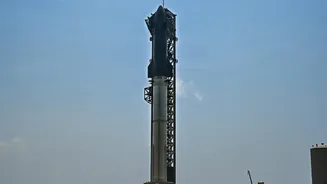
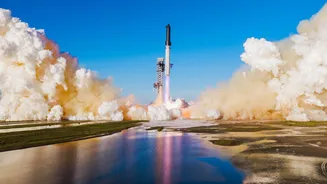
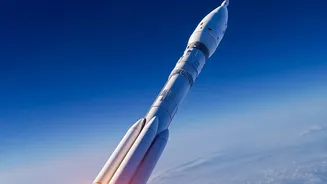
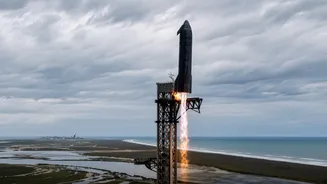
The mission began with a powerful and seemingly perfect liftoff from Starbase, Texas, on November 13. The massive Super Heavy booster, with all 33 of its Raptor engines firing, successfully propelled the Starship upper stage toward space. Following stage separation,
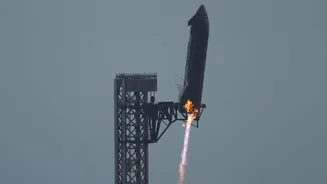
however, things went awry. The booster was meant to fly back to the launch tower for a pinpoint landing and be caught by the giant 'Mechazilla' arms. This maneuver was automatically aborted. Early indications suggest a low fuel mass alarm caused the boostback burn to end prematurely, preventing the booster from safely returning to the tower. Its guidance system then correctly diverted it for a controlled splashdown in the Gulf of Mexico, where it was intentionally destroyed. This marked the loss of another expensive booster, highlighting a persistent challenge in SpaceX's quest for full, rapid reusability.
Starship's Triumph in Orbit
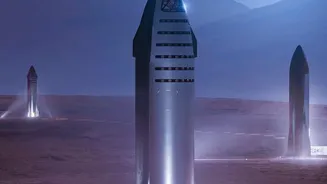
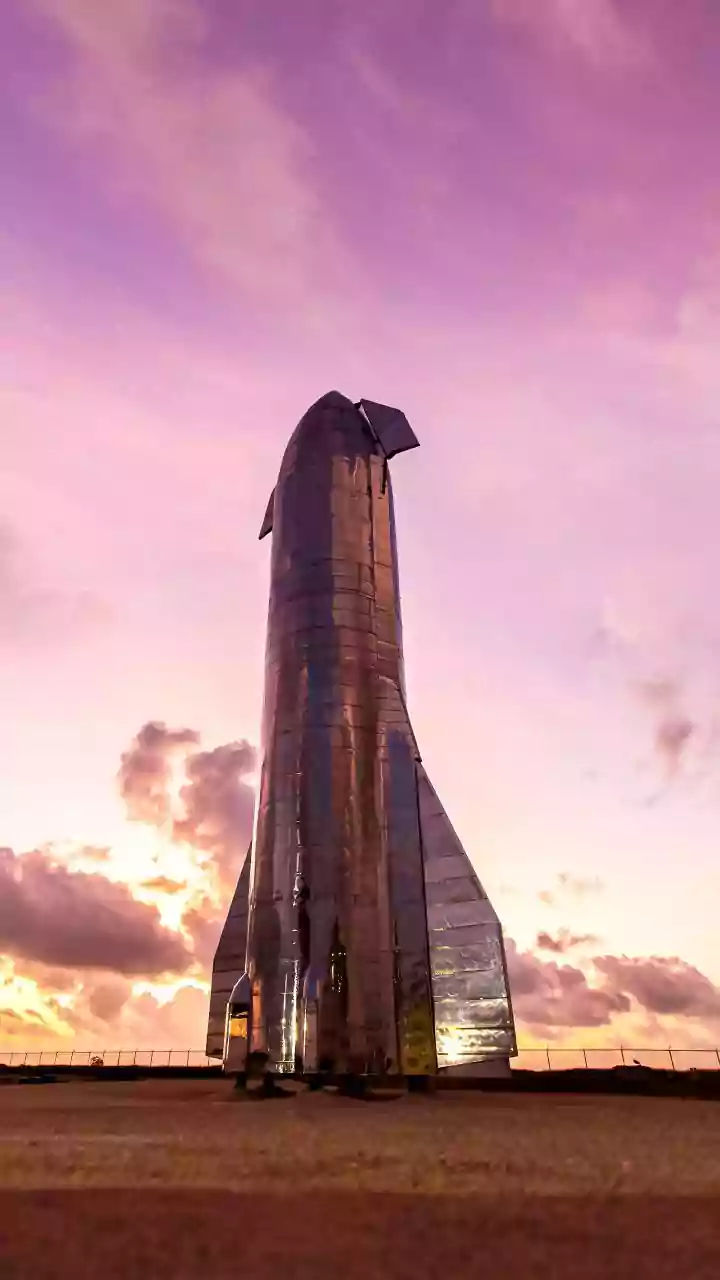
Despite the loss of its first stage, the Starship upper stage, known as Ship 42, continued its mission flawlessly. It successfully ignited its own engines to push into a stable low Earth orbit. This marked the second time a Starship vehicle has reached orbit, a significant achievement on its own. While in space for its record-setting 22.5-hour flight, the spacecraft successfully deployed 26 next-generation Starlink V3 satellites, fulfilling a key commercial objective and demonstrating its capability as a payload delivery platform. The ship completed 14 orbits of Earth, allowing engineers to monitor its systems extensively before attempting its ambitious return journey.
The Holy Grail: A Historic Catch
The mission's most anticipated moment came nearly a day after it launched. After firing an engine to de-orbit, Ship 42 plunged back through the atmosphere and navigated its way back to Starbase. In a sequence that had never been attempted with an orbital-class vehicle, the spacecraft performed a final landing burn, slowed its descent, and was successfully caught by the launch tower's mechanical 'chopstick' arms. This achievement is being hailed as a landmark moment in spaceflight history. While SpaceX had previously caught Super Heavy boosters, recovering an upper stage returning from orbital velocity is a far more complex challenge and a critical step toward the company's goal of making Starship fully and rapidly reusable.
A Successful Failure?
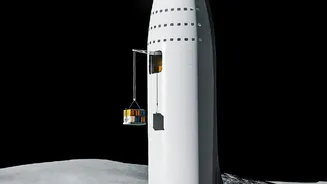
In the world of SpaceX, a test flight that doesn't end in complete success is often seen as a valuable data-gathering exercise. Flight 15 fits this description perfectly. While the loss of the Super Heavy booster was a clear setback, the successful orbital insertion, payload deployment, and, most importantly, the historic catch of the Starship upper stage represent massive victories. The data from the booster's failed return will be crucial for fixing the issue on subsequent flights. Meanwhile, proving the ship catch is possible validates the entire architecture for rapid reusability. Elon Musk has already suggested the recovered Ship 42 could be refurbished and fly again within weeks, a testament to the success of the landing. This flight, a mixture of triumph and failure, ultimately pushes the Starship program much closer to its operational goals of deploying satellites, landing astronauts on the Moon for NASA, and eventually enabling human settlement on Mars.