



The End of an Era
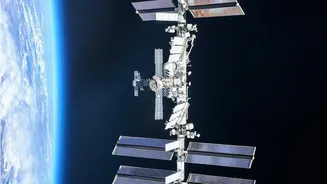
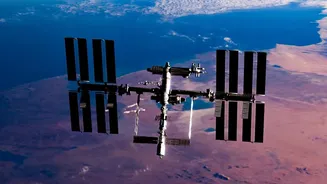
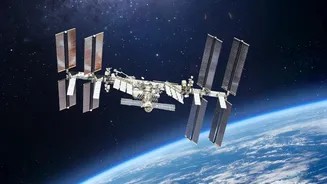
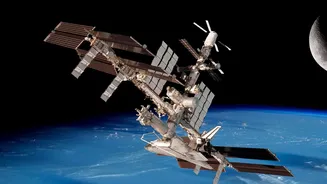
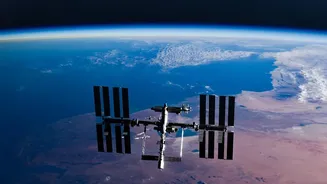
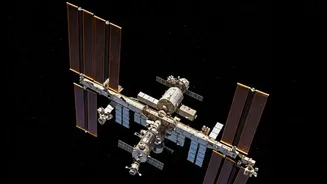
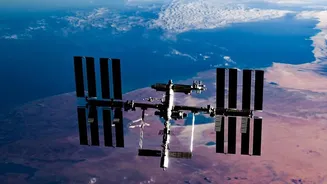
The International Space Station stands as one of humanity's greatest engineering achievements, a symbol of global cooperation that has hosted nearly 300 astronauts from 26 countries. Since 2000, it has been a floating laboratory for groundbreaking research.
However, the station is aging. After decades of service, facing structural fatigue and rising operational costs, NASA and its international partners are planning to deorbit the ISS around 2030. This impending retirement created an urgent question: how does humanity maintain its permanent foothold in low Earth orbit (LEO)? Without a successor, a critical gap in microgravity research and space access would emerge, potentially ceding leadership to other nations.
NASA's New Role: From Owner to Customer
Instead of building a multi-billion-dollar ISS 2.0, NASA is executing one of the most significant policy shifts in spaceflight history: it will become a customer rather than an owner. Through its Commercial Low Earth Orbit Destinations (CLD) program, NASA is funding private companies to design, build, and operate their own space stations. The agency plans to buy services, such as astronaut time and research capacity, from these commercial providers. This model is designed to reduce costs for the American taxpayer, stimulate a competitive marketplace in LEO, and free up NASA's resources to focus on more ambitious deep-space missions to the Moon and Mars. It's a calculated handoff, turning the keys to near-Earth space over to the private sector.
Meet the New Landlords of LEO
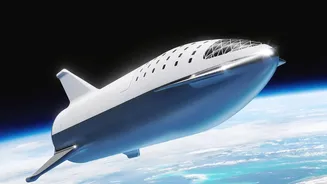
Several companies are now in a race to become the first commercial landlords in orbit. Axiom Space is building a station that will initially attach modules to the ISS before separating to become a free-flying platform. The company has already conducted private astronaut missions to the station, laying the groundwork for its future operations. Another major contender is a joint venture between Voyager Space and Airbus, which is developing the Starlab station, a dedicated science and research hub scheduled to launch before the ISS is decommissioned. Meanwhile, Jeff Bezos's Blue Origin, in partnership with Sierra Space, is developing Orbital Reef, which they have branded as a "mixed-use business park" in space. These stations, along with others like Vast's Haven-1, are all vying for a piece of the emerging orbital economy.
An Emerging Economy in Orbit
This shift is not just about replacing an old lab; it's about creating a whole new economy. Private stations won't be solely dedicated to government-funded science. Their business models envision a diverse portfolio of customers. This includes in-space manufacturing of unique materials like high-purity fiber optics or 3D-printed human organs, which are only possible in microgravity. It also includes sovereign astronaut programs for nations without their own space agencies, media and entertainment projects, and, of course, space tourism for wealthy adventurers. Orbital Reef's concept of a "business park" with leasable space and standard interfaces for various clients captures this new paradigm perfectly. It transforms LEO from a scientific frontier into a commercial real estate market.
Redefining 'Astronaut' and 'Mission'
The very definition of an astronaut is set to change. For decades, the title was reserved for a select few, chosen and trained by government agencies. The new commercial era will open the airlock to private citizens from all walks of life. We will see corporate researchers, industrial technicians, artists, and tourists going to space to do a job or for the experience of a lifetime. Missions will no longer be defined solely by scientific discovery or national prestige. A mission could be to test a new alloy, film a movie scene, or simply gaze out the window at Earth. This diversification of people and purpose is the true redefinition of humanity's presence in orbit—it becomes less about exploration as a national project and more about space as a place for human activity of all kinds.