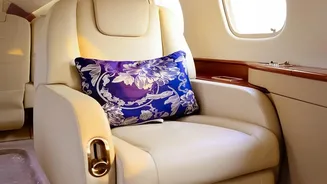







For the Dedicated Sleeper
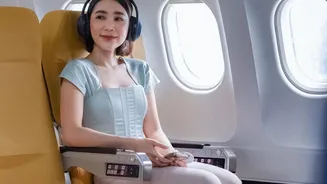
If your primary goal is to arrive well-rested, the window seat is your best friend. It offers a solid surface to lean against, preventing you from slumping onto a stranger's shoulder. You also control the window shade, allowing you to block out harsh
light. Most importantly, you won't be disturbed by neighbours needing to use the restroom. For optimal quiet, try to select a seat a few rows away from the galley and lavatories, as these areas have constant foot traffic and noise. On a train, a window seat still offers a surface to lean on, but also be mindful of which side of the train will face the sun during your journey to avoid being woken by a direct glare.
For the Productive Professional
When you need to turn your seat into a temporary office, priorities shift. An aisle seat can be advantageous, offering the freedom to get up, stretch, and grab something from the overhead bin without disrupting your neighbours. However, the constant traffic of crew and other passengers can be a major distraction. The bulkhead seat—the one directly behind a cabin divider—can be a strong contender. You get extra legroom and, crucially, no one can recline their seat into your laptop screen. The downside is that all your belongings must go into the overhead bin for takeoff and landing, and the tray table is often in the armrest, making it smaller and less stable. Consider what matters more: freedom of movement or a protected workspace.
For the Anxious Traveller
Feeling comfortable and in control is key when you're a nervous flyer. Experts suggest choosing a seat over the wings, as this is the aircraft's centre of gravity and where you'll feel the least turbulence. If feeling confined is a major trigger, an aisle seat can provide a sense of escape and allows you to stand and stretch more easily. Conversely, if seeing the horizon gives you a sense of stability, a window seat over the wing is ideal. Avoid the very back of the plane, as motion can feel more pronounced there. On trains, a forward-facing seat can help if you are prone to motion sickness.
For the Parent Flying with Children
Travelling with little ones presents a unique set of challenges. Many parents prefer bulkhead seats because the space in front can serve as a small, contained play area on the floor. It also means your kids aren't kicking the back of another passenger's seat. Being close to a lavatory is another major plus. Bulkhead seats are often where bassinets can be mounted on long-haul flights, so be sure to request this with the airline in advance. On trains, look for seating configurations with a table in the middle, which allows for face-to-face interaction and provides a surface for snacks, games, and colouring books to keep kids occupied.
For the Traveller on a Tight Connection
When you have a race to your next gate, every second counts. The single most important factor for a speedy exit is sitting as close to the front of the plane as possible. An aisle seat will give you a slight edge over your row-mates, allowing you to get into the aisle and grab your bag from the overhead bin the moment the seatbelt sign turns off. Even a few rows can make a significant difference in how quickly you deplane, especially on a full flight. Pre-booking a seat in one of the first few rows of your cabin is a small investment that can save you a lot of stress.
For the Scenery and Experience Seeker
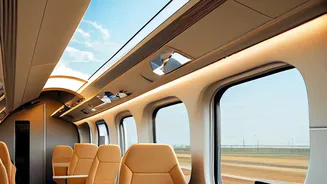
If the journey itself is part of the destination for you, the choice is obvious: the window seat. It offers a front-row view to stunning landscapes, cloud formations, and city lights. For train journeys through scenic routes, a window seat is non-negotiable. To get the best views, do a little research on your flight or train path. For example, on a flight arriving into a coastal city, one side of the plane might offer dramatic ocean views while the other sees mainly land. For a daytime train journey, consider the direction of the sun to avoid spending hours squinting into the light instead of enjoying the view.