

Why Mobility Matters for Desk Workers
Sitting for prolonged periods puts your body in a compromised position. Your hip flexors shorten, your glutes can weaken from underuse, and your upper back tends to round forward as you lean toward your screen. This combination doesn't just feel uncomfortable;
it can lead to poor posture, muscle imbalances, and chronic aches. The goal of a mobility routine isn't just to stretch tight muscles but to actively move your joints through their full range of motion. This helps to reawaken dormant muscles, improve circulation, and remind your body how to move freely outside of the seated position it's in all day. A mere 10 minutes can be enough to reset your system.
1. Cat-Cow: Awaken the Spine
This foundational yoga pose is perfect for easing stiffness along the entire length of your spine, from your neck to your tailbone. Start on your hands and knees in a tabletop position, with your wrists aligned under your shoulders and knees under your hips. For the 'Cow' pose, inhale as you drop your belly towards the floor, lift your chest and tailbone, and look forward. For the 'Cat' pose, exhale as you press into your hands, round your spine toward the ceiling, and tuck your chin to your chest. Gently flow between these two positions for 60 seconds, syncing your breath with the movement. This helps to gently mobilize each vertebra.
2. Seated Thoracic Rotations: Unwind the Upper Back
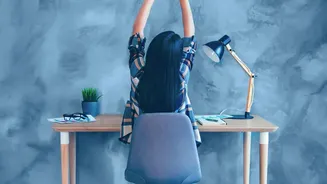
Your mid-back, or thoracic spine, is designed to rotate, but desk work often keeps it locked in place. Improving its mobility can relieve strain on your neck and lower back. Sit tall at the edge of your chair with your feet flat on the floor. Cross your arms over your chest, placing your hands on your shoulders. Keeping your hips stationary, slowly rotate your torso to the right as far as is comfortable. Pause, then return to the center and rotate to the left. Focus on the movement coming from your ribcage and upper back, not your lower back. Perform 8-10 slow, controlled rotations on each side.
3. 90/90 Hip Switches: Unlock Tight Hips
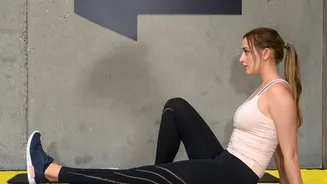
This exercise is fantastic for improving internal and external rotation in the hips, which become notoriously tight from sitting. Sit on the floor with both knees bent at a 90-degree angle. Your front leg should be turned out, with the shin parallel to the front of your body, and your back leg should be turned in. Keeping your torso upright, gently rotate your hips to switch your legs to the opposite side, so the position is mirrored. If you're very tight, you can use your hands for support on the floor behind you. Move slowly and with control for 60-90 seconds to open up the hip capsules.
4. Kneeling Hip Flexor Stretch: Counteract Chair Pose
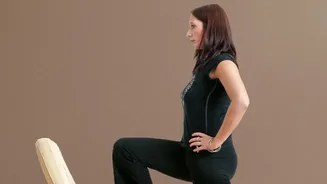
Sitting shortens the muscles at the front of your hips. This simple stretch helps to lengthen them. Kneel on one knee, placing a cushion underneath it if needed. Place your other foot flat on the floor in front of you with your knee bent at 90 degrees. Gently tuck your pelvis under and squeeze the glute of the kneeling leg. You should feel a stretch at the front of your hip. To increase the stretch, you can gently lean forward, but avoid arching your lower back. Hold for 30-45 seconds on each side.
5. Glute Bridges: Reactivate Your Glutes
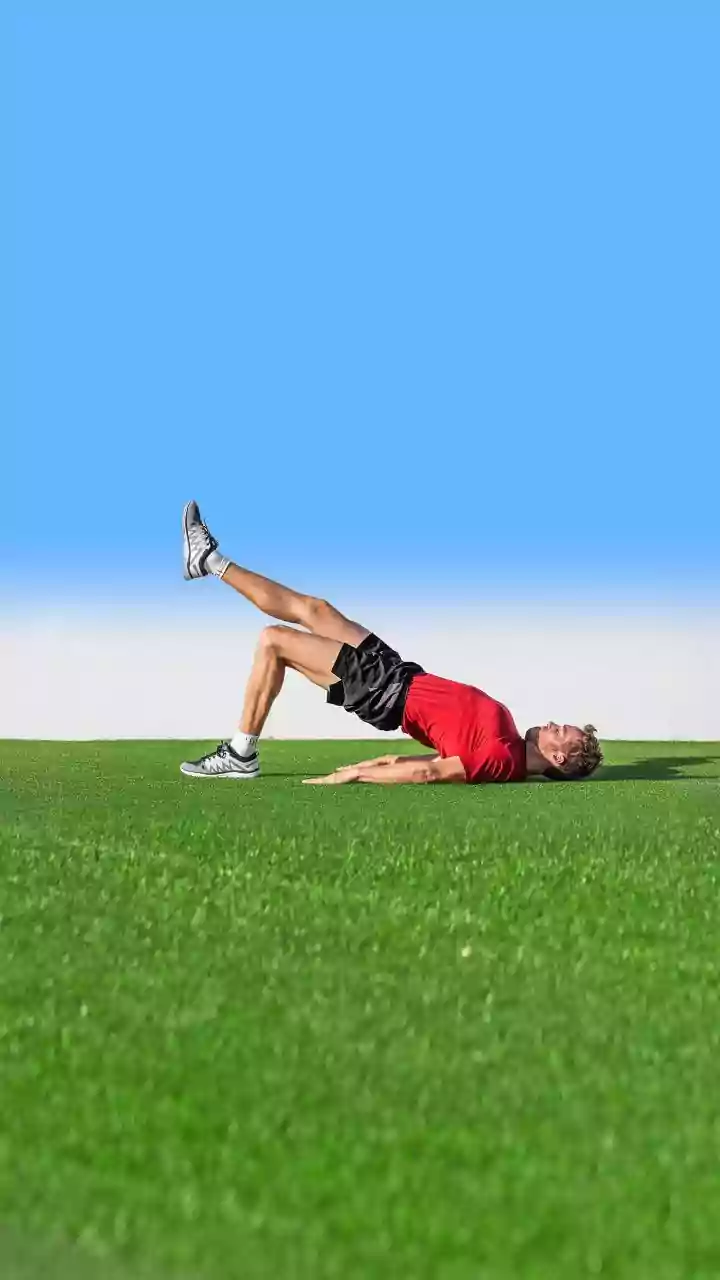
When you sit all day, your glute muscles can become inactive, a condition sometimes called 'dormant butt syndrome'. Glute bridges help wake them up, which is crucial for supporting your lower back and pelvis. Lie on your back with your knees bent, feet flat on the floor about hip-width apart, and your arms by your sides. Press through your heels to lift your hips off the floor until your body forms a straight line from your shoulders to your knees. Squeeze your glutes at the top, hold for a moment, and then slowly lower back down. Aim for 12-15 repetitions.
6. Deep Squat Hold: A Full-Body Reset
The deep squat is a fundamental human movement pattern that can help decompress the spine and improve ankle, knee, and hip mobility. Stand with your feet slightly wider than shoulder-width apart, toes pointed slightly out. Lower your hips down as if sitting in a low chair, going as deep as you can while keeping your heels on the ground and your back relatively straight. You can hold onto a desk or doorframe for balance. Rest your elbows on the inside of your knees to gently press them outward. Hold this position for 30-60 seconds, breathing deeply. It’s a powerful way to undo the effects of being stuck in a chair.