



What Is a Planetary 'Convergence'?
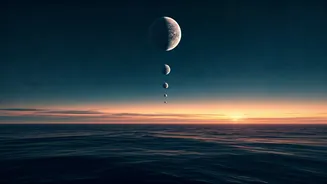
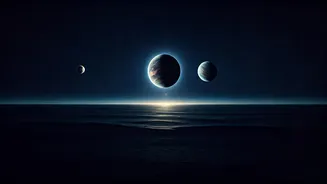
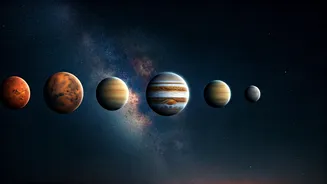
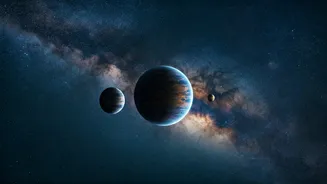
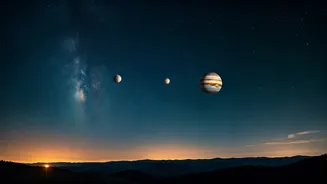
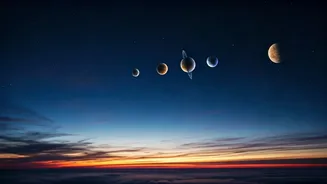
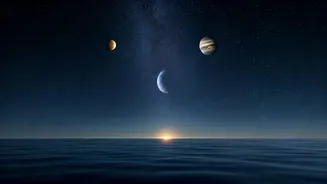
When we say planets are 'converging' or in 'conjunction', it doesn't mean they are actually close to each other in space. These planets are still hundreds of millions of kilometres apart! What it means is that from our viewpoint here on Earth, they appear
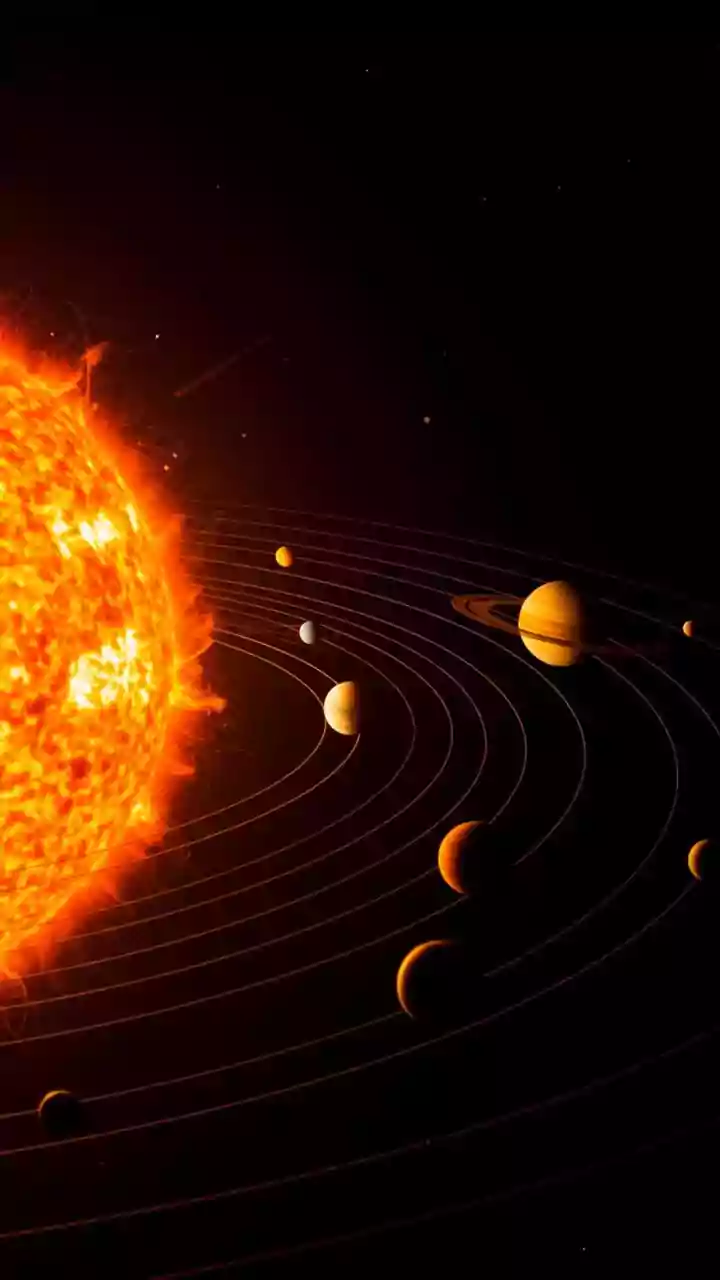
to line up in a small, specific section of the sky. Think of it like seeing two distant mountains appear side-by-side from a particular spot on a highway. You know they're far apart, but from your perspective, they form a single, stunning picture. These alignments are special because each planet orbits the Sun at a different speed and on a different plane. For them to line up in our sky is a matter of cosmic geometry and perfect timing.
Meet the Celestial Trio
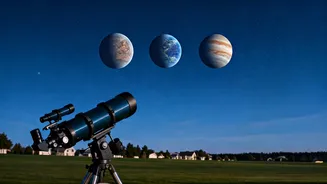
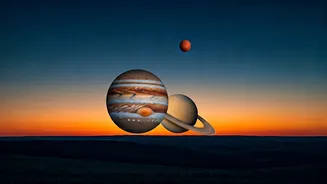
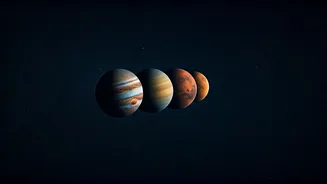
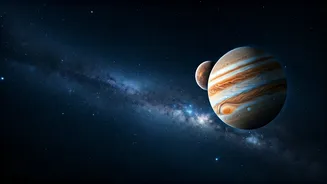
The stars of tonight’s show are three of our solar system's most fascinating members: Jupiter, Mars, and Saturn. You'll be able to distinguish them from the surrounding stars because planets don't twinkle; they shine with a steady, constant light. **Jupiter:** The king of the planets will be the brightest of the three, appearing as a brilliant, unwavering point of light. Even with the naked eye, its commanding presence is unmistakable. **Mars:** Look for the famous 'Red Planet'. It will have a distinct, slightly reddish or orange hue that sets it apart from the others. This colour comes from the iron oxide—essentially rust—on its surface. **Saturn:** The ringed giant will appear as a steady, yellowish-white point of light. While you won't see its famous rings without a telescope, knowing you're looking at the most iconic planet in our solar system is a thrill in itself. It will likely be the faintest of the three.
Your Guide to Spotting Them
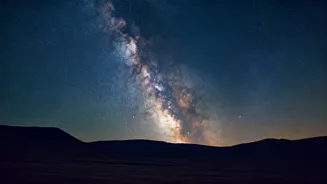
The best part about this event is its accessibility. You don’t need special equipment or a remote location, though a darker sky always helps. For the best viewing experience in India, this celestial gathering is most prominent in the pre-dawn sky. **When to Look:** The ideal time is about 60 to 90 minutes before your local sunrise. This is when the sky is dark enough for the planets to shine brightly but the sun hasn’t begun to wash them out. Check your local sunrise time and set an early alarm! **Where to Look:** You'll want to find a spot with a clear, unobstructed view of the eastern horizon. This could be a rooftop, a balcony facing east, or a nearby park or open field away from tall buildings. The planets will be clustered together in the sky, rising from the east.
Tips for the Best Experience
To make the most of this celestial show, follow these simple tips: 1. **Give Your Eyes Time:** Step outside about 15-20 minutes before you start looking. This allows your eyes to adjust to the darkness, making it much easier to spot fainter objects like Saturn. 2. **Go Low-Tech:** You don't need a telescope. In fact, a wide-field view with just your eyes or a pair of binoculars is often better for appreciating the alignment of multiple planets at once. 3. **Use a Stargazing App:** If you’re unsure which dot is which, a free stargazing app like Stellarium or SkyView can be your best friend. Just point your phone at the sky, and the app will identify the planets, stars, and constellations for you. 4. **Find a Dark Spot:** While these planets are bright enough to be seen from most cities, the view is always more breathtaking with less light pollution. If you can, get to a place with fewer streetlights for a truly mesmerising experience.