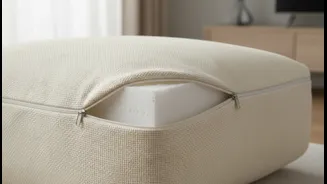









The Hidden Problem Inside Your Cushions
Your sofa and chair cushions are made of porous foam, which acts like a sponge for moisture. In areas with high humidity, or from small spills and even body sweat, this moisture gets trapped deep inside the foam. This creates the perfect dark, damp breeding
ground for mould and mildew spores that are always present in the air. While you might see a few spots on the surface, the real damage happens within the foam itself—a place that is nearly impossible to clean thoroughly. Once mould takes hold inside the cushion, it releases that signature musty smell and begins to degrade the foam, reducing the lifespan and comfort of your furniture.
Surface Cleaning Isn't Enough
When you spot mildew on a standard cushion, the typical response is to spot-clean the fabric. While this might remove the visible stain, it does nothing to address the fungal growth that has likely penetrated the foam core. Attempts to clean the foam itself are often ineffective and can even make the problem worse by adding more moisture. Trying to dry a saturated foam cushion can take days, during which mould can flourish. Some sources suggest using bleach or vinegar solutions, but these can damage the foam and may not eliminate all the spores hidden deep within. In many cases, once mould has established itself inside a cushion, the only safe option is to replace it entirely, which can be a costly exercise.
The First Line of Defence: A Washable Barrier
This is where washable cushion shells, or covers, become essential. A removable, machine-washable cover acts as a protective barrier between the environment and the vulnerable foam core. It catches dust, pollen, food crumbs, and most importantly, moisture, before it has a chance to soak into the cushion. By regularly washing the covers, you remove these contaminants and mould spores, effectively stopping fungal growth before it can even begin. This simple maintenance routine is far more effective than any attempt to clean an already-infested cushion, making it a proactive solution rather than a reactive one.
What Makes a Shell 'Anti-Mould'?
While any washable cover is a step up, true anti-mould shells offer enhanced protection. These fabrics work in a few key ways. Many are made from synthetic fibres like polyester, acrylic, or olefin, which are inherently resistant to absorbing moisture. Their tightly woven structure also presents a physical barrier that is harder for mould spores to penetrate. Furthermore, some fabrics are treated with antimicrobial agents during the manufacturing process. These treatments, which can involve compounds of silver or zinc, actively inhibit the growth of fungi, mould, and bacteria on the fabric's surface, providing an extra layer of defence.
A Smart Investment for Health and Home
Investing in washable, anti-mould cushion shells is not just about keeping your furniture clean; it's about protecting your financial investment and your family's health. Replacing mould-infested foam cushions can be expensive. A good set of protective covers costs significantly less than replacing an entire set of cushions or a whole sofa. More importantly, chronic exposure to mould spores can cause a range of health issues, from allergic reactions like sneezing, skin irritation, and itchy eyes to more serious respiratory problems, especially for those with asthma or compromised immune systems. By preventing mould growth in your furniture, you contribute to better indoor air quality and a healthier living environment for everyone in your home.