






The Soaring Cost of Sick Days and Lost Work
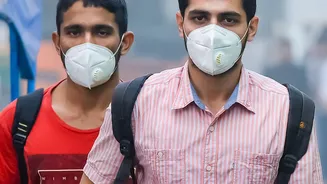
The most direct economic hit from air pollution, beyond healthcare expenses, is on labour productivity. A joint report by FICCI and EY estimated that air pollution could be costing India as much as 9.5% of its GDP annually. A significant portion of this
comes from businesses losing an estimated $95 billion each year due to lower worker efficiency, increased absenteeism, and operational disruptions. Studies show that on days with high pollution, worker productivity can fall by 8% to 10%. This translates to a staggering 1.3 billion working days lost annually as employees fall ill or care for sick family members. The impact is felt across sectors, from IT, which loses around $1.3 billion a year to pollution-induced productivity loss, to labour-intensive industries where workers are directly exposed to toxic air. This loss of output due to premature deaths and illness was estimated to be 1.36% of India's GDP in 2019 alone.
When Consumers Stay Home
Pollution doesn't just keep workers from their jobs; it keeps customers from businesses. When air quality plummets, people choose to stay indoors, delivering a direct blow to the retail and hospitality sectors. Analysis has shown that consumer spending can be reduced by 1.3%, which amounted to a loss of $22 billion in 2019, as people avoid exposure to pollutants. Severe pollution episodes, particularly in major hubs like Delhi-NCR, lead to a noticeable drop in foot traffic for restaurants and shops. This creates a recurring 'pollution tax' on businesses, which face empty aisles and lower sales during the smoggiest months. This behavioural shift not only hurts immediate revenue but also disrupts supply chains when restrictions are placed on transport to curb emissions, increasing operational costs for businesses.
A Smokescreen for Tourism
India's rich cultural heritage, from the Taj Mahal to the bustling streets of Delhi, is a major draw for international tourists. However, the persistent haze is becoming a powerful deterrent. Tour operators report that an increasing number of travellers are requesting changes to their itineraries to avoid pollution-affected regions like Delhi, Agra, and parts of Rajasthan, opting instead for South India or hill stations. Studies have noted a correlation between spikes in pollution and a drop in tourist arrivals and booking enquiries. This isn't just about aesthetics; countries like the UK and Canada have issued travel advisories, warning citizens, especially vulnerable groups, about the health hazards of winter pollution in northern India. The economic cost is substantial, with one World Bank study suggesting air pollution chokes India's tourism industry to the tune of billions of dollars each year.
The Toll on Agriculture
The crisis extends far beyond city limits into India's agricultural heartland. Pollutants like ground-level ozone and particulate matter inflict direct damage on crops. Particulate matter can settle on leaves, blocking sunlight and stunting photosynthesis, while ground-level ozone damages plant cells and interferes with growth. This 'silent killer' for crops leads to significant yield losses. Studies indicate that ozone pollution can reduce wheat yields by 5-11% and rice yields by 3-6%. In some heavily polluted regions of the Indo-Gangetic plains, the combined effect of pollutants can slash wheat yields by over 30%. This not only threatens the livelihoods of farmers but also has profound implications for national food security and can lead to contaminants like heavy metals entering the food chain.
A Drag on Long-Term Growth
The cumulative effect of these costs acts as a significant drag on India's overall economic growth. A World Bank paper found that a median annual increase in PM2.5 concentrations reduces a district's year-on-year GDP growth by 0.56 percentage points. Beyond the immediate numbers, chronic pollution erodes long-term human capital, India's most valuable asset. It impacts children's cognitive development and drives skilled professionals to consider leaving polluted cities. Furthermore, poor air quality can deter foreign investment, as companies may be hesitant to bear the additional costs and health burdens of setting up operations in a polluted area. Experts argue that addressing air pollution is not just a health or environmental issue, but a core economic necessity to secure the country's future growth and competitiveness.