



A Pathfinder for Deep Space
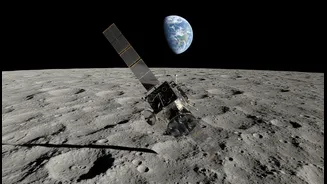
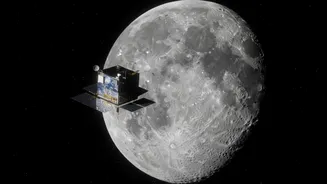
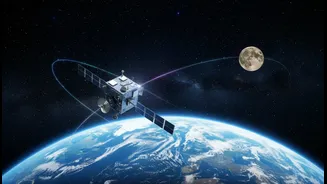
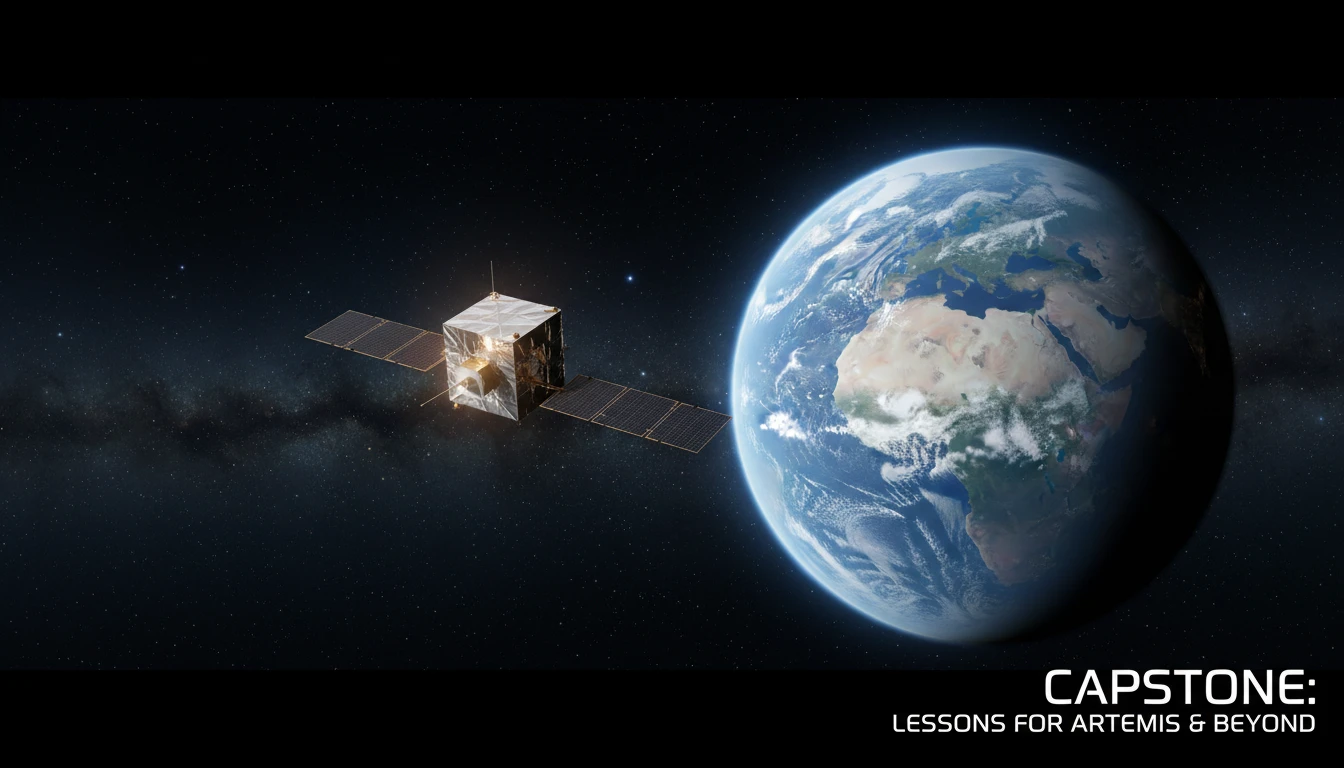
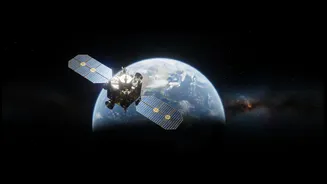
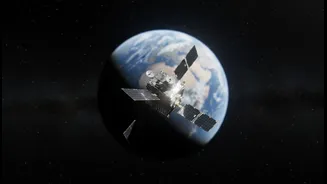
Launched in June 2022, the Cislunar Autonomous Positioning System Technology Operations and Navigation Experiment, or CAPSTONE, is a pathfinder mission in every sense. Weighing just 55 pounds, this small satellite, also known as a CubeSat, was tasked
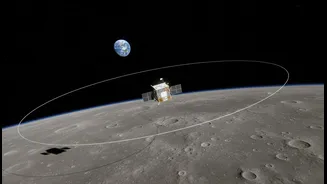
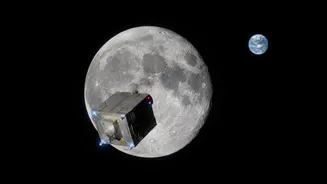
with a monumental job: to be the very first spacecraft to enter and operate in a unique and challenging lunar orbit. Developed through a partnership between NASA and the private company Advanced Space, CAPSTONE's primary goal was to reduce the risks for future, more complex missions by testing critical technologies in the harsh environment of deep space. After successfully completing its primary and extended mission objectives, NASA concluded its activities in June 2026, marking the mission a resounding success.
Testing a Unique Lunar Highway
At the heart of CAPSTONE's mission was the near-rectilinear halo orbit (NRHO). This highly elliptical path is located at a precise balance point between the gravity of the Earth and the Moon. This gravitational equilibrium provides a stable environment, meaning spacecraft in this orbit require very little fuel to stay in place, making it ideal for long-term missions. The NRHO is not just a random location; it's the intended orbit for the Gateway, a future space station that will serve as a staging point for astronauts on Artemis missions to the lunar surface. Before sending a multi-billion-dollar space station, NASA needed to be sure the orbit was as stable as their models predicted. CAPSTONE was the scout sent to validate the route, successfully demonstrating that the orbit's power and propulsion requirements were exactly as forecasted.
Smarter Navigation, Less Earth-Dependence
Beyond testing the orbit, CAPSTONE had another crucial objective: to demonstrate autonomous navigation. As humanity pushes farther into the solar system, spacecraft cannot constantly rely on commands from Earth. The CAPSTONE mission tested a pioneering technology that allows a spacecraft to determine its own position by communicating directly with another orbiter—in this case, NASA's Lunar Reconnaissance Orbiter (LRO). This spacecraft-to-spacecraft navigation system, called CAPS, allows for positioning without needing to 'phone home' to the Deep Space Network on Earth, a critical step toward enabling a more self-sufficient and robust presence in deep space. Its extended mission further tested advanced software for autonomous maneuver planning and resilient communications.
The Power of Being Small
CAPSTONE’s success highlights a major shift in space exploration strategy. Traditionally, space missions have been synonymous with enormous, expensive, and decade-long projects. Small spacecraft, or 'smallsats,' are changing that paradigm. Their lower cost and faster development time allow for more frequent missions and a greater willingness to test new, high-risk technologies. If a smallsat mission fails, the financial and programmatic loss is significantly smaller than that of a flagship mission. This makes them perfect for pathfinder roles like CAPSTONE's, where the goal is to prove new concepts and reduce uncertainty. By validating the NRHO and autonomous navigation, the 55-pound CAPSTONE de-risked operations for the much larger and more expensive Gateway and Artemis missions to follow.
Gateway to the Artemis Generation
Ultimately, every piece of data sent back from CAPSTONE directly informs NASA's Artemis program, which aims to establish a sustainable human presence on and around the Moon. The mission provided operational experience that will be vital for the Gateway lunar outpost, from understanding the nuances of station-keeping in the NRHO to building confidence in autonomous systems. It served as the first commercial U.S. mission to the Moon, proving that public-private partnerships can successfully pioneer new frontiers. After its NASA-led phase, the spacecraft will continue to be operated by Advanced Space, serving as an ongoing testbed for new technologies. This small but mighty explorer has successfully forged a new path, making the ambitious goals of the Artemis generation feel closer and more achievable than ever.