




The Old Way: Throwaway Rockets
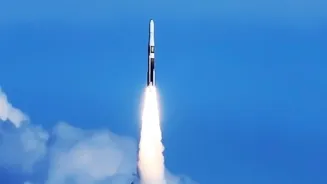
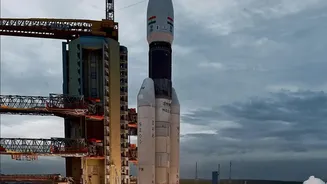
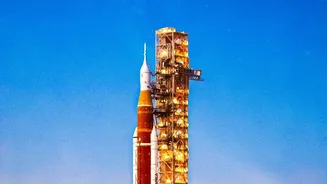
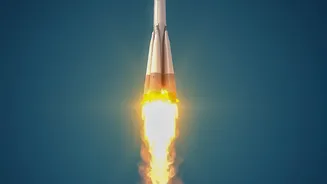
Imagine if after every single flight, an airline had to discard its multi-million dollar aircraft. Air travel would be impossibly expensive for almost everyone. For decades, this has been the reality of space exploration. Most rockets have been expendable
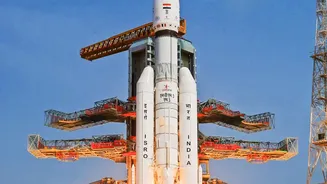
launch vehicles (ELVs), meaning they are built for a single mission. The most expensive and complex parts, the rocket stages, are discarded after they burn through their fuel, falling into the ocean or burning up in the atmosphere. This “use-and-throw” model is precisely why accessing space has been so costly. The price of a launch includes not just the fuel and operational costs, but the entire price tag of a brand-new, precision-engineered rocket that will be destroyed minutes after take-off.
The New Era: Reusable Launch Vehicles
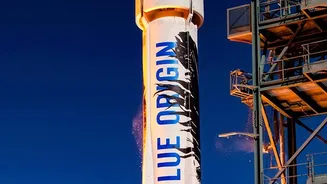
A Reusable Launch Vehicle (RLV) fundamentally changes this economic model. Instead of being discarded, the most valuable parts of the rocket are designed to survive the mission and return to Earth for reuse. The first stage of a rocket, which provides the initial powerful thrust to leave the ground, can constitute up to 80% of the vehicle's total cost. By developing a system to safely recover and reuse this stage, the cost per launch can be reduced dramatically. After an initial investment in development, subsequent launches primarily have to cover the cost of fuel, refurbishment, and operations, rather than building an entire new rocket from scratch. This is the core principle behind ISRO's ambitious RLV program.
Meet 'Pushpak': ISRO’s Winged Vehicle
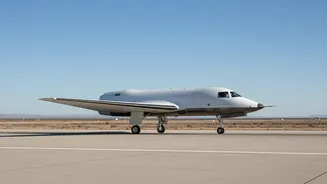
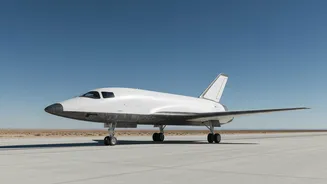
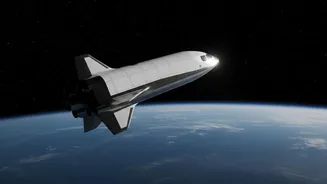
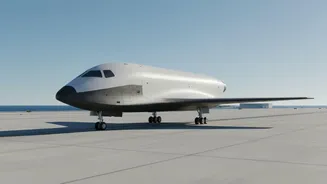
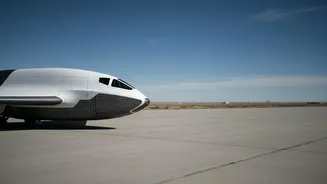
ISRO’s answer to the reusability challenge is a winged vehicle technology demonstrator named 'Pushpak'. This vehicle has been the star of a series of crucial tests known as the Landing Experiments (LEX). In these tests, conducted at the Aeronautical Test Range in Chitradurga, Karnataka, Pushpak was carried to a high altitude by an Air Force helicopter and released. From there, it had to autonomously navigate its way to a runway and perform a perfect, high-speed horizontal landing, much like an aircraft. The final test in the series, LEX-03, saw Pushpak land successfully at over 320 km/h, even under challenging wind conditions, proving the robustness of its autonomous guidance and control systems. Critically, the winged body and flight systems from the second test were reused for the third, demonstrating the core reusability concept in practice.
Connecting Technology to Cost Savings
So, how does a successful landing translate to slashing launch expenses? Every time Pushpak or a future operational vehicle like it lands successfully, ISRO saves the massive cost of building a new first stage. The goal is to create a system where the vehicle can be inspected, refurbished, and prepared for its next mission relatively quickly and cheaply. This model has the potential to reduce the cost of access to space by up to 80%. ISRO's specific target is to bring down the cost per kilogram to Low Earth Orbit significantly, from tens of thousands of dollars to potentially as low as a few thousand. This makes launching satellites for communication, Earth observation, and scientific research far more affordable for both government and commercial clients.
The Road Ahead and Global Competition
While the successful landing experiments are a monumental step, the journey to a fully operational, two-stage-to-orbit reusable launch vehicle is still long. The next major milestone for ISRO is the Orbital Re-entry Experiment (OREX). This will involve a larger vehicle being launched into orbit on a rocket before it detaches, re-enters the atmosphere at hypersonic speeds, and returns to land on a runway. This test will validate the vehicle's heat shields and its ability to handle the extreme conditions of re-entry. Successfully mastering this technology is crucial for India to enhance its position in the competitive global launch market, currently dominated by players like SpaceX who have already proven the economic viability of reusable rockets. ISRO's progress with Pushpak shows India is on a firm path to becoming a key player in this new, more sustainable era of space exploration.