



Our Familiar Earthly Clock
On Earth, our sense of time is built on a simple, reliable rhythm. A 'day' is the roughly 24-hour period it takes for our planet to spin once on its axis, giving us the cycle of sunrise and sunset. A 'year' is the approximately 365 days it takes for Earth to complete
one full orbit around the Sun. We experience 365 sunrises and sunsets during one trip around our star. This relationship feels intuitive and normal. But in the grand theatre of the solar system, 'normal' is relative, and Venus is the ultimate proof that planetary mechanics can be incredibly strange.
Defining Cosmic Time
To understand Venus, we first need to be precise about what a 'day' means. Astronomers use two main definitions. A 'sidereal day' is the time it takes for a planet to complete one full 360-degree rotation on its axis relative to distant stars. This is its true rotational period. A 'solar day' is the time it takes for the Sun to appear in the same position in the sky again, like from one noon to the next. On Earth, these two are very close (a sidereal day is about 23 hours and 56 minutes). A 'year', meanwhile, is straightforward: it's the time taken to complete one orbit around the Sun. The headline's mind-boggling claim hinges on the sidereal day.
Venus by the Numbers
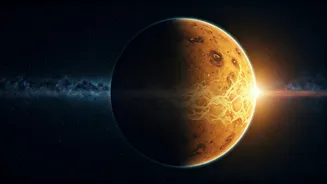
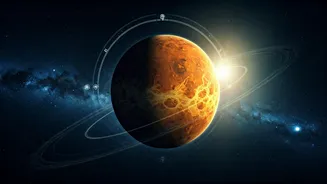
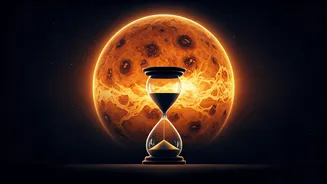
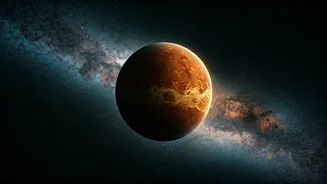
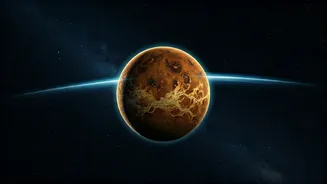
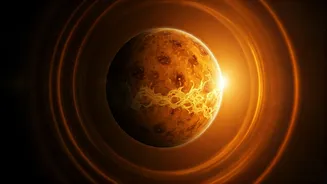
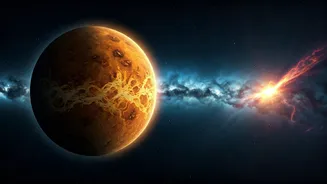
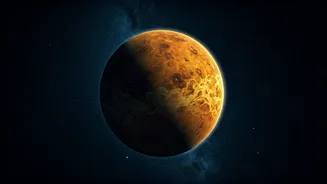
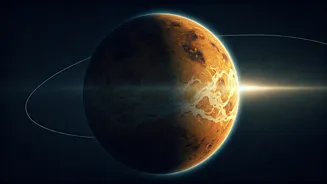
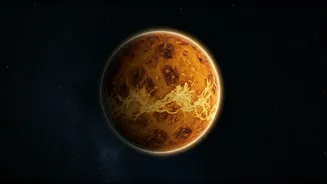
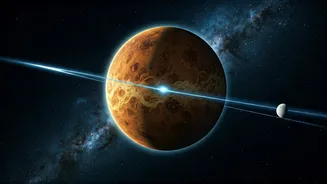
Here's where it gets weird. Venus takes about 225 Earth days to complete one orbit around the Sun. This is its year. So, a Venusian year is significantly shorter than an Earth year. However, Venus rotates on its axis incredibly slowly. One full 360-degree spin—its sidereal day—takes approximately 243 Earth days. So, yes, its day (243 Earth days) is indeed longer than its year (225 Earth days). It completes an entire orbit before it has even finished a single rotation. This makes Venus unique in our solar system. No other planet has a day that outlasts its year.
A Planet Spinning the Wrong Way
What makes Venus even stranger is its 'retrograde' rotation. While most planets, including Earth, spin counter-clockwise on their axis, Venus spins clockwise. If you could stand on the surface of Venus, you would see the Sun rise in the west and set in the east. This backward and extremely slow spin is a major astronomical puzzle. Scientists have a few theories. One leading idea is that a massive collision with another large celestial body early in its history could have reversed its spin and dramatically slowed it down. Another theory suggests that the gravitational pull of the Sun on Venus's incredibly thick atmosphere created a powerful tidal effect over billions of years, gradually braking its rotation to its current leisurely pace.
What Would a Venusian Day Feel Like?
Because of this strange dance between its spin and its orbit, a solar day on Venus—the time from one sunrise to the next—is different again. It works out to about 117 Earth days. So, if you were living on Venus, you'd experience about 58 Earth days of continuous daylight followed by 58 Earth days of unending night. During one Venusian year, you would only witness two sunrises and two sunsets. And because the planet rotates so slowly, the Sun would appear to crawl across the sky at an almost imperceptible rate. Combined with a crushing atmosphere and surface temperatures hot enough to melt lead, it's a truly alien and inhospitable environment, governed by a clock unlike any other.