




A Symphony of Colour
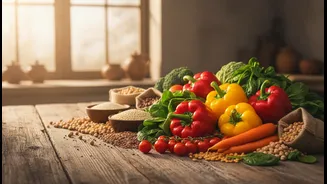
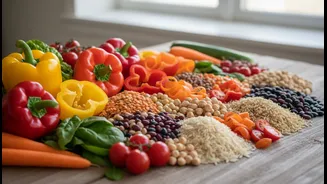
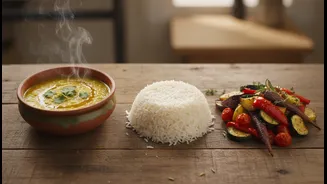
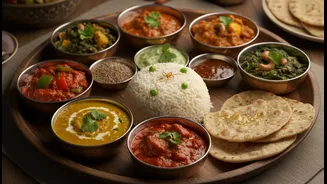
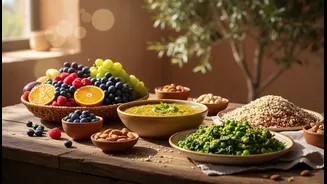
A key principle of a healthy Indian meal is eating a rainbow of colours, which ensures a wide range of nutrients. This isn't just about aesthetics; the vibrant hues in Indian cooking come from spices and vegetables that are packed with health benefits.
The brilliant yellow of turmeric, for instance, contains curcumin, a compound known for its powerful anti-inflammatory and antioxidant properties. The deep red of tomatoes and bell peppers provides lycopene, while the lush greens of spinach in dishes like Palak Paneer are rich in iron. Even a simple side salad like Kachumber, with its mix of red tomatoes, white onions, and green cucumbers, is a crunchy, refreshing way to add more vitamins to your plate. Dishes such as vegetable korma, with its creamy sauce and medley of vegetables like carrots, peas, and beans, further prove that Indian vegetarian food is a celebration of colour and health.
The Fibre Foundation
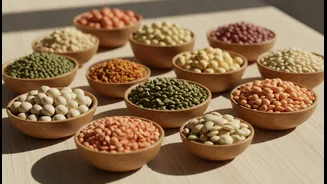
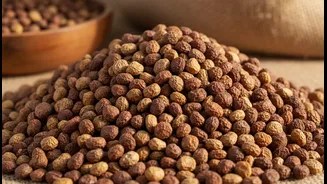
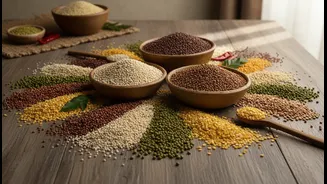
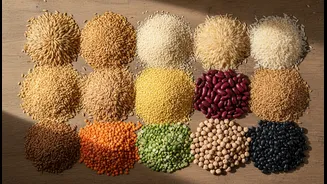
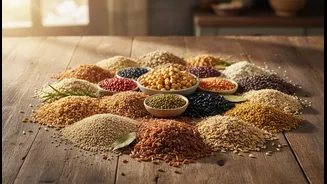
Fibre is essential for good digestive health, and Indian vegetarian meals are naturally rich in it. The foundation of many meals includes whole grains and legumes, which are excellent sources of dietary fibre. Whole wheat rotis, brown rice, and millets like jowar and bajra are fibre-rich staples that provide sustained energy. Lentils and pulses, the stars of countless dal preparations, are loaded with both soluble and insoluble fibre. Dishes like Chana Masala (chickpea curry), Rajma (kidney bean curry), and various dal preparations are not only hearty and flavourful but also contribute significantly to your daily fibre intake. Vegetables like okra (bhindi), pumpkin (kaddu), and cauliflower (gobi) are also common in Indian cooking and packed with fibre, making dishes like Bhindi Masala and Aloo Gobi both delicious and beneficial for your gut.
Powering Up with Protein
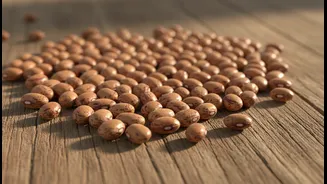
One of the most common questions about vegetarianism is: "Where do you get your protein?" Indian cuisine has a comprehensive answer. The diet is built on the principle of combining foods to create complete proteins. Most plant-based proteins are 'incomplete', meaning they lack one or more essential amino acids. However, the classic Indian combination of dal (lentils) and chawal (rice) creates a complete protein profile, as the amino acids in rice complement those in lentils. The same logic applies to eating dal with roti (wheat). Beyond this, Indian vegetarian diets are rich in protein powerhouses like paneer (Indian cheese), which provides around 18 grams of protein per 100 grams. Other excellent sources include chickpeas, kidney beans, moong dal, and soy products like tofu and soya chunks. A bowl of rajma, a serving of palak paneer, or a sprouted moong salad can all be delicious ways to meet your protein needs.