





The Problem with 'Just Winging It'
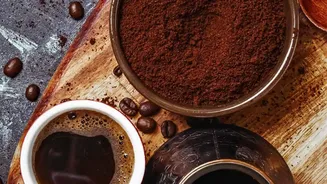
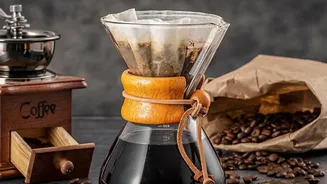
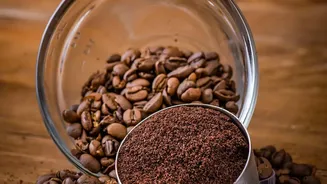
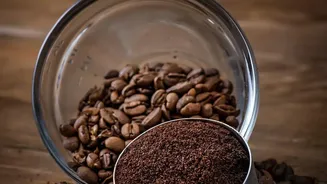
Using a scoop to measure coffee is a common practice, but it's inherently inconsistent. Why? Because it measures volume, not weight. Different coffee beans have different sizes and densities; a scoop of a light-roasted peaberry will weigh less than a scoop of a dark-roasted,
oilier bean. Even the grind size changes the equation: a scoop of finely ground coffee contains more coffee mass than a scoop of the same coffee ground coarsely, due to less air space between the particles. This variability means that even if you use the same number of scoops each day, the actual amount of coffee you're brewing can fluctuate significantly, leading to unpredictable results. One day your coffee is perfect, the next it's weak or harsh. Measuring by weight eliminates this guesswork entirely. A gram is always a gram, regardless of bean size, roast level, or grind setting.
The Science of Delicious Extraction
Brewing coffee is a process of extraction: hot water acts as a solvent, dissolving flavourful compounds from the ground beans. This process happens in stages. First, acidic and fruity notes are released, followed by sweetness and balance, and finally, compounds that can contribute bitterness. The goal is to stop the process in that 'sweet spot' for a balanced cup. The single most important factor controlling this process is the coffee-to-water ratio. Too much water for the amount of coffee (under-extraction) results in a weak, sour, or thin-tasting cup because not enough of the desirable compounds were dissolved. Too little water (over-extraction) pulls too many of the bitter compounds, leading to a harsh and astringent taste. By precisely measuring your ingredients, you gain control over extraction, ensuring you consistently hit that perfect balance.
Finding the 'Golden Ratio'
So, what's the right ratio? Most coffee professionals, including the Specialty Coffee Association (SCA), point to a starting point known as the 'golden ratio'. This generally falls between 1:15 and 1:18—meaning for every one part of coffee, you use 15 to 18 parts of water. For example, a common 1:16 ratio would mean using 20 grams of coffee and 320 grams of water (since 1 ml of water weighs 1 gram). This isn't a rigid rule but a reliable baseline. If you prefer a stronger brew, you might try a tighter ratio like 1:15. If you enjoy a more delicate cup, a wider ratio like 1:17 might be better. Different brewing methods also have their own sweet spots; pour-overs often thrive around 1:16 or 1:17, while a French press might be better at 1:15. Using a scale empowers you to experiment and find the exact ratio that creates the perfect cup for your specific taste.
Consistency Is the Ultimate Reward
Perhaps the greatest benefit of weighing your coffee is achieving consistency. When you stumble upon that perfect brew—the one with just the right strength, sweetness, and aroma—you want to be able to make it again. And again. By measuring your inputs in grams, you create a repeatable recipe. You're no longer relying on luck or feel. You can note down '22g of coffee to 350g of water' and know with certainty that you can replicate that exact cup tomorrow morning. This precision is what allows professional baristas to serve reliably excellent coffee to every customer. It transforms your brewing process from a game of chance into a craft you can control and refine, taking the frustration out of your morning routine and ensuring a delicious result every time.
Getting Started Is Easy and Affordable
Adopting this habit doesn't require a major investment. All you need is a simple digital kitchen scale, many of which are inexpensive and widely available. A good coffee scale will measure in increments of 0.1 grams, which is ideal for precision, and many also include a built-in timer to help you control your brew time—another key variable in extraction. The process is simple: place your brewing vessel on the scale, press the 'tare' or 'zero' button, add your desired weight of coffee grounds, and then tare it again before adding your water. This small addition to your routine takes only a few seconds but pays huge dividends in flavour and consistency, elevating your home-brewed coffee from good to great.