









The Beginning: Baahubali's Grand Vision
Before 2015, a 'pan-Indian film' was more of a distribution theory than a reality. The term existed, but no film had truly captured the nation's collective imagination quite like S.S. Rajamouli's 'Baahubali: The Beginning'. It was originally a Telugu
film, but its ambition was boundless. With breathtaking visuals rooted in Indian mythology, larger-than-life characters, and a story of epic proportions, it transcended its regional origins. The film was simultaneously released in several languages, backed by a strategic marketing push that presented it as a national event. The masterstroke was its cliffhanger ending—"Why did Kattappa kill Baahubali?"—which became a national obsession and ensured its sequel, 'Baahubali 2: The Conclusion', would shatter every existing box office record. 'Baahubali' didn't just break records; it broke the psychological barrier, proving that a film from the South could not only compete with but dominate the entire Indian market.
The New Swagger: KGF's Gritty Spectacle
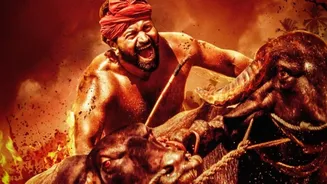
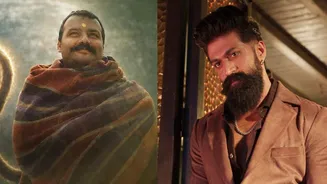
If 'Baahubali' was about epic fantasy, 'KGF: Chapter 1' (2018) was a gritty, stylish celebration of the anti-hero. Hailing from the Kannada film industry, which was not previously known for such massive productions, 'KGF' was a bold declaration. Director Prashanth Neel created a hyper-stylised world around the Kolar Gold Fields, and in its centre was Rocky Bhai, a character played with smoldering intensity by Yash. The film's success was not a fluke; it was built on a distinct aesthetic, powerful dialogue, and an underdog story that resonated universally. It showed that pan-Indian success didn't always require mythological scale; it could also be achieved with raw, unapologetic swagger. The sequel, 'KGF: Chapter 2', amplified this, becoming one of the highest-grossing Indian films ever and cementing Yash as a pan-Indian superstar. The franchise gave the Kannada industry newfound respect and proved that any regional industry with a powerful story could command national attention.
The Global Phenomenon: RRR's Unstoppable Bromance
After 'Baahubali', S.S. Rajamouli returned with 'RRR' (2022), a film that didn't just conquer India but danced its way onto the global stage. 'RRR' was a maximalist action-drama centered on the fictional friendship between two real-life revolutionaries. While the scale was immense, the film's heart was the electrifying chemistry between its leads, N.T. Rama Rao Jr. and Ram Charan. Its action sequences were inventive and gravity-defying, creating moments of pure cinematic joy. The song 'Naatu Naatu' became a global sensation, eventually winning an Academy Award. 'RRR' proved that a story rooted in Indian history and culture could have universal appeal, breaking box office records from India to the UK and establishing Tollywood as a powerhouse of global entertainment.
The Rustic Revolution: Pushpa's Raw Power
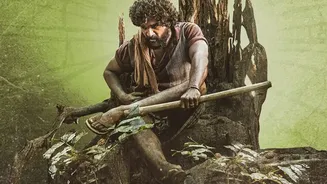
While 'Baahubali' and 'RRR' relied on grand spectacle, 'Pushpa: The Rise' (2021) proved that a grounded, rustic story could be just as explosive. Starring Allu Arjun, the film followed the rise of a coolie in the red sandalwood smuggling syndicate. Its hero was flawed, its world was dusty and grimy, but its impact was immense. Allu Arjun's unique mannerisms, the film's catchy dialogues, and its chartbuster music went viral across the country, turning it into an unexpected blockbuster, especially in the Hindi belt. 'Pushpa' succeeded where many slick Bollywood films failed, connecting with audiences in smaller towns and single screens who were craving the 'angry young man' archetype. It demonstrated that the pan-Indian formula was flexible; it was less about budget and more about a compelling hero and mass appeal.