


An Unstable Foundation
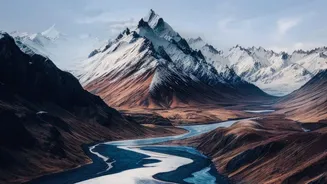
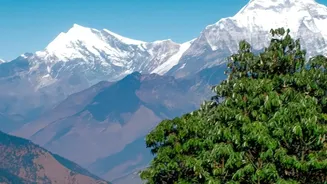
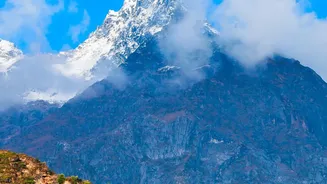
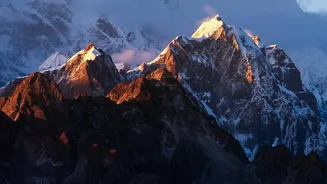
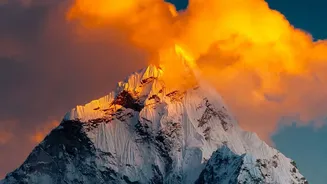
The story of Nepal's disaster risk begins with its most famous feature: the mountains. The Himalayas are geologically young and active, formed by the ongoing collision of the Indian and Eurasian tectonic plates. This process creates steep, unstable terrain
composed of fractured and weak rock. Unlike older, more weathered mountain ranges, the Himalayas are constantly shifting. This inherent fragility means the slopes are naturally susceptible to erosion and landslides, even without a specific trigger. The very forces that created the world's highest peaks also laid the groundwork for recurring disasters.
The Monsoon's Trigger
If the mountains are the loaded gun, the monsoon is what pulls the trigger. From roughly June to September, Nepal receives about 80% of its total annual rainfall. This isn't a gentle drizzle; it's an intense, torrential downpour that saturates the loose soil and rock on the steep hillsides. This saturation acts like a lubricant, drastically reducing the friction that holds the slopes together and leading to catastrophic landslides. Research shows that these monsoon-triggered landslides are the country's most persistent and deadly hazard, claiming lives every single year.
Swift Rivers, Powerful Floods
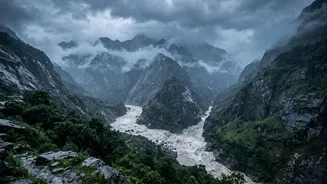
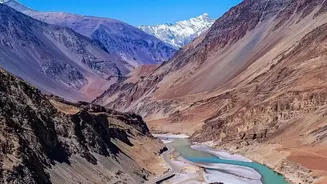
The third piece of the puzzle is Nepal's vast network of over 6,000 rivers and streams. These are not lazy, meandering waterways. Fed by both monsoon rains and glacial melt from high in the Himalayas, they plunge from extreme altitudes over short distances. This gives them incredible energy and erosive power. When landslides occur, they often dump enormous amounts of rock and soil directly into these rivers. Sometimes this debris forms a temporary dam, which, when it inevitably bursts, unleashes a devastating flash flood downstream. In other cases, the sheer volume of water and debris overwhelms river channels, causing them to flood the flat southern plains, known as the Terai.
A Vicious, Interlocking Cycle
The true danger lies in how these three elements—fragile mountains, heavy rain, and steep rivers—interact in a vicious cycle. It often unfolds like this: intense monsoon rain soaks the unstable mountain slopes, triggering a landslide. The debris from the landslide crashes into a powerful river below, either blocking it or adding to its volume. The river then swells into a flash flood or a debris flow, a fast-moving slurry of water, mud, and boulders that can obliterate entire villages, bridges, and hydropower plants downstream. The 2021 Melamchi Valley disaster was a textbook example of this, where heavy rain, snowmelt, and unstable terrain combined to create a catastrophic flood.
The Climate Change Multiplier
This already volatile system is being made worse by climate change and human activity. Rising temperatures are causing glaciers to melt at an accelerated rate, increasing the risk of Glacial Lake Outburst Floods (GLOFs), where lakes formed by melting glaciers suddenly burst their natural dams. Climate change is also making monsoon patterns more erratic and intense, leading to more extreme rainfall events. At the same time, unregulated human activities like haphazard road construction and deforestation further destabilize fragile slopes, increasing the likelihood of landslides. These factors don't create the risk from scratch; they multiply the pre-existing dangers posed by Nepal's unique geography.