


The Ultimate Goal: A Place Among the Stars
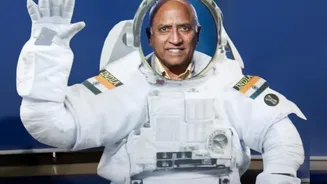
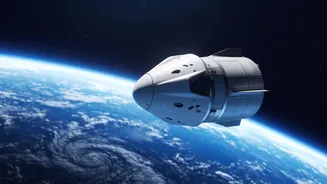
The Gaganyaan programme is ISRO's ambitious endeavor to send a crew of three Indian astronauts, or 'Vyomanauts', into a 400-kilometre orbit for three days and bring them back safely. Success would make India only the fourth nation in history—after the United
States, Russia, and China—to have an independent human spaceflight capability. This is more than a technological milestone; it's a statement of national capability that will inspire a generation and unlock new avenues for scientific research, from microgravity experiments to planetary exploration. The long-term vision extends to establishing an Indian space station, the Bharatiya Antariksha Station, by 2035 and a crewed lunar landing by 2040.
Why Uncrewed Tests Are Non-Negotiable
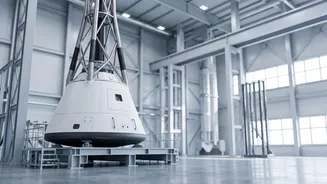
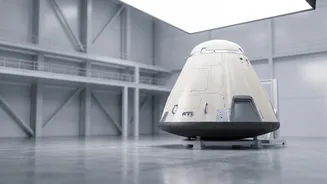
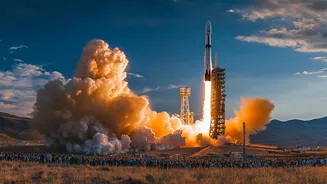
When human lives are at stake, there is no room for error. The core purpose of the uncrewed missions is to test, verify, and validate every single component of the Gaganyaan system in real-world conditions without risking a single astronaut. ISRO is conducting thousands of tests to ensure the human-rated launch vehicle, life support systems, and crew module are perfect. These flights are heavily instrumented to gather data on everything from launch vibrations and re-entry heat to the performance of the life support systems. Each successful uncrewed test builds the confidence and reliability needed before strapping astronauts into the capsule.
The Crucial Crew Escape System
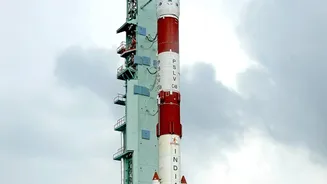
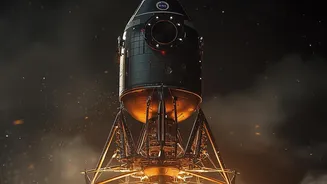
One of the most critical safety features being tested is the Crew Escape System (CES). This is a launch-abort system designed to pull the crew module away from the main rocket in case of a catastrophic failure during ascent. ISRO has conducted a series of Test Vehicle Abort Missions to demonstrate the CES's performance. In these tests, a dedicated single-stage rocket carries the crew module to a specific altitude, where an abort is simulated. The CES then fires its own motors, separating the capsule and pulling it to a safe distance before parachutes deploy for a soft landing in the sea. These tests validate the system during the most aerodynamically stressful part of the launch.
Testing the Parachutes: The Integrated Air Drop Test
Getting astronauts safely to orbit is only half the battle; bringing them home is just as critical. ISRO has been conducting a series of Integrated Air Drop Tests (IADT) to perfect the parachute system responsible for slowing the crew module for a gentle splashdown. In these tests, a module is dropped from an aircraft to simulate its return journey. A sequence of drogue and main parachutes deploys to stabilize the capsule and reduce its speed to a safe velocity for landing. The tests are designed to validate the system even if one of the main parachutes fails to open, ensuring redundancy and astronaut safety are paramount.
Enter Vyommitra: The Humanoid Stand-In
Before the Vyomanauts fly, their robotic counterpart will pave the way. Vyommitra, a name derived from Sanskrit for "space friend," is a sophisticated half-humanoid robot developed by ISRO. This robot, which has a torso, head, and arms but no legs, will be a passenger on the first full uncrewed orbital flight, G1, which is targeted for the latter half of 2026. Vyommitra is no mere dummy; it can mimic human functions, operate control panels, monitor the cabin environment, and communicate with ground control. Its job is to simulate the presence of an astronaut, allowing ISRO to test the life support systems and the overall cabin environment in space before a human crew ever steps inside.
The Road Ahead to the First Manned Mission
The entire sequence of uncrewed flights is a meticulously planned dress rehearsal. Following the various abort and drop tests, ISRO plans for at least two full uncrewed orbital missions, starting with G1 carrying Vyommitra. Each test provides invaluable data, allowing engineers to refine systems and procedures. While timelines can shift to ensure absolute safety, the current target for the first uncrewed orbital flight is late 2026, with the first historic crewed mission (H1) planned for 2027. Each successful test brings India closer to its goal, demonstrating a mature, safety-first approach to one of the most complex endeavors in human history.