



In India, rice is more than just a staple food; it's a canvas for culture, history, and flavour. Each region transforms this humble grain into something extraordinary, reflecting its unique culinary identity and local ingredients.
Bisi Bele Bath, Karnataka
Meaning 'hot lentil rice'
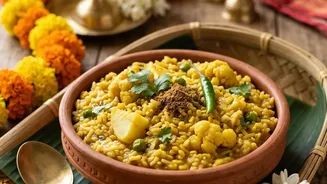
in Kannada, Bisi Bele Bath is a quintessential one-pot meal from Karnataka that is both wholesome and deeply flavourful. Said to have originated in the royal kitchens of the Mysore Palace, this dish is a masterful blend of rice, toor dal (pigeon peas), assorted vegetables, tamarind pulp, and a special spice powder known as Bisi Bele Bath masala. The preparation is elaborate, sometimes involving up to thirty ingredients, including nutmeg and asafoetida. The final dish has a soft, porridge-like consistency and is traditionally finished with a generous dollop of ghee, served hot with a side of crispy boondi or potato chips. It’s a complete, nutritious meal that beautifully represents the complexity of South Indian comfort food.
Masale Bhat, Maharashtra
Aromatic, spicy, and deeply satisfying, Masale Bhat is a celebratory rice dish from Maharashtra. Unlike a simple pulao, its distinct flavour comes from 'goda masala', a unique Maharashtrian spice blend containing ingredients like coconut, sesame seeds, and stone flower. This one-pot dish features rice cooked with vegetables like brinjals, ivy gourd, and potatoes, all brought together by the complex, slightly sweet and pungent notes of the goda masala. Often prepared for weddings and special occasions, it is a no-onion, no-garlic recipe in many households. Garnished with fresh coconut and coriander, Masale Bhat offers a taste of authentic Maharashtrian heritage in every spoonful.
Tehri, Uttar Pradesh
Hailing from the Awadhi cuisine of Uttar Pradesh, Tehri (or Tahari) is a fragrant, yellow rice dish that occupies a special place between a mild pulao and a complex biryani. Traditionally a vegetarian specialty, it was created for the vegetarian bookkeepers in Mughal courts who couldn't eat the meat-heavy biryanis. The dish is made by cooking rice with potatoes and other seasonal vegetables like peas and carrots, along with a medley of whole and powdered spices. Turmeric gives Tehri its signature golden hue. While simpler than a layered biryani, it is more robustly spiced than a typical pulao, offering a comforting and flavour-packed meal that remains a beloved staple in North Indian homes.
Ghee Bhat, Bengal
Simple, elegant, and fragrant, Ghee Bhat is a testament to the Bengali principle of letting a few high-quality ingredients shine. As the name suggests, the stars are aromatic, short-grained Gobindobhog rice and pure ghee. Often called Mishti Pulao, this dish has a subtly sweet and savoury profile, achieved by frying the rice in ghee with whole spices like cinnamon, cardamom, and cloves, along with cashews and raisins. Sometimes, a pinch of sugar is added to enhance the sweetness. While it can be made with vegetables, the purist version focuses on the heavenly aroma of rice and ghee. It's a celebratory dish, often served at festivals and weddings, pairing perfectly with rich, spicy curries like Kosha Mangsho (mutton curry).
Pulihora,' Southern India
Pulihora,' also known as Puliyogare or Tamarind Rice,' is a beloved South Indian classic known for its distinctive tangy and spicy flavour. Popular across Andhra Pradesh,' Telangana,' Karnataka,' and Tamil Nadu,' its name comes from 'puli,' meaning sour. The primary flavouring agent is tamarind pulp,' which is cooked into a thick paste with spices,' jaggery,' peanuts,' and a tempering of mustard seeds and curry leaves. This flavourful paste is then mixed with cooked rice. Pulihora is a staple offering in temples (prasadam) and a go-'to dish for festivals and travel,' as it stays fresh for a long time. Each state has a slight variation,' but the core profile of tangy,' spicy,' and nutty remains a constant delight.
Jadoh,' Meghalaya
Venturing into the Northeast,' Jadoh is a signature dish of the Khasi tribe in Meghalaya. The name 'Jadoh' literally translates to 'rice and meat'. This isn't your typical pulao;' it is a rustic and intensely flavourful dish traditionally made with a local short-'grain red rice and pork. The most authentic versions are cooked with pork fat and sometimes even pork blood,' which gives the dish a rich flavour and a deep colour. The key aromatics are minimal but potent:' ginger and black pepper,' which provide a distinct heat and fragrance. While variations with chicken exist,' the pork version is the most cherished. Jadoh is a true reflection of the region's culinary traditions,' offering a hearty,' savoury experience unlike any other rice dish in India.