


The Foundation: More Than Just a Leaf
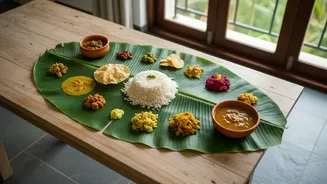
Before the first dish is served, the stage is set with the banana leaf. Tradition dictates it must be placed with its narrow tip pointing to the left of the guest. This isn't just for aesthetics. The leaf is divided into two halves: the upper portion
for accompaniments and the lower, wider half for the main course of rice and curries. This layout provides a logical and accessible map for the meal. Using a banana leaf is also an eco-friendly choice rooted in Ayurvedic principles; when warm food is placed on the leaf, it is believed to release polyphenols, antioxidants that are absorbed by the food, subtly enhancing its flavour and nutritional value.
The Upper Half: A Symphony of Sides
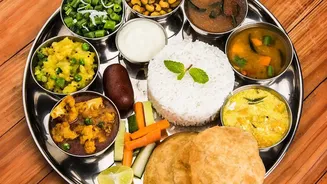
Serving begins on the top left corner, the designated space for items consumed in smaller quantities. First, a pinch of salt is placed, followed by snacks like banana chips (upperi) and their sweet jaggery-coated counterpart, sharkara varatti. Moving rightward, a series of potent pickles and preserves are arranged. This includes tangy mango and lime pickles, and the iconic Puli Inji, a sweet and sour chutney made from ginger, tamarind, and jaggery. These are followed by an array of vegetable preparations called 'thoran' (stir-fried vegetables with coconut) and yoghurt-based sides known as kichadi and pachadi, which cool the palate. This section acts as a flavour toolkit, allowing the diner to customise each bite of rice with a hint of salt, a touch of spice, or a bit of crunch.
The Heart of the Meal: Curries and Stews
The main side dishes are arranged across the upper half, forming a rich tapestry of textures and tastes. While the exact order can vary by region, this row always features the sadhya's star preparations. You'll find Avial, a thick stew of mixed vegetables in a coconut and yogurt gravy. Alongside it might be Kalan (a thicker, sour curry), Olan (a delicate dish of ash gourd in coconut milk), Erissery (a mild pumpkin and lentil stew), and Koottukari (a flavourful dish of vegetables and black chickpeas). These dishes are central to the meal's philosophy of incorporating all six tastes—sweet, sour, salty, bitter, pungent, and astringent—which is a core principle of Ayurveda.
The Main Event: A Journey Through Rice Courses
Once the sides are in place, a generous serving of steaming red Matta rice is placed on the bottom centre of the leaf. The meal is eaten in courses, with different curries poured over the rice in a specific sequence. The first course is always Parippu, a simple lentil curry, served with a spoonful of ghee. This is followed by Sambar, a robust lentil and vegetable stew. After Sambar, the meal transitions to lighter, more digestive curries. Pulissery, a tangy yogurt-based curry, or Rasam, a thin and peppery tamarind broth, are served to cleanse the palate and aid digestion. This progression from heavy to light is a deliberate design to ensure the feast is both delicious and easy on the stomach.
The Sweet Conclusion
No Sadhya is complete without the dessert course, Payasam. Served towards the end of the meal, it can be spooned directly onto a cleaned portion of the banana leaf. Often, a small, ripe banana and a crisp pappadam are served alongside it, which can be mashed together with the payasam for a unique blend of textures. There are many varieties, from the milky Palada Payasam to the jaggery-rich Ada Pradhaman. The meal officially concludes with a serving of buttermilk, which acts as a final digestive aid. When finished, folding the top half of the banana leaf down over the bottom half is a gesture of satisfaction.