





The Clarification: A New Trajectory
The latest buzz in engineering circles isn't about a new rocket, but a strategic clarification from the Indian Space Research Organisation (ISRO). While ISRO continues its recruitment for Scientist/Engineer 'SC' positions, with 176 vacancies announced
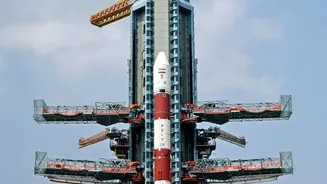
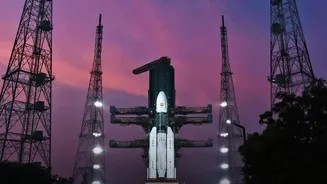
in late August 2026 for key disciplines like Electronics, Mechanical, and Computer Science, the agency's broader strategy is evolving. The clarification underscores a long-term directional shift: ISRO will increasingly focus its world-class talent on core research and development, deep-space exploration, and national security missions. This includes ambitious projects like the Gaganyaan human spaceflight mission and future interplanetary exploration. This pivot means that routine manufacturing, satellite fabrication, and launch services will progressively be handled by India’s burgeoning private space sector, fundamentally changing the employment landscape.
The Bigger Picture: A Galaxy of Opportunity
This move isn't happening in a vacuum. It is a direct consequence of the Indian government's space sector reforms, particularly the establishment of the Indian National Space Promotion and Authorisation Centre (IN-SPACe). IN-SPACe was created to act as a bridge between ISRO and the private industry, facilitating technology transfers and enabling private firms to build, own, and operate space assets. India is now home to over 400 space-tech startups. Companies like Skyroot Aerospace, Agnikul Cosmos, Pixxel, and Dhruva Space are no longer just concepts; they are launching rockets, building satellite constellations, and hiring aggressively. The goal is to grow India's space economy from around $8 billion today to a projected $44 billion by 2033. For an engineer, this means the definition of a “space job” has expanded dramatically.
The Future of an ISRO Career
So, is the dream of working for ISRO over? Absolutely not. It's just becoming more focused. A career at ISRO is transitioning from being the only path to being the most advanced path. Future hiring will likely prioritise candidates with specialised knowledge for cutting-edge R&D. Think roles in advanced propulsion, robotics, AI for autonomous systems, space science, and mission design. The direct pipeline from the Indian Institute of Space Science and Technology (IIST) remains a premier entry route, alongside the highly competitive ISRO Centralised Recruitment Board (ICRB) exams. An ISRO job will increasingly mean you are working on the next frontier of science, while your counterparts in the private sector build the industrial backbone to support it.
Your New Launchpad: The Private Sector
The most significant implication of ISRO's clarification is the validation of the private space sector as a primary employer. For engineers, this opens up a world of dynamic, fast-paced career opportunities. Private companies offer roles that might not have existed a decade ago: from designing 3D-printed rocket engines and developing satellite-based climate analytics platforms to working on flight-critical software for launch vehicles. These startups and larger private aerospace firms value agility, multi-disciplinary skills, and a product-focused mindset. Unlike the structured, long-term projects at a national agency, private sector work often involves rapid iteration, direct impact on commercial products, and potentially even stock options. Companies are actively hiring across Bengaluru, Hyderabad, and Chennai, creating new hubs of space technology.
The Skillset for This New Universe
This new, diversified space industry demands a broader skillset. Core engineering disciplines like Mechanical, Electronics, and Aerospace are still the foundation. However, today’s space engineer needs to be more versatile. Expertise in software development, AI and machine learning, data science, and robotics is becoming crucial. Experience with simulation software, digital twins, and advanced materials science gives candidates a significant edge. The private sector, in particular, is looking for engineers who can work across disciplines—combining hardware expertise with software fluency. Aspiring space professionals should focus on gaining practical experience through internships, university projects like CubeSat programs, and developing a strong foundation in coding and data analysis alongside their core engineering studies.