






The Illusion of the One-Hour Flight
A one-hour flight is never just one hour. That advertised time is a seductive, but misleading, fragment of the real story. The actual journey begins the moment you lock your front door. For most urban Indians, this means plunging into unpredictable traffic.
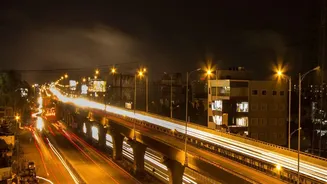
A trip to the airport in a city like Mumbai, Delhi or Bengaluru can often take longer than the flight itself. Reports consistently rank these cities among the world's most congested, with peak-hour traffic easily doubling commute times. That one-hour flight now requires a two-hour buffer just to reach the terminal. Once there, the clock keeps ticking. You navigate check-in queues, lengthy security lines, and the slow march to a distant boarding gate. After landing, the process reverses: deplaning, the anxious wait at the baggage carousel, and finally, the hunt for a cab or a metro connection. Studies on travel behaviour emphasise that this entire door-to-door sequence, including access and waiting time, is what constitutes the true travel experience. That 'quick' one-hour flight to Goa has likely consumed half a day before your feet even touch the sand.
The Hidden 'Time Tax' of Travel
Every trip comes with a price tag, but we often forget to calculate the 'time tax'. Economists have long understood that time has a monetary value. When planning a trip, we should too. A flight that costs ₹2,000 less but requires you to take a 4 a.m. cab and adds three extra hours of transit is not a bargain; it’s a bad trade. You've essentially 'paid' for the discount with your time and energy. Consider the alternatives. An overnight train might have a longer 'official' travel time of 10 hours, but the experience can be far more efficient. You board in the evening, have dinner, sleep, and wake up at your destination, having saved on a night's hotel stay. The door-to-door time might be similar to, or even less than, the supposedly faster flight. This is especially true for routes where last-mile connectivity from the airport is poor — a common issue across many Indian cities. The failure to integrate transport hubs like airports and metro stations seamlessly means commuters often spend more time and money on the final leg of their journey than on the main transit itself.
Redefining the 'Best' Travel Deal
The relentless pursuit of the lowest fare is a race to the bottom that overlooks the quality of the journey. The 'best' deal isn't simply the cheapest ticket. It’s the option that offers the optimal balance of cost, convenience, and time. Travel time reliability—the predictability of your journey's duration—is a crucial, often ignored, factor. An unpredictable journey, even if it ends up being short, is a significant source of stress. This calls for a shift in mindset. Before booking, we should map out the entire journey. What is the total time from my home to the hotel? How reliable are the connections? What is the cost in both rupees and hours? Sometimes, driving to a nearby hill station is a more relaxing and efficient weekend trip than flying to a destination three states away. It’s also worth considering the mode of transport. For certain distances, a comfortable bus or a fast train offers a more civilised experience than a budget airline. The time costs of a journey, which include the hassle and stress of transit, often make up the largest part of the 'generalised cost' of travel, eventually becoming more significant than the fare itself.