




The '90s Yearbook In Your Pocket
If you’ve been on any social media platform recently, you’ve seen it: friends, celebrities, and influencers transformed into quintessential ‘90s high school archetypes. There’s the jock with a letterman jacket, the grunge fan with smudged eyeliner, and the preppy
student with a perfect side-part. This isn’t the result of a dusty box of old photos being unearthed; it’s the work of EPIK, an AI photo editing app whose ‘AI Yearbook’ feature went viral. For a small fee, users upload a handful of selfies and let the app’s generative AI do the rest. It churns out dozens of images, placing your face into classic ‘90s settings and styles with uncanny accuracy. The trend exploded on platforms like TikTok and Instagram, with everyone from Bollywood stars to your college friends joining in. It became a collective cultural moment, a shared digital dress-up party where the theme was a very specific, pre-millennium nostalgia.
The Psychology of Perfected Nostalgia
So, why the obsession? The appeal goes deeper than just a fun filter. This trend taps directly into the powerful emotion of nostalgia, but with a modern twist. For those who actually grew up in the ‘90s, it’s a chance to see an idealized version of their past self—the one they wish they were, without the awkwardness of reality. For younger generations who missed the era, it’s a form of aesthetic tourism, allowing them to try on a vintage identity that feels authentic and cool. This isn't just about looking old; it's about looking *artfully* old. The AI smooths over the rough edges. The photos have a soft, hazy, film-like quality that feels more romantic than a crisp iPhone photo. It’s a curated imperfection. Unlike earlier AI trends that created futuristic avatars or hyper-realistic fantasy portraits, the retro trend feels grounded and relatable. It’s not about becoming an elf; it’s about becoming a cooler, slightly-more-photogenic version of your teenage self.
How Does This Digital Time Machine Work?
The technology behind the ‘90s magic isn’t actually magic, but a sophisticated form of artificial intelligence known as a generative adversarial network (GAN) or, more recently, diffusion models. In simple terms, you are providing the AI with a set of new data: your selfies. The AI has already been ‘trained’ on a massive dataset of images, including thousands of actual ‘90s yearbook photos, portraits, and fashion styles. When you submit your pictures, the model analyses your key facial features. It then masterfully blends those features into the pre-existing retro templates it knows so well. It’s not just pasting your face onto another body (a ‘deepfake’), but generating a brand new image from scratch that combines your likeness with the target aesthetic. The results can be startlingly good, though often with a few hilariously weird artifacts—a stray hand with six fingers or a bizarrely warped background—reminding you that a machine is still at the controls.
It’s Not All Fun and Film Grain
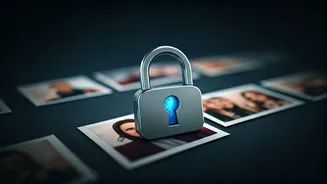
Before you rush to create your own retro rock band album cover, it’s worth noting the concerns. As with any app that asks for your biometric data (i.e., your face), questions about privacy are paramount. EPIK’s privacy policy, like many others, states that user data may be stored and used to improve its AI models. While the company has assured users their photos are deleted from its servers after the images are generated, the broader issue of handing over our facial data to tech companies remains a valid concern. Furthermore, the trend isn’t free. While the app itself might be, the popular features are often behind a paywall, creating a micro-transaction model for viral moments. There are also the familiar pitfalls of AI, such as algorithmic bias. Some users have reported that the AI defaults to certain racial or beauty standards, creating images that don't accurately or fairly represent their features.