

The Sun's Unseen Temper
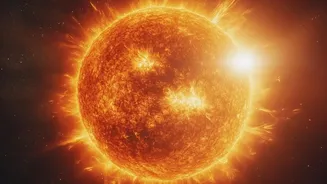
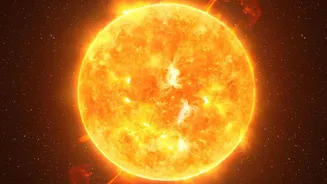
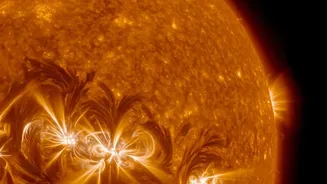
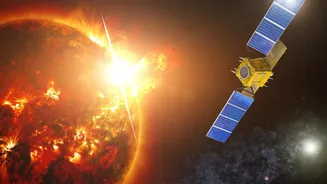
The Sun isn't always the calm, life-giving star it appears to be. It has a volatile side known as space weather. The primary threats are solar flares and, more significantly, coronal mass ejections (CMEs). A CME is a massive eruption of magnetized plasma
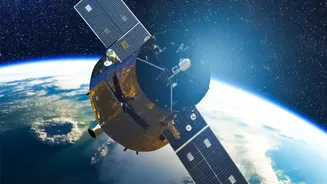
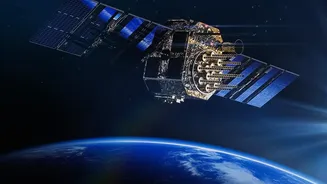
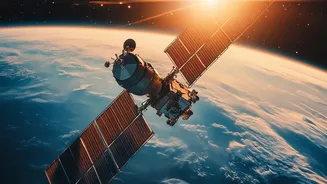
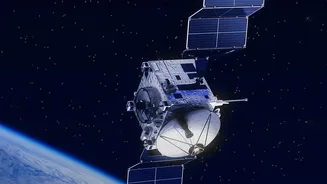
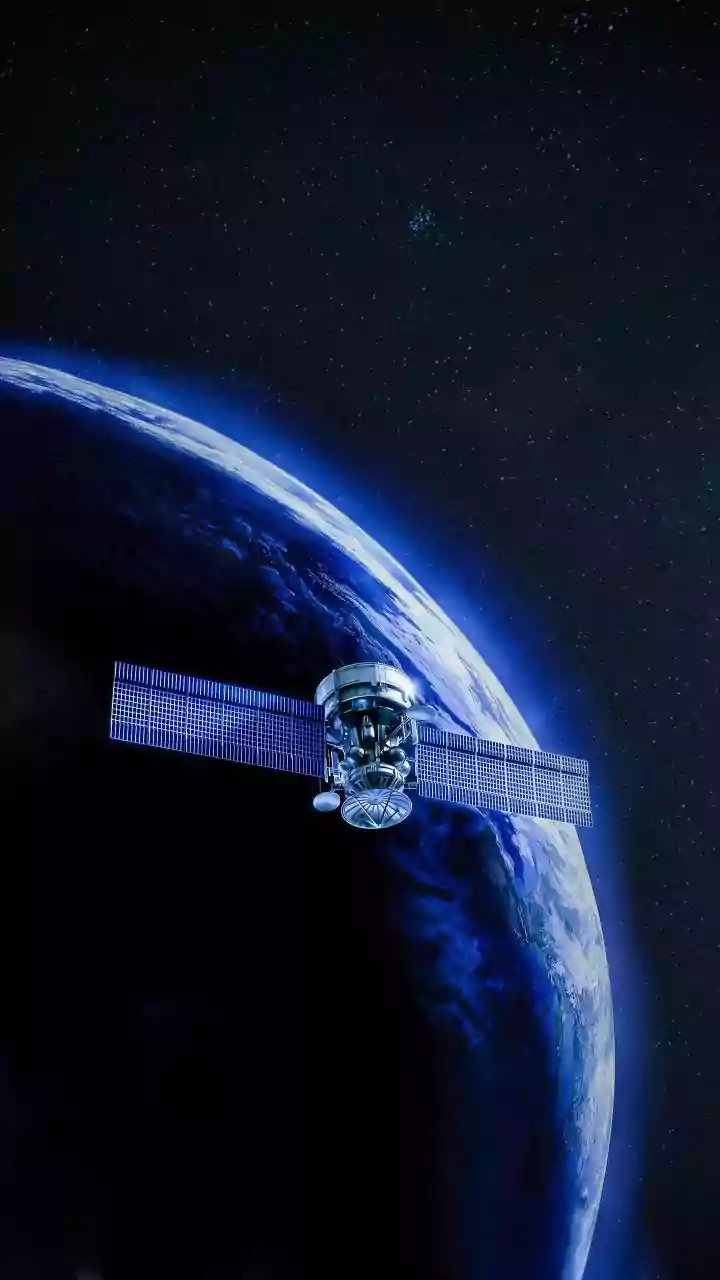
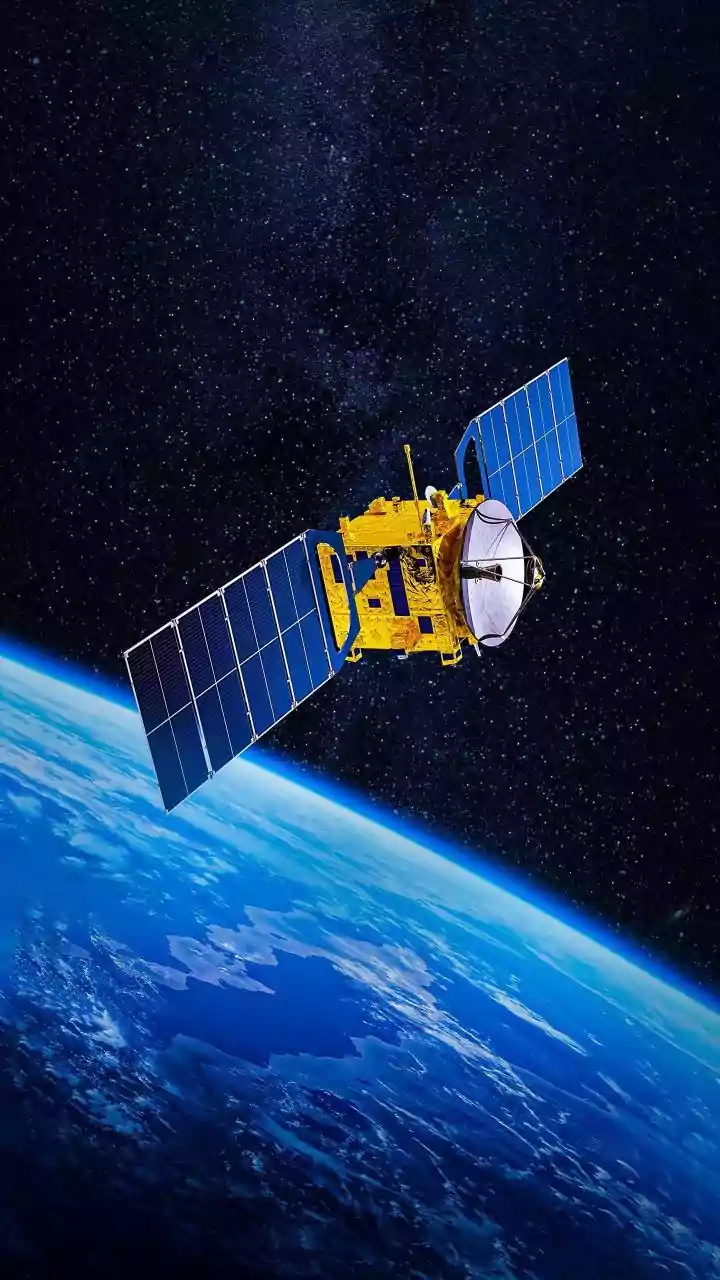
from the Sun's outer atmosphere, the corona. These clouds of energetic particles can travel millions of miles through space, and if they hit Earth, they can wreak havoc. For the thousands of satellites in orbit, a run-in with a CME can be devastating. It can damage electronics, degrade solar panels, confuse navigation systems, and even increase atmospheric drag on low-orbiting satellites, causing them to fall out of the sky. Protecting these multi-million-dollar assets is not just an engineering challenge; it's an economic necessity.
Creating an Artificial Eclipse
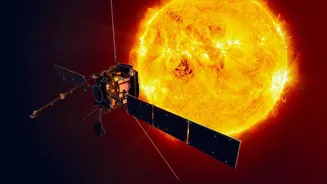
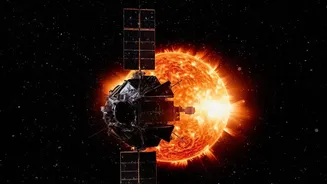
To see a CME coming, you have to look at the Sun's corona. The problem is that the Sun's own brightness is so overwhelming that it completely washes out the much fainter light of the corona. This is where coronagraphs come in. A coronagraph is a specialized telescope designed to block the light from the Sun's main disk, creating an artificial eclipse. By using an 'occulting disk' to blot out the bright center, these instruments allow scientists to see the faint, ethereal structures of the corona and, crucially, to spot a CME as it bursts forth from the Sun. Missions like the joint NASA/ESA Solar and Heliospheric Observatory (SOHO) and NOAA's GOES satellites have carried these instruments for years, providing our first line of defense.
From Image to Early Warning
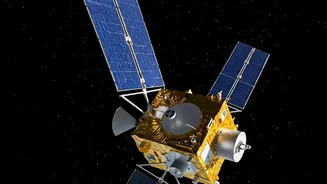
Spotting a CME is only the first step. Once a coronagraph satellite like GOES-19 or the new SOLAR-1 captures an image of a potential threat, the data is beamed back to Earth. Here, forecasters at agencies like NOAA's Space Weather Prediction Center (SWPC) analyze the sequence of images to determine the CME's size, speed, and direction. They use this information to run complex computer models, such as the WSA-Enlil model, which predict whether the CME will hit Earth and, if so, when and how severe the impact will be. Because these satellites are often positioned far from Earth (at a point called L1, about a million miles away), they can detect a CME one to three days before it reaches us, providing a critical window of warning.
Battening Down the Hatches in Orbit
With an early warning in hand, satellite operators don't just sit and wait. The SWPC issues watches, warnings, and alerts that are sent to commercial and government satellite operators around the world. Based on this information, operators can take protective measures. This might involve temporarily shutting down sensitive, non-essential electronics to prevent them from being fried by charged particles. They can also reorient a satellite to present a smaller cross-section to the incoming storm or use its thrusters to counteract the effects of increased atmospheric drag. In some cases, a satellite might be put into a full 'safe mode,' a minimal-functionality state designed to ride out the worst of the storm. These actions are a direct result of the images first captured by a coronagraph.
The Future of Space Sentinels
As our reliance on satellite technology grows, so does our need for better space weather forecasting. The field is constantly evolving with automated detection systems that use AI to identify CMEs faster and more reliably than human analysts. New and upcoming missions are designed to enhance our observational capabilities. NOAA’s SOLAR-1 observatory, which entered service in 2026, is the first US satellite designed exclusively for operational space weather observations, ensuring a continuous stream of data. The Space Weather Next program plans for even more observatories to provide a more comprehensive view of the Sun and the space between it and Earth. These next-generation sentinels will provide even more timely and accurate warnings, further securing the orbital infrastructure that powers our modern world.