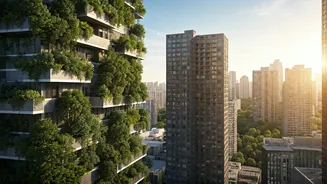









From Rooftop to Rainforest
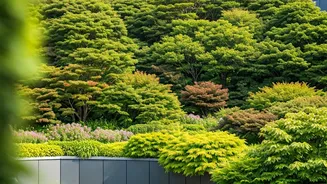
This isn't just about a few potted plants. The terrace forest movement involves creating miniature, self-sustaining ecosystems, often using principles from the Miyawaki method, a technique developed by Japanese botanist Akira Miyawaki. This approach involves planting
a dense mix of diverse, native species—from tall trees to smaller shrubs and groundcover—in a small area. By planting saplings closely together (around 3-5 per square metre), they are forced to compete for sunlight and grow upwards rapidly. The result is a multi-layered forest that can become self-sufficient in just two to three years, growing up to ten times faster and becoming thirty times denser than a conventional plantation. These mini-jungles are designed to mimic the structure of a natural forest, creating a rich, biodiverse habitat on what was once an empty, heat-absorbing rooftop.
The Youth-Led Green Wave
While urban gardening has been popular for a while, it's a younger, tech-savvy generation that is now championing this intensive form of urban afforestation. Spurred by concerns over climate change, pollution, and a desire to reconnect with nature, young professionals and students are leading the charge. Take Aman Sharma, a young conservationist from Delhi, who transformed his family’s terrace into a thriving forest of over 500 plants. Starting during the COVID-19 lockdown, his urban jungle now attracts over 100 bird species and 25 types of butterflies, becoming a powerful example of urban biodiversity restoration. For many like him, this is more than a hobby; it’s a form of practical activism and a way to reclaim a slice of nature in an increasingly concretised world. They are driven by a desire for pesticide-free food, mental well-being, and a tangible way to combat environmental degradation.
A Small Forest's Big Impact
The benefits of these rooftop ecosystems are immense. They act as powerful natural air purifiers, absorbing pollutants and releasing oxygen. A key advantage is their ability to combat the 'urban heat island' effect, where concrete and asphalt make cities significantly hotter than surrounding rural areas. Studies have shown that green roofs can reduce surface temperatures by as much as 20°C compared to conventional rooftops, leading to lower energy consumption for cooling. These green patches also become crucial habitats for urban wildlife, creating biodiversity hotspots for birds, bees, and butterflies. Furthermore, they can enhance food security by providing families with fresh, organic produce right at home and help in managing rainwater runoff, reducing the strain on city drainage systems.
The Challenges Above Ground
Creating a forest in the sky is not without its hurdles. The first and most critical consideration is the structural integrity of the building; a dense garden with wet soil is heavy, and it's essential to ensure the roof can bear the load. Proper waterproofing is another non-negotiable step to prevent leaks and damage to the building. Other challenges include sourcing a wide variety of native plants, which can be difficult in urban centres, and the initial labour and cost. Terrace gardens also require regular maintenance, especially in the initial years, and must be protected from pests, though they often suffer less from pests than ground-level gardens. Despite these obstacles, the growing movement proves they are surmountable with careful planning and community support.