


Beyond the Basic Forecast
Simply knowing it might rain isn't enough. For any monsoon travel in India, your first stop should be the India Meteorological Department (IMD). The IMD uses a four-colour alert system that is crucial for travellers to understand. A 'Green' alert means
all is well, and you can proceed with your plans. A 'Yellow' alert is a signal to 'Be Aware', suggesting you should stay updated as conditions might change. An 'Orange' alert means 'Be Prepared' for potentially disruptive weather like heavy rain, which could lead to waterlogging or traffic issues. The 'Red' alert is the most serious, meaning 'Take Action'. This is issued for extremely heavy rainfall that poses a significant threat to life and property, and all non-essential travel should be avoided. Understanding these warnings allows you to make informed decisions, not just about whether to travel, but which routes to take and what precautions are necessary.
Your Phone is Your Co-Pilot
Harness the power of technology by equipping your smartphone with reliable weather apps. The official 'Mausam' app from the IMD is one of the most accurate sources for weather data, forecasts, and radar imagery in India. It provides alerts for severe weather events directly from the source. Another highly reliable 'made in India' option is Skymet Weather, which uses a vast network of automatic weather stations to provide real-time data, forecasts, and air pollution details. For a global perspective that works well in India, AccuWeather is a popular choice, known for its accuracy in many Indian cities. These apps are more than just rain predictors; they can offer information on lightning, wind speed, and visibility, giving you a comprehensive picture of the conditions you're about to drive into.
Route Planning and Local Intel
The shortest route is not always the safest during the monsoon. Hilly and mountainous regions, while scenic, are often prone to landslides and road closures. Before setting off, check local news and traffic police advisories for your intended route. As of late August 2026, the IMD has issued warnings for heavy rainfall and potential flash floods across several states, including Madhya Pradesh, Chhattisgarh, and parts of the Northeast, urging caution for travellers. Popular monsoon destinations in the Himalayas, like parts of Uttarakhand, are also expecting widespread rain. It's wise to choose national highways where possible and avoid smaller, poorly maintained roads. Always have an alternative route in mind. Sometimes the most valuable information comes from locals; don't hesitate to ask hotel staff or drivers about the current conditions of the roads you plan to take.
Safe Driving on Wet Roads
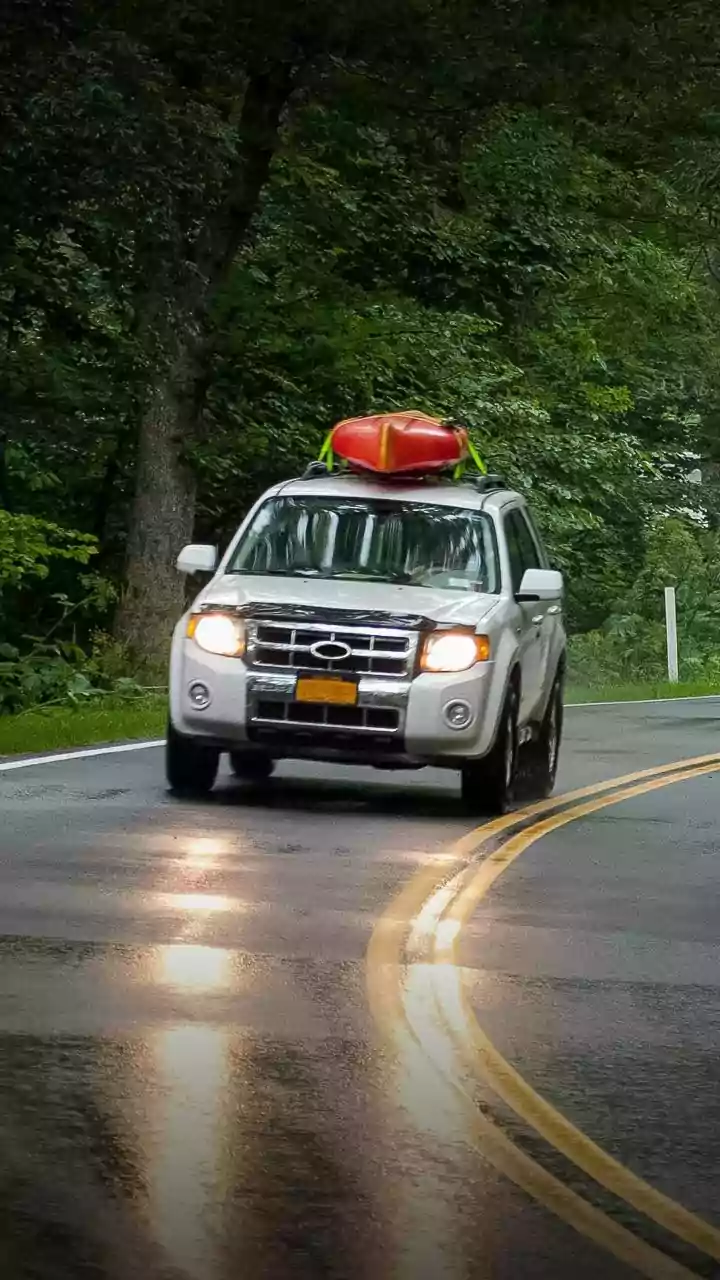
Wet roads demand a different style of driving. The most critical adjustment is to reduce your speed; experts recommend cutting it by 20-30% from what you’d do in the dry. Braking distances increase significantly on wet surfaces, so double the distance you would normally keep from the vehicle in front of you. Be extra cautious on concrete roads and painted surfaces like zebra crossings, which become exceptionally slippery. Use your low-beam headlights during the day to improve your visibility to other drivers. If you encounter a waterlogged street, avoid it. You can't be sure of its depth or what hazards lie beneath the surface. If driving through a shallow, known puddle is unavoidable, do so slowly in a low gear while keeping the engine revs up to prevent water from entering the exhaust.
Vehicle and Emergency Preparedness
A pre-trip vehicle check is non-negotiable. Ensure your tyres have adequate tread (at least 3mm), your brakes are in top condition, and your windscreen wipers are effective. It's a good practice to install new wiper blades at the start of every monsoon season. Check all your lights, including headlights and fog lamps. Your emergency kit should be monsoon-ready. Pack a powerful torch, a first-aid kit, a fully charged power bank, and extra drinking water and non-perishable snacks. Given the higher chance of traffic jams during rains, always start your journey with a full tank of fuel. These preparations don't just keep you safe; they give you peace of mind.