




The Great Monsoon Sunscreen Myth
Let’s be honest: when the sun is hidden behind a thick blanket of clouds and rain is pouring down, slathering on sunscreen feels counterintuitive. We associate sunscreen with bright, sunny beach days, not damp, overcast afternoons. This is the most common
reason people diligently pack away their SPF as soon as the first rains hit. The logic seems simple: no sun, no burn, no need for sunscreen. However, this is a fundamental misunderstanding of what we are protecting ourselves from. The danger isn't the visible light or the heat from the sun; it's the invisible ultraviolet (UV) radiation that is present every single day of the year, rain or shine.
Clouds Are Not a UV Shield
Here's the crucial science bit: there are two main types of UV rays that damage our skin. UVB rays are the primary cause of sunburn, while UVA rays are responsible for premature ageing, wrinkles, and deep skin damage. While thick cloud cover can block a significant portion of UVB rays (the 'burning' rays), they do very little to stop UVA rays. In fact, studies show that up to 80% of UVA radiation can penetrate through clouds, fog, and haze. This means that even on the gloomiest monsoon day, your skin is still being exposed to the very rays that cause long-term damage, fine lines, and increase the risk of skin cancer. You may not get a sunburn, but the silent, deeper damage is still occurring.
Monsoon’s Double-Damage Effect
The monsoon environment can actually amplify the need for protection. Firstly, surfaces like wet roads, puddles, and glass buildings are highly reflective. This means UV rays can bounce off these surfaces and hit your skin from different angles, leading to increased overall exposure. Secondly, the high humidity can be tough on your skin. It can lead to clogged pores and a compromised skin barrier. A weakened barrier is less effective at protecting itself from environmental aggressors, including UV radiation. On top of that, sweat and humidity can cause your sunscreen to break down faster, making diligent application even more critical.
Choosing Your Monsoon Armour
The feeling of a thick, creamy sunscreen on an already sticky, humid day is a major turn-off. The key is to switch up your product. For monsoon weather, look for sunscreens that are specifically formulated to be lightweight and non-greasy. Gel-based or water-based formulas are excellent choices as they absorb quickly without leaving a heavy film. Look for labels that say “water-resistant” or “sweat-resistant” to ensure your protection lasts longer. A “broad-spectrum” sunscreen is non-negotiable, as this guarantees protection from both UVA and UVB rays. Many modern sunscreens also come with a “matte finish,” which can help control oil and shine in humid conditions, making them much more pleasant to wear daily.
Application Tips for Humid Weather
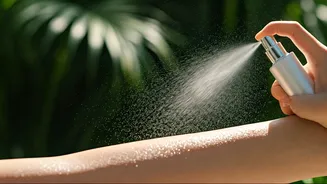
To get the most out of your sunscreen during the monsoon, application is key. Always apply it as the last step of your skincare routine, before any makeup. Give it time to absorb—apply it at least 20 minutes before you step outside. This allows the UV filters to form a protective layer on your skin. Don't forget often-missed spots like your ears, neck, and the tops of your feet if you’re wearing sandals. And yes, you still need to reapply. A good rule of thumb is to reapply every two to three hours, or more frequently if you’ve been sweating heavily or have been caught in a downpour. It might seem like a hassle, but it's the only way to ensure continuous protection throughout the day.