





The Humble Button
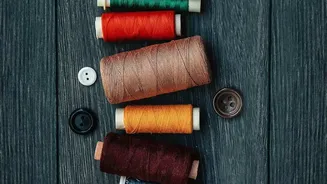
The most common and arguably simplest repair is sewing on a button. A missing button on a shirt, jacket, or pair of trousers can render an entire garment unwearable. Yet, fixing it requires only a needle, thread, and about five minutes of your time. Learning
this basic skill prevents a perfectly good piece of clothing from being relegated to the back of the closet or thrown away. Mastering this repair is the first step toward clothing independence. Keep a small kit with a few needles and neutral-coloured threads (black, white, and grey are a great start) to ensure you are always prepared. For thicker fabrics like coats, creating a thread 'shank'—a small stem of thread under the button—gives the button space and reduces stress on the fabric.
The Critical Seam
A split seam along a side, sleeve, or trouser leg can feel like a major issue, but it's usually a straightforward fix. The original stitching has simply come undone. Repairing a seam restores the structural integrity of the garment and prevents the split from getting worse. You can do this by hand using a backstitch, which is strong and ideal for high-stress areas like underarms. Simply turn the garment inside out, align the edges of the fabric, and sew along the original stitch line. For a nearly invisible finish on areas like linings, a ladder stitch is an excellent technique to learn. Catching and mending a split seam early is one of the best ways to prevent further, more complicated damage.
The Unravelling Hem
A fallen hem on a pair of trousers or a skirt not only looks untidy but can lead to tripping hazards and serious fabric damage from being stepped on. Luckily, it's another easy fix. For a quick, no-sew solution, fusible hemming tape can be used with an iron to bond the fabric back into place. This is a great option for those who are not confident with a needle and thread. For a more durable and traditional repair, a few hand stitches will secure the hem for years to come. The herringbone stitch is a classic for hems because it's strong yet allows for some flexibility. Fixing a hem immediately restores the clean lines of a garment and protects the fabric edge from fraying.
The Minor Rip or Tear
Small holes and tears can quickly become large, irreparable ones if left unattended. Addressing them early is crucial. For sturdy fabrics like denim or canvas, an iron-on patch applied to the inside of the garment is a fast and effective solution that provides reinforcement. You can then add a few stitches around the edge for maximum durability. For smaller snags or holes in T-shirts or sweaters, darning is a traditional technique where you essentially weave a new patch of threads over the hole. This not only repairs the damage but can also be used as a creative, visible mending statement by using contrasting thread colours.
The Stubborn Zipper
A stuck or broken zipper can be frustrating, but it's not always a lost cause. Often, a zipper just needs a little maintenance. If the teeth are misaligned or it's simply stuck, running the tip of a graphite pencil or a bit of wax along the teeth can help it glide smoothly again. If the stitching that holds the zipper tape to the garment has come undone, this can often be repaired with a simple hand-sewn straight stitch, reinforcing the original line. While completely replacing a broken zipper can be a more advanced task, these simple maintenance tips and minor stitch repairs can solve many common zipper problems and keep your favourite jackets, trousers, and bags in rotation.