




The 'Goldilocks' Promise
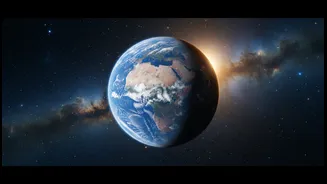
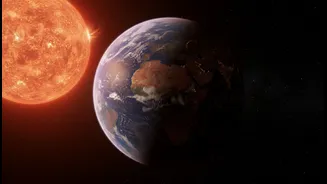
For decades, the search for life beyond Earth has started with a simple concept: the 'habitable zone'. Often called the 'Goldilocks Zone', this is the orbital region around a star where conditions are just right—not too hot and not too cold—for liquid
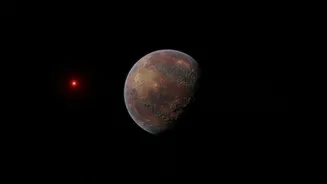
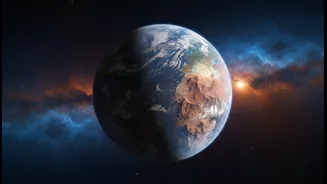
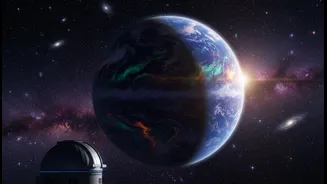
water to exist on a planet's surface. Since liquid water is considered a key ingredient for life as we know it, finding a planet in this zone is the critical first step. GJ 3378b, a rocky world about 25 light-years away, has recently generated excitement because it sits comfortably within its star's habitable zone. It receives about 90% of the energy that Earth gets from the sun, making it a prime target for study. But this promising location is just one box on a much longer checklist.
A Planet’s Temperamental Star
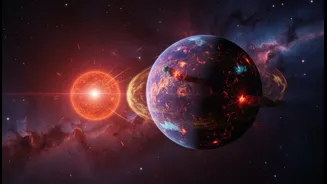
A planet's habitability is deeply tied to the nature of its parent star. GJ 3378b orbits a red dwarf, the most common type of star in our galaxy. While these stars are long-lived, they have a violent side, especially in their youth. They are known for powerful stellar flares and emitting intense radiation that can blast a nearby planet, stripping away its atmosphere over time. This is a major concern for planets in the close-in habitable zones of red dwarfs. Scientists are uncertain if GJ 3378b has managed to hold onto its atmosphere. It sits right on the edge of what's called the 'cosmic shoreline', a theoretical boundary separating planets that can retain their atmospheres from those that likely can't.
The Necessity of an Atmosphere
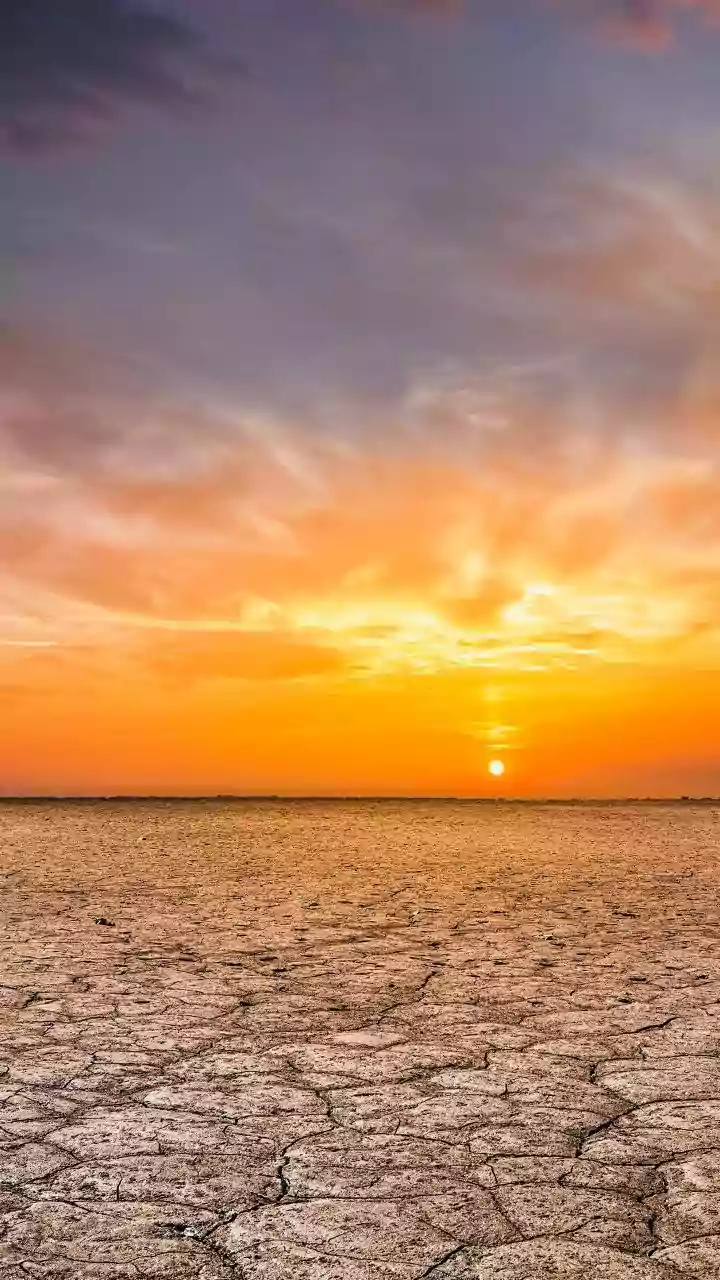
Without an atmosphere, a planet's claim to habitability vanishes. An atmosphere does much more than provide air to breathe; it creates the surface pressure needed to keep water in a liquid state. It also acts as a planetary blanket, trapping heat to prevent catastrophic temperature swings between day and night. Furthermore, it serves as a crucial shield, protecting the surface from harmful ultraviolet and X-ray radiation from its star. Mars offers a cautionary tale from our own solar system. Scientists believe it once had a thicker atmosphere and liquid water on its surface, but as its atmosphere thinned over billions of years, it became the cold, dry desert world we see today.
A Magnetic Shield Is a Must
What keeps an atmosphere in place? A global magnetic field. Generated by the motion of a planet's liquid metallic core, a magnetic field deflects the charged particles of the stellar wind. Without this protective magnetosphere, the stellar wind can slowly but surely erode a planet's atmosphere, blowing it out into space. This is thought to be a major part of the story of how Mars lost its ancient atmosphere. For a super-Earth like GJ 3378b, its mass—now estimated at just 2.3 times that of Earth—is a key factor. A higher mass increases the chance of it being geologically active and sustaining the internal engine needed to power a protective magnetic field, but it is no guarantee.
Beyond the Checklist
Even with the right location, a stable star, an atmosphere, and a magnetic field, the list of requirements continues. A truly habitable world likely needs plate tectonics to regulate its climate and recycle nutrients. It needs the right chemical composition and a stable, near-circular orbit to avoid drastic seasonal changes. Even the planet's neighbours matter. In our solar system, Jupiter acts as a sort of cosmic bouncer, its immense gravity helping to deflect potentially devastating comets and asteroids. The search for a second Earth is a complex puzzle. Planets like GJ 3378b are crucial pieces, helping scientists refine what to look for and pushing technology to new limits. The definitive answer on its atmosphere, and its ultimate habitability, may have to wait until future instruments like the Habitable Worlds Observatory come online in the 2040s.