




The Moon's Deep Freeze Problem
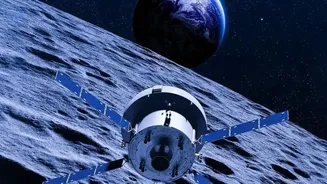
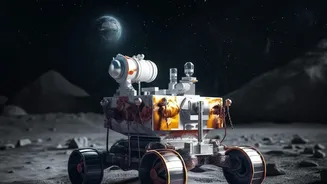
Establishing a permanent human presence on the Moon under the Artemis program presents immense logistical challenges. One of the most significant is the extreme environment. During the two-week-long lunar night, temperatures near the Moon's South Pole—a
key area of interest—can plummet to minus 328 degrees Fahrenheit (minus 200 Celsius). For any piece of equipment that relies on electricity, from rovers to scientific instruments and astronaut life support, this poses a fatal threat. Standard lithium-ion batteries, like those in our phones and cars, use a liquid electrolyte to function. In such profound cold, this liquid freezes, which can cause permanent damage and render the battery useless. This issue has historically limited lunar missions to the duration of a single lunar day, as demonstrated by India's Chandrayaan-3 lander and rover.
The Old Way: Heavy Heating Systems
Until now, the only way to keep essential electronics alive through the lunar night was to equip them with bulky and energy-intensive heating systems. These heaters must run continuously to keep the batteries within their narrow operational temperature range, typically between minus 20 and 40 degrees Celsius. This approach has major drawbacks. The heating systems add significant weight and complexity to spacecraft, which increases launch costs. More importantly, they consume a large portion of the very power they are meant to protect, reducing the overall energy available for the actual mission objectives of exploration and scientific discovery.
A Solid Solution to a Splashy Problem
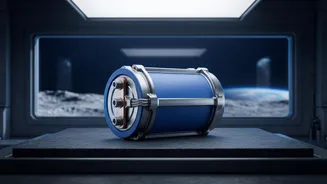
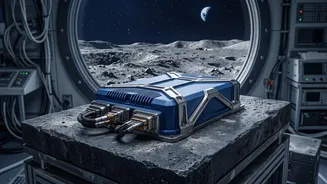
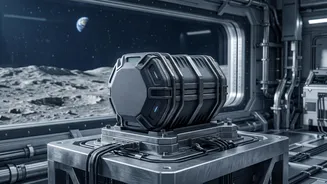
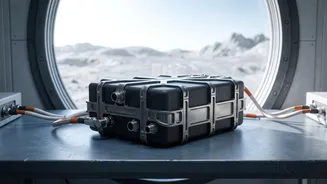
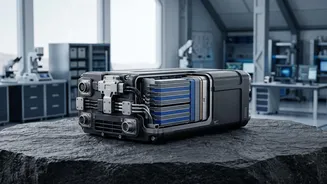
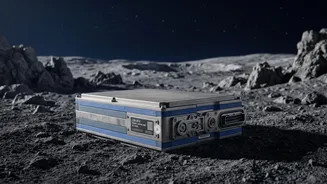
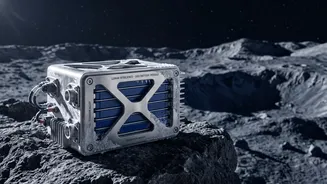
NASA's research into this area is paving the way for a revolutionary new approach. The project, called SPEARS (Solid Power for Extreme Environment Adaptability and Resilience in Space), aims to develop a new generation of solid-state batteries. As the name suggests, these batteries replace the vulnerable liquid electrolyte with a solid material, such as a specialized ceramic or polymer. This fundamental change in design eliminates the risk of freezing. While even these advanced batteries cannot generate power at the lowest lunar temperatures, the solid material means they can survive the deep freeze without sustaining damage and be ready to operate again once warmed.
Putting the Tech to the Test
Recent tests conducted at NASA's Langley Research Center in Virginia have shown promising results. During thermal vacuum testing that simulates the harsh conditions of space, prototype SPEARS battery cells demonstrated an impressive resilience. The cells survived exposure to a temperature range from 212 degrees Fahrenheit (100 C) all the way down to minus 274 degrees Fahrenheit (minus 170 C) without being damaged. Furthermore, the tests proved the cells could actively operate with slightly reduced performance at temperatures as low as minus 112 degrees Fahrenheit (minus 80 C). This is a massive improvement over conventional batteries and confirms that the solid-state approach is viable. Instead of needing constant warmth, SPEARS batteries would only require small, intermittent heaters to bring them up to operational temperature when needed, saving enormous amounts of energy.
Powering the Future of Artemis
The success of the SPEARS project is a critical enabling technology for the long-term goals of the Artemis missions. By creating a reliable power source that can endure the lunar night, NASA unlocks the ability for longer-duration missions, more extensive exploration by rovers, and a sustainable infrastructure on the lunar surface. The adaptability of this technology means it could be used for a wide range of applications, from handheld tools for astronauts to stationary scientific outposts. While the research is still in its early stages, it represents a fundamental shift in how engineers can design lunar hardware. Lighter, more efficient, and more resilient systems become possible when you are not constantly fighting the cold. This innovation not only brings a permanent Moon base closer to reality but could also have applications on Earth, potentially leading to better batteries for electric vehicles and consumer electronics.