






What Exactly Is an Expense Ratio?
Think of the expense ratio, or Total Expense Ratio (TER), as an annual fee that a mutual fund house charges to manage your money. It’s expressed as a percentage of your investment. This fee covers all the operational costs of running the fund, including
the fund manager's salary, research team expenses, marketing, administrative costs, and registrar fees. You don't pay this fee directly from your bank account; instead, it is deducted from the fund's Net Asset Value (NAV) on a daily basis. So, the return you see published is always post-fee. This silent, automatic deduction is why many investors overlook it, but its effect compounds over time.
The 20-Year Drain: A Real-World Example
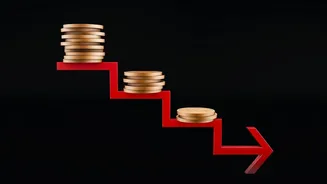
Let’s see how this plays out over two decades. Imagine you invest ₹1 lakh in a lump sum. We will assume a conservative annual return of 12% before fees. Now, compare two funds. Fund A has a lower expense ratio of 0.75%, which is common for direct plans of active funds or low-cost index funds. Your net annual return is 11.25%. After 20 years, your ₹1 lakh would grow to approximately ₹8.25 lakhs. Fund B has a higher expense ratio of 1.75%, typical for some regular plans of actively managed funds. Your net annual return is 10.25%. After 20 years, your ₹1 lakh would become just over ₹7 lakhs. The difference is a staggering ₹1.25 lakhs. That’s more than your initial investment, completely lost to higher fees over the long term. This “fee drag” doesn’t just remove money; it prevents that money from compounding and earning further returns for you.
Direct Plans vs. Regular Plans: The Great Divide
The single biggest factor influencing a fund’s expense ratio is whether you have invested in a 'Direct Plan' or a 'Regular Plan'. Both plans have the same fund manager and hold the same stocks, but their costs are different. Regular Plans are sold through intermediaries like distributors or agents, and their commission is bundled into the expense ratio. This can add anywhere from 0.5% to over 1% in extra costs each year. Direct Plans, which you buy straight from the fund house or through certain platforms, do not have this commission, making their expense ratios significantly lower. Over time, this cost saving directly translates into higher returns for you, the investor.
Does a Higher Fee Mean a Better Fund?
It's a common misconception that a higher expense ratio implies a more skilled fund manager or better potential returns. While active funds with dedicated research teams naturally cost more than passive index funds, there is little evidence to suggest that the most expensive funds consistently outperform their cheaper peers. In fact, the expense ratio is one of the most reliable predictors of future returns—lower costs mean you keep more of what the fund earns, regardless of market performance. With the rise of low-cost index funds that simply mirror a market index like the Nifty 50, investors now have a powerful alternative to high-fee active funds. These passive funds often have expense ratios below 0.20%.
Your Action Plan: How to Be a Cost-Conscious Investor
Being mindful of costs is a core tenet of successful long-term investing. First, check the expense ratios of all the mutual funds you currently own. You can find this on the fund’s factsheet or on financial websites. Second, wherever possible, opt for Direct Plans over Regular Plans to cut out intermediary commissions. If you're already in a Regular Plan, you can switch to the Direct Plan of the same scheme. Finally, when choosing new funds, don't just look at past performance. Compare the expense ratios of similar funds within the same category. A lower fee is a guaranteed advantage that works in your favour year after year.