





What Exactly Are Forex Reserves?
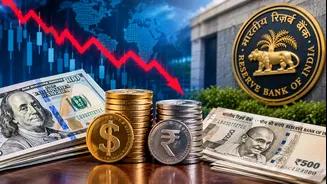
Think of foreign exchange reserves as a country's emergency savings account, but instead of being held in rupees, it's held in foreign currencies. For India, these reserves are managed by the Reserve Bank of India (RBI). They are a stockpile of assets
including major global currencies like the US dollar, euro, and Japanese yen, as well as gold and Special Drawing Rights (SDRs), which are an international reserve asset created by the IMF. The largest component is typically foreign currency assets, such as US government bonds. This war chest serves as a nation's first line of defense against economic shocks.
The Rupee in the Global Market
The value of the Indian rupee isn't fixed; it 'floats' based on the laws of supply and demand in the global currency market. When demand for the rupee is high—for instance, when foreign investors bring money into India or exports are strong—its value tends to rise. Conversely, when more people are selling rupees to buy foreign currencies—perhaps to pay for imports like crude oil or when investors pull money out—its value tends to fall. This fluctuation is normal, but extreme volatility can be harmful to the economy.
The RBI’s Balancing Act
This is where forex reserves become critical. The RBI’s goal is not to peg the rupee to a specific value but to curb excessive volatility. If the rupee is depreciating too quickly, it can make imports more expensive and fuel inflation. To prevent this, the RBI can intervene by selling dollars from its forex reserves and buying rupees. This increases the demand for the rupee in the market, helping to stabilize its value. On the other hand, if the rupee is appreciating too rapidly, it can make India's exports more expensive and less competitive. In this scenario, the RBI may buy dollars from the market, adding them to its reserves and thereby preventing the rupee from rising too fast.
A Signal of Strength and Stability
Beyond directly managing the currency, forex reserves serve other vital functions. A healthy level of reserves acts as a powerful signal of a country's economic stability and creditworthiness to global investors. It assures them that the country can meet its external debt obligations and is not at immediate risk of a balance of payments crisis. This confidence is crucial for attracting and retaining foreign investment, which is essential for economic growth. Having robust reserves means a country is less likely to need emergency borrowing from international institutions.
Ensuring a Safety Net for Imports
Another critical role of forex reserves is providing an 'import cover'. This metric indicates how many months of imports a country can finance with its reserves alone. India is a major importer of essential goods like crude oil, electronics, and fertilizers. Adequate reserves ensure that even during a period of economic stress or a sudden drop in export earnings, the country can continue to pay for these crucial imports without disruption, preventing shortages and economic paralysis.
The Cost and Recent Trends
Managing reserves is a delicate balance. When the RBI sells dollars to defend the rupee, the reserves deplete. Recent data from October 2026 shows a decline in India's reserves, partly due to such interventions amid global pressures. India’s reserves fell by over $50 billion in four weeks from a peak in September 2026, a significant drop reflecting the RBI's actions to manage rupee pressure. While intervention is necessary to curb volatility, it comes at the cost of using up this valuable buffer. This is why the size and movement of forex reserves are so closely watched by economists and policymakers.