






What is the 'Tower-Catch' Strategy?
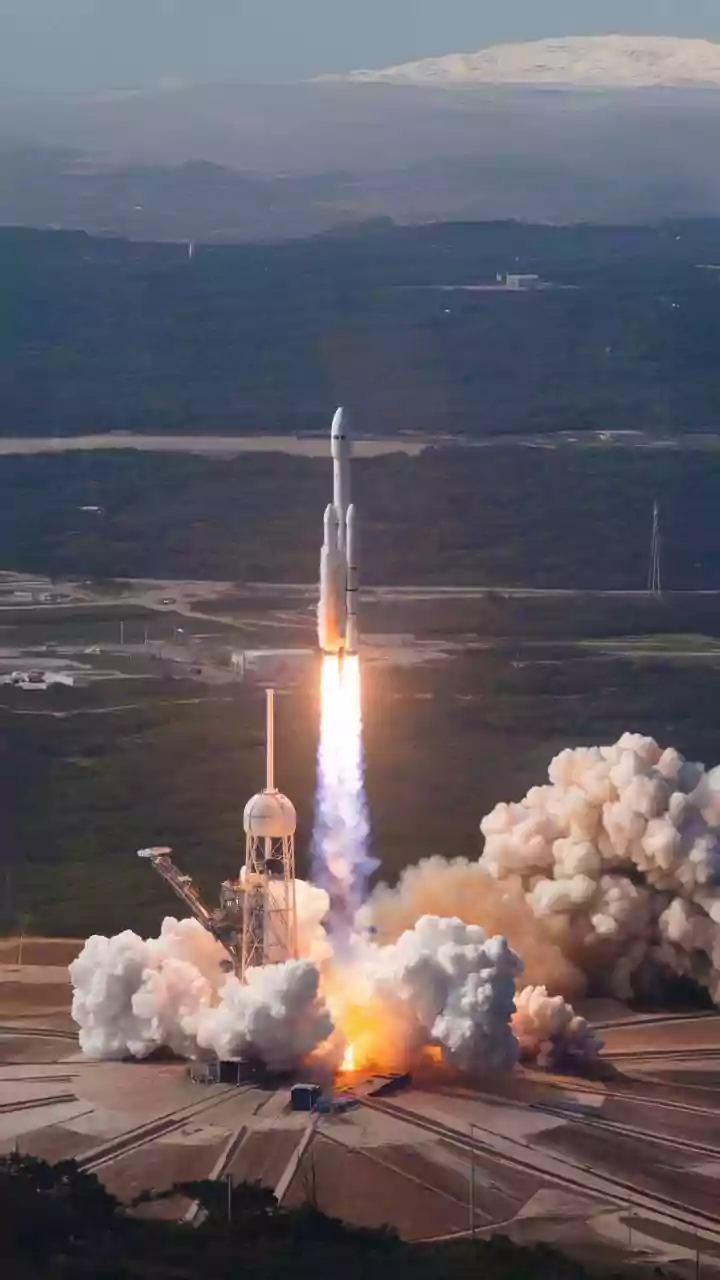
For years, SpaceX has wowed the world by landing its Falcon 9 boosters upright on ships and landing pads. For its next-generation Starship, the company is taking a giant leap forward. Instead of the rocket landing itself on legs, the plan is for the massive
Super Heavy booster to be caught in mid-air by the launch tower itself. This system, nicknamed 'Mechazilla', consists of two huge mechanical arms, or 'chopsticks', that extend from the launch integration tower. As the returning booster slows to a hover using its engines, these arms are designed to close around it, securing it via reinforced points on the rocket's body. The booster is then lowered onto the launch mount, ready for inspection, refuelling, and another flight. The entire process is a high-stakes mechanical ballet, demanding incredible precision in timing, positioning, and velocity.
The Problem with Landing Legs
So, why go through all this trouble? The answer comes down to one of the most critical factors in rocketry: mass. Landing legs, especially ones strong enough to support a vehicle the size of the Super Heavy booster, are incredibly heavy. Estimates suggest a leg system for Starship could weigh between 5 to 10 tons. Every single kilogram of hardware on the rocket is a kilogram that isn't payload or propellant. This dead weight has to be launched and carried partway to space on every single flight, costing enormous amounts of energy. By moving the landing hardware from the vehicle to the ground, SpaceX effectively outsources the mass of the landing system to the launch tower, a structure that never has to fly. The tower can be made immensely strong and heavy without any flight penalty.
More Payload, More Possibilities
Removing 5 to 10 tons of legs might not sound like much for a rocket system that weighs thousands of tons, but the impact is significant. That saved mass can be directly converted into more valuable payload. It means Starship could carry heavier satellites, more cargo for a future Moon base, or additional supplies for a mission to Mars. For a rocket designed to lift over 100 tons, even a small percentage increase in efficiency unlocks massive potential. This is crucial for SpaceX's business model, particularly for deploying its next-generation Starlink V3 satellites, which are much larger and more capable. A single Starship launch can deploy more satellite capacity than multiple launches of its predecessor, the Falcon 9. The tower-catch method also dramatically speeds up reusability. By catching the booster directly at the launch site, SpaceX can potentially eliminate the complex logistics of transporting it from a separate landing zone, inspecting it, and moving it back to the pad. The goal is an airline-like operation, with the potential for multiple launches per day.
A High-Stakes Engineering Gamble
While the benefits are clear, the risks are equally immense. The tower-catch strategy is an all-or-nothing manoeuvre. With landing legs, a booster has a margin of error for where it touches down. With the chopsticks, the booster must fly a perfect trajectory to arrive at a specific point in space, at the right speed and orientation, to be intercepted. A failure could be catastrophic, potentially destroying not just the multi-million dollar booster but also the vital, complex, and expensive launch tower. This would ground the entire program at that launch site until massive repairs could be completed. The manoeuvre requires flawless coordination between the booster's engines, its grid fin control surfaces, and the ground-based mechanical arms. Despite the challenges, SpaceX believes this high-risk, high-reward approach is essential to achieving its ultimate goal: making humanity a multi-planetary species by building a city on Mars.