




1. Sholay (1975): The Original Blueprint
No discussion of mass cinema is complete without 'Sholay'. Initially met with a tepid response, it became a phenomenon through word-of-mouth. It perfected the multi-starrer 'masala' formula, combining action, comedy, and romance into a single explosive
package. With its iconic villain Gabbar Singh, unforgettable dialogues, and 70mm spectacle, 'Sholay' ran for a record-breaking five years at Mumbai's Minerva theatre. It wasn't just a film; it was a cultural event that set the template for blockbusters for decades to come, selling more tickets than any Indian film in history.
2. Hum Aapke Hain Koun..! (1994): The Family Entertainer Revolution
In an era dominated by action films, 'Hum Aapke Hain Koun..!' brought families back to the theatres. With an unprecedented 14 songs, it transformed a simple family wedding into a grand musical celebration. Its revolutionary distribution strategy, starting with a limited print run in high-quality renovated theatres, curbed piracy and created massive demand. The film became the first to gross over ₹100 crore in India, proving that wholesome, family-centric narratives could be immensely profitable and redefine the theatre-going experience.
3. Dilwale Dulhania Le Jayenge (1995): The NRI Dream and Unmatched Longevity
Commonly known as DDLJ, this film captured the imagination of a newly globalised India and the diaspora. It was a turning point for Hindi cinema, establishing the overseas market as a significant revenue stream and making stars Shah Rukh Khan and Kajol the definitive romantic pair. The story of Raj and Simran, balancing modern love with traditional values, resonated so deeply that the film continues to run at Mumbai's Maratha Mandir theatre decades after its release, making it the longest-running film in Indian cinema history.
4. Gadar: Ek Prem Katha (2001): The Heartland Roar
Clashing with the Oscar-nominated 'Lagaan', 'Gadar' became an unmatched box office phenomenon, especially in India's heartland. It recorded over 50 million footfalls, a number unheard of in the 21st century. The film's raw, high-octane emotion and Sunny Deol's powerful performance as Tara Singh created a frenzy in single-screen theatres. 'Gadar' proved that a story rooted in patriotism and powerful drama could generate a tidal wave of audience support, shattering records in an era of emerging multiplexes.
5. Lagaan (2001): The Game-Changer
A three-and-a-half-hour film about a cricket match set in colonial India was a massive gamble that paid off spectacularly. 'Lagaan' proved that unconventional, content-driven stories could achieve massive commercial success. Its nomination for the Best Foreign Language Film at the Academy Awards put Indian cinema on the global map in a way few films had before. The film's success gave filmmakers the confidence to back unique scripts, blending artistic merit with mainstream appeal.
6. Dangal (2016): Conquering the Global Box Office
While many films had found success overseas, 'Dangal' took it to another level, becoming the highest-grossing Indian film worldwide primarily due to its phenomenal success in China. The film grossed over ₹2,000 crore globally, a first for Indian cinema. It demonstrated that a powerful, emotional story rooted in Indian culture could transcend borders and language barriers without any formulaic adjustments. 'Dangal' became one of the highest-grossing non-English films ever, redefining the potential of the international market.
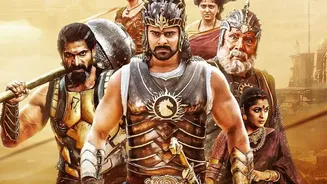
7. Baahubali Series (2015-2017): The Pan-Indian Spectacle
S.S. Rajamouli's epic didn't just break records; it broke barriers. Originating from the Telugu industry, 'Baahubali' was dubbed and released across India, creating the first true pan-Indian blockbuster. It shattered the notion that only Hindi films could dominate the national box office. With its world-class VFX, grand mythology-inspired storytelling, and the nationwide cliffhanger of "Why did Kattappa kill Baahubali?", the franchise showed Indian cinema could produce a spectacle on par with Hollywood, inspiring a new wave of large-scale productions.
8. K.G.F. Series (2018-2022): Redefining Action and Style
Following the path forged by 'Baahubali', the Kannada film industry's 'K.G.F.' franchise became another pan-Indian sensation. It redefined the 'mass hero' with its stylishly mounted action, swaggering protagonist Rocky Bhai, and a kinetic editing style that influenced countless other films. Its success proved that the pan-Indian model wasn't a fluke and that regional industries could create distinct cinematic languages that would be celebrated nationwide, culminating in 'K.G.F: Chapter 2' becoming one of the highest-grossing Indian films ever.
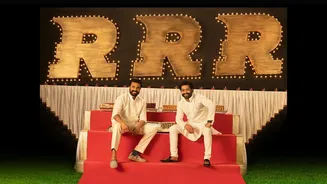
9. RRR (2022): Taking Indian Mass Cinema Global
If 'Baahubali' created the pan-Indian film, 'RRR' took it global. S.S. Rajamouli's next epic became a sensation in the West, celebrated by audiences and critics alike for its over-the-top action and emotional storytelling. The song 'Naatu Naatu' made history by winning the Academy Award for Best Original Song, a first for an Indian production. 'RRR' proved that an unapologetically Indian 'masala' film could not only find a global audience but also achieve the highest levels of international critical acclaim.
10. Dil Chahta Hai (2001): The Dawn of Multiplex Cinema
Released in the same year as 'Lagaan' and 'Gadar', 'Dil Chahta Hai' didn't aim for single-screen mass hysteria but instead captured the urban, upper-middle-class youth. Its depiction of modern friendships, realistic characters, and chic, aspirational lifestyle ushered Indian cinema into the 21st century and became a touchstone for millennials. It was a film perfectly suited for the burgeoning multiplex culture, proving there was a large, viable market for stories that were contemporary, cool, and conversational.