







Why Green Tea for Ferns?
The idea of watering your plants with your morning beverage might seem odd, but there’s sound science behind it. Many ferns thrive in slightly acidic soil with a pH between 5.5 and 6.5, which mimics their natural woodland habitat. [14, 12] Green tea is
naturally slightly acidic and contains tannins. When a weak, cooled tea is applied to the soil, these tannins can help gently lower the soil's pH. [1] This subtle shift can make crucial micronutrients like iron and manganese, which are vital for chlorophyll production, more available to the plant's roots. [8] The result can be deeper green, more vibrant fronds. Additionally, used tea leaves contain nitrogen, a key nutrient for lush foliage, along with trace amounts of phosphorus and potassium. [3, 11] Think of it less as a full meal and more as a healthy, hydrating vitamin water for your fern.
The Perfect Brew for Your Plants
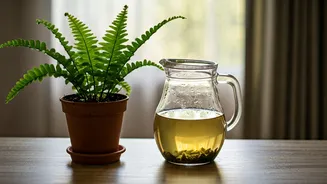
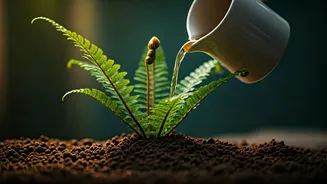
Preparing this nutrient boost is simple, but the details matter. You cannot use just any leftover tea. Start with plain, organic green tea bags or loose leaves. [1] Avoid any teas with added sugars, milk, oils, or artificial flavorings, as these can attract pests and promote fungal growth in the soil. [3] To make the brew, steep one green tea bag in about a litre of hot water for a few minutes — you're aiming for a weak tea, not a strong concentrate. [1] The most critical step is to let the brew cool completely to room temperature. [8] Pouring even warm tea on your fern can shock and damage its delicate root system. Once cooled, your plant-friendly tonic is ready to use.
How and When to Apply
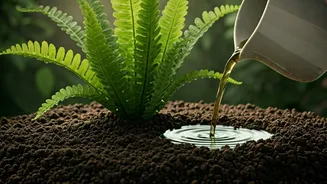
Treat the cooled green tea solution as a supplemental watering, not a replacement for a balanced fertilizer, especially during the peak growing seasons of spring and summer. [1] A good rule of thumb is to water your fern with the weak tea solution once every two to four weeks. [1, 8] Apply it directly to the soil, watering thoroughly until a small amount drains from the bottom of the pot, just as you would with regular water. [1] Be careful not to overdo it; overuse could potentially make the soil too acidic over time. [4] It’s wise to monitor your plant's response. If you notice any adverse effects, such as browning leaf tips, flush the soil with plain water during the next watering cycle and reduce the frequency of the tea applications. [8, 19]
Using Tea Leaves and Other Methods
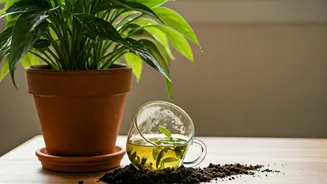
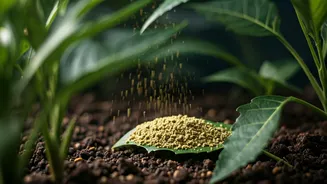
Beyond a liquid fertilizer, the used tea leaves themselves can be beneficial. After allowing them to cool, you can sprinkle them lightly on top of the soil as a mulch or mix them into the top inch. [3] As they decompose, they release nitrogen and other nutrients slowly. [2, 4] This also adds organic matter to the soil, which can improve its structure and water retention. [3] However, be mindful not to apply a thick layer, as this can create a dense mat that may encourage mold or attract fungus gnats. [3] If you are a composter, used tea leaves are an excellent 'green' material to add to your compost pile, enriching the final product that can be used for all your plants. [2]
A Gentle Approach to Plant Care
Using green tea is a sustainable, low-cost way to give your ferns a little extra care, but it is not a cure-all. This method works best as part of a comprehensive care routine that includes appropriate light, consistent moisture, and adequate humidity. [8] Some species, like Boston and maidenhair ferns, may show a positive response fairly quickly. [1] Always observe your plant. Its health is the best indicator of whether your care regimen is working. This gentle, organic boost is about supporting your fern's natural vitality, helping it to thrive and bring a touch of verdant nature into your home.