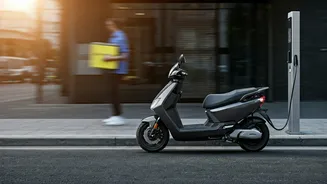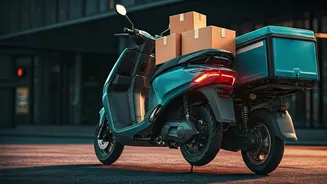



The High Upfront Cost of Going Green
The most significant hurdle for any delivery partner is the initial investment. An electric two-wheeler can cost 1.5 to 2 times more than its petrol counterpart. [14] While government subsidies under schemes like FAME II exist, they don't eliminate the high
barrier to entry. [5] For gig workers, who often come from economically vulnerable backgrounds and operate on thin margins, this upfront cost is prohibitive. [18] Securing financing is another major challenge. Many delivery partners lack the formal credit history required by traditional banks, and loans from non-banking financial companies often come with high interest rates and short tenures, further straining their finances. [14, 25] This financial burden forces many to either stick with their older, less efficient petrol vehicles or enter into costly rental agreements, negating some of the long-term savings.
Lost Time Is Lost Income
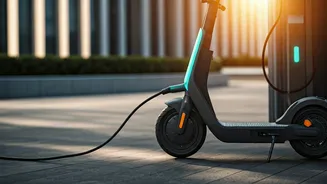
In the gig economy, time is money. A delivery partner's earnings are directly tied to the number of orders they can complete. While petrol bikes can be refuelled in minutes, charging an EV can take hours. A standard AC charger can take 4-6 hours, which is unfeasible during a working day. [9] This downtime represents significant lost income. [11] One of the most cited challenges by riders is the difficulty in finding available and functioning charging spots. [2] The alternative, battery swapping, offers a solution, allowing a rider to exchange a depleted battery for a full one in about two minutes. [9] This model is gaining traction, with companies like Battery Smart and Sun Mobility establishing networks. [3] However, the infrastructure is still developing, and a lack of standardization among battery types remains a complicating factor. [22, 24] For a rider covering 80-100 km daily, range anxiety and charging logistics are constant operational headaches that directly impact their livelihood. [4, 18]
Who Really Bears the Risk?
Delivery platforms like Zomato and Swiggy have made ambitious commitments to electrify their fleets by 2030. [4, 17] They have partnered with various EV manufacturers and rental companies to facilitate access for their riders. [17, 20] However, the fundamental structure of the gig economy means that the financial and operational risks of this transition are largely transferred to the delivery partners themselves. These workers are not employees; they are independent contractors responsible for their own vehicles and maintenance. While the total cost of ownership (TCO) for an EV is significantly lower than a petrol vehicle over its lifespan—with fuel costs being 70-81% lower—the initial risk is borne entirely by the individual. [12, 14, 16] This creates a system where platforms reap the benefits of a 'green' fleet—reducing their carbon footprint and operational costs per order—while the workforce on the ground navigates the financial precarity and logistical challenges of the switch. [20]
A More Equitable Path Forward
For the EV transition to be truly successful and sustainable, the responsibility must be shared. A model that relies solely on individual riders to navigate a complex and expensive shift is destined to falter. A more equitable approach requires a collaborative ecosystem involving platforms, policymakers, and financial institutions. This includes creating streamlined, low-interest financing options tailored for gig workers. [14, 25] Platforms can play a much larger role by offering stronger support, such as facilitating group purchasing discounts, providing maintenance support, or offering income guarantees during charging downtime. Expanding and standardizing the battery-swapping infrastructure is critical to eliminating range anxiety and lost earning time. [13, 15] Ultimately, the goal should not be just to get more EVs on the road, but to ensure that the people riding them can build sustainable livelihoods. By investing in the success of their delivery partners, companies are investing in the resilience and success of the entire last-mile delivery ecosystem.