



India's New Coordinated Push
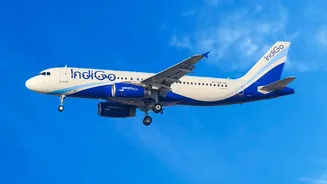
In late July 2026, India's Ministry of Tourism announced a significant Memorandum of Understanding (MoU) with Air India to jointly promote the country as a top-tier global destination. This was followed days later by a similar agreement with IndiGo, the country's
largest carrier. The core idea is to leverage the airlines' vast international and domestic networks to amplify the government's 'Incredible India' campaign. The partnerships aim to create co-branded marketing, develop destination-focused content for in-flight entertainment, and work with tour operators in key overseas markets to boost inbound travel. A key focus is also on promoting India as a transit hub, encouraging stopover tourism to give travellers a taste of the country. This dual-airline approach signals a strategic intent to present a unified, accessible, and appealing vision of India to the world.
The Integrated Powerhouse: Emirates and Dubai
Any discussion of airline-tourism synergy inevitably leads to Emirates and Dubai. Their relationship is less a partnership and more a complete fusion of brand and strategy. Dubai’s Department of Economy and Tourism (DET) and the airline work in lockstep to build the city's identity as a global hub for business, leisure, and investment. This isn't just about joint ad campaigns; it’s about a shared vision that has driven Dubai's growth. Emirates’ route network is a strategic tool for Dubai's economic goals, connecting the city to key markets and facilitating everything from tourism to trade. The airline actively signs MoUs with tourism boards around the world, not just to fly people to Dubai, but to feed its global network, making the city an unparalleled crossroads. This deep integration, where the airline's identity is inseparable from the destination's, is the gold standard in tourism coordination.
A Different Model: Qantas and Tourism Australia
The relationship between Qantas and Tourism Australia offers a different, and perhaps more relatable, model. It’s a formal, strategic partnership with clear financial commitments. A notable multi-year, multi-million dollar deal signed in 2016 focused on promoting Australia in key markets like the US, UK, and Asia. This wasn't just about logos on a poster. The deal involved joint investment in digital marketing, public relations, and, crucially, anonymised data sharing to better target potential travellers. Though the partnership has had its ups and downs, including a temporary suspension, its foundation is built on a clear business case: Qantas, as the national carrier, invests significantly in marketing Australia because a thriving tourism industry directly benefits its bottom line. This model shows that even without complete fusion, a well-funded, data-driven commercial partnership can be incredibly effective.
What Makes These Partnerships Work?
Successful collaborations share common traits. First is a long-term strategic alignment where the airline and tourism body agree on target markets and messaging. Second is a significant joint investment, whether in marketing funds, resources, or both. Third is deep integration across platforms—from in-flight entertainment and digital channels to joint participation in trade shows. The most advanced partnerships also involve data sharing to refine marketing efforts and route planning to match tourism demand. Perhaps most importantly, there's a shared understanding that the airline isn't just a transportation service but a country's primary ambassador in the sky. As seen with Turkish Airlines, the national carrier plays a direct role in implementing national tourism strategy, even increasing flight frequencies to key tourist destinations based on demand.
How Does India's New Approach Compare?
India's recent MoUs with Air India and IndiGo are a promising start that aligns with global best practices. By partnering with its revitalised flag carrier and its largest domestic airline, the Ministry of Tourism is covering all bases. The stated goals of co-branded marketing, content development, and trade engagement are right out of the successful partnership playbook. However, the real test will be in the execution. The current agreements are described as non-commercial and non-binding frameworks. To evolve into a powerhouse like the Emirates-Dubai or Qantas-Australia examples, this framework will need to be backed by substantial, long-term joint funding, deep data integration for targeting travellers, and a seamless execution that makes the 'Incredible India' brand a tangible part of the passenger experience from booking to landing. The potential is immense, but the journey from a promising MoU to a world-class tourism engine has just begun.